

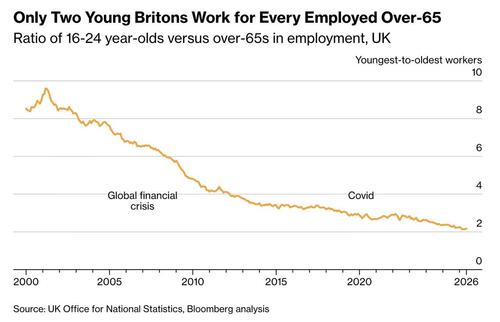
Older Britons Are Working Longer As Youth Unemployment Rises
Britain has a strange labor problem: the people who have spent decades working increasingly aren’t leaving, while the people trying to begin their careers increasingly can’t get in, according to Bloomberg.
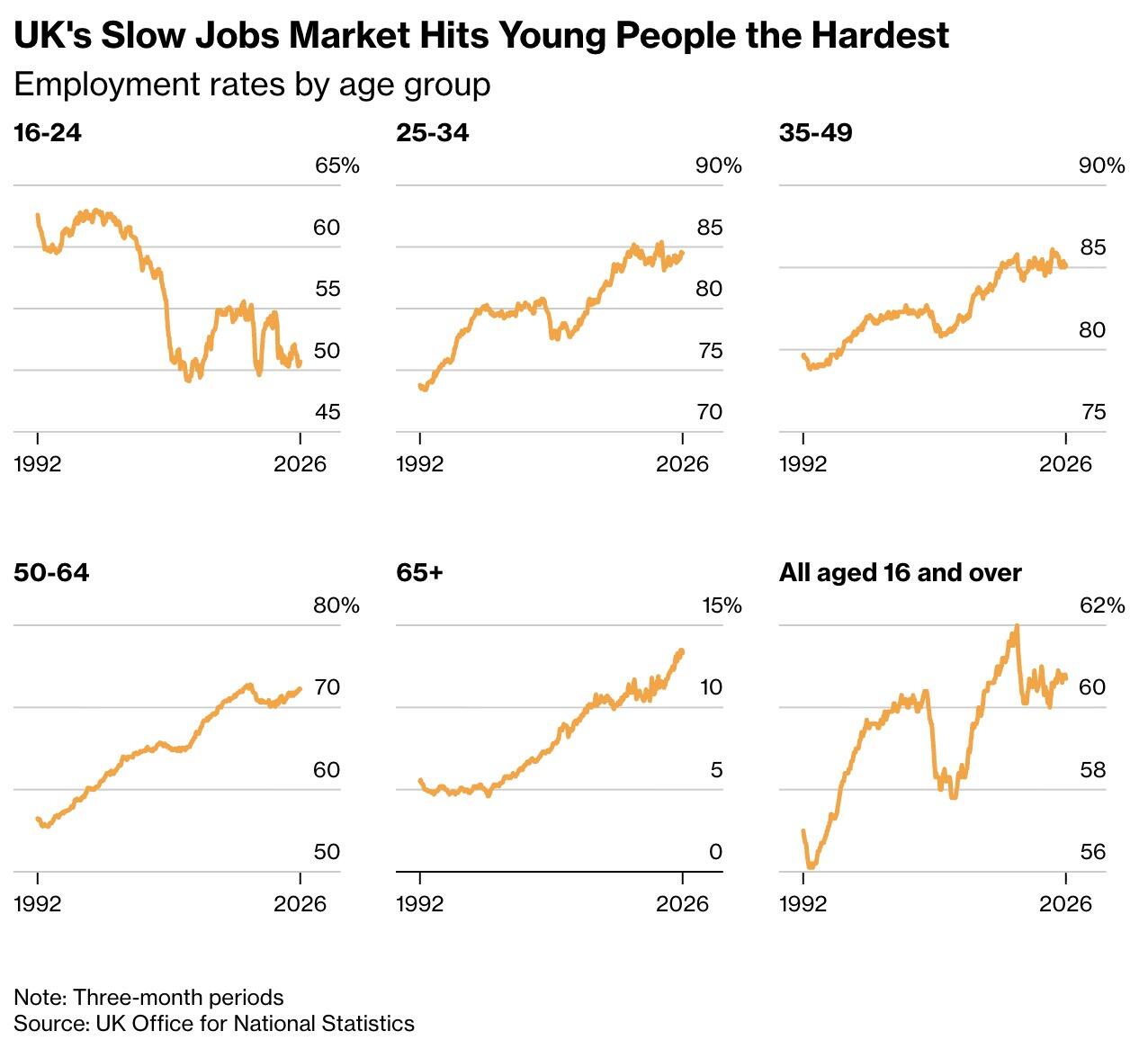
More than 1.7 million people over 65 are now employed in the UK, the highest level on record. Meanwhile, youth unemployment is hovering near a decade-plus high, and nearly one million people between 16 and 24 are neither employed nor in school.
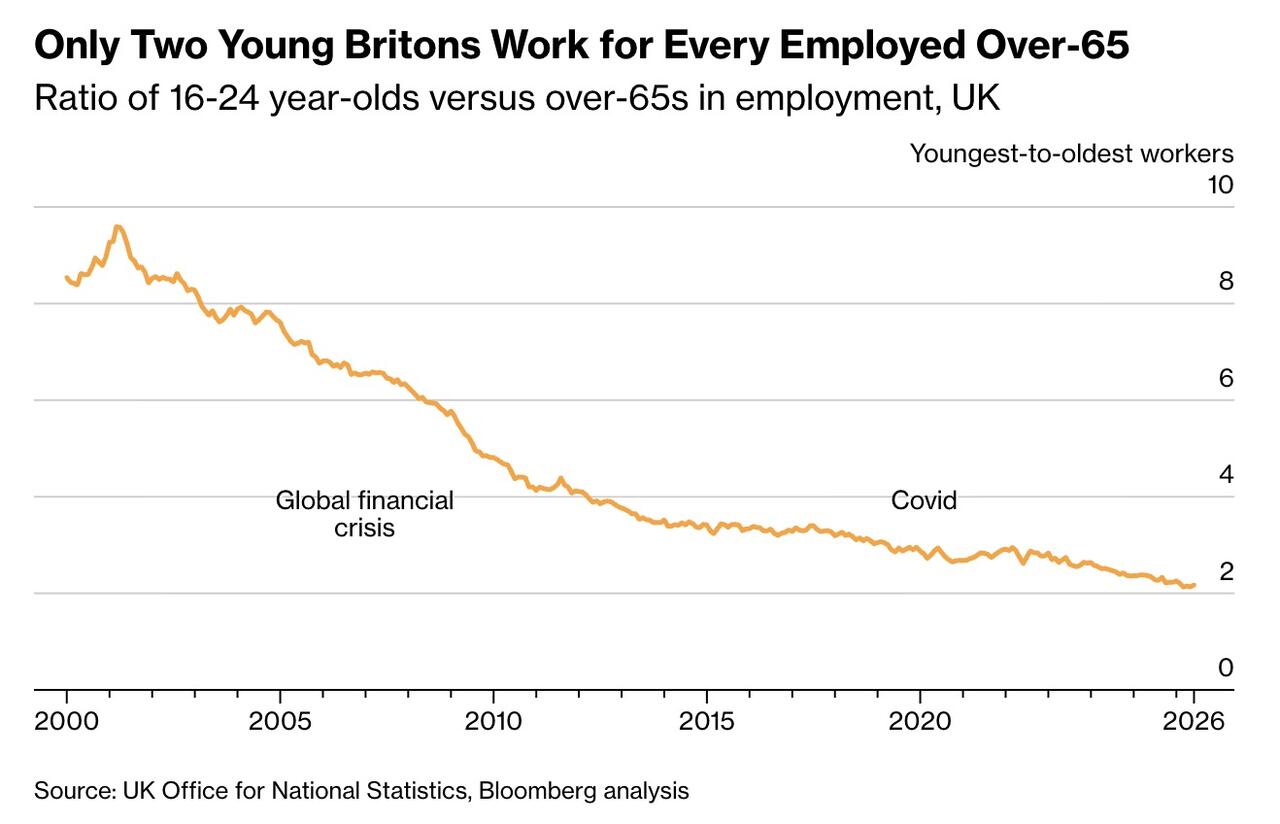
The demographic shift is dramatic. About two decades ago, there were roughly 10 working young people for every employed person over 65. Today there are only about two.
Some of this is simply good news: people are healthier, living longer and have more opportunities to work flexible schedules. But money is clearly part of the equation too. Rising living expenses have pushed some retirees back into the workforce and encouraged others to postpone retirement.
That becomes more consequential when companies aren’t creating many new positions. The Bank of England has described Britain as having a “low hire, low fire” labor market. Companies aren’t necessarily conducting massive layoffs, but they’re also reluctant to expand payrolls. When older employees remain in their jobs longer, fewer vacancies naturally work their way down the ladder.
Bloomberg writes that AI could amplify the problem. Graduate positions as a percentage of available jobs have reportedly been cut in half since 2022. Instead of building large teams of junior employees, companies can increasingly give experienced workers AI tools and ask them to produce more.
As one employment expert put it, some companies are effectively saying, “we just want to get rid of some junior staff and replace them with AIs.”
Working from home could be contributing as well. Junior employees require more training and supervision, something that becomes considerably more difficult when employees and managers aren’t regularly sitting together.
The end result is almost backwards from the traditional labor-market cycle. Britain has record numbers of retirement-age people still collecting paychecks at precisely the same time that an unusually large number of young people can’t find their first one.
Tyler Durden
Tue, 09/15/2026 – 02:45

