

Saudis Signal Red Sea Oil Loadings Could Soon Resume For Asian Buyers
Bloomberg reports Saudi Aramco may restart crude loadings at Yanbu this week, raising hopes that the critical East-West pipeline route, which bypasses the Strait of Hormuz, could resume operations at half capacity after a drone attack disabled it.
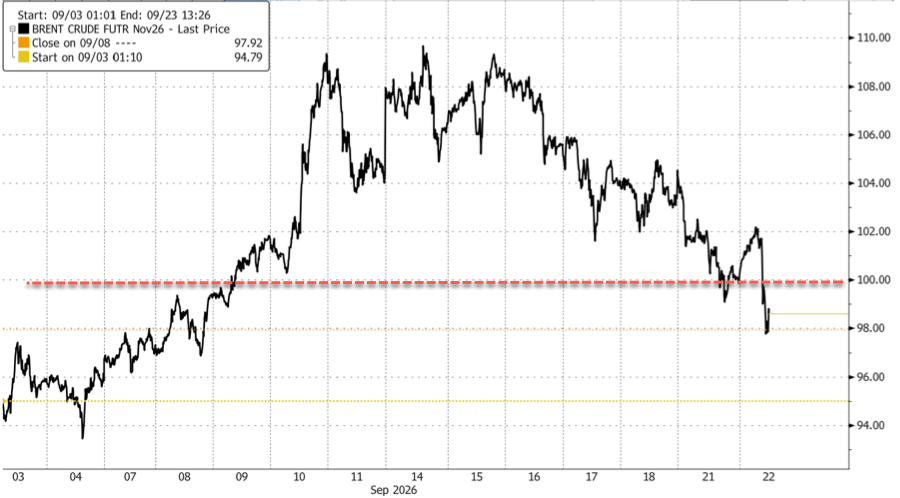
While no restart timeline has been confirmed, the overnight development adds to positive signs of progress toward resolving the global energy crisis after Brent slipped below $100 a barrel on reports that Iran offered to reopen the strait in exchange for an easing of US naval pressure and the US blockade of Iranian ports.
However, Iran’s semi-official Fars News Agency has denied reports from Kyodo and Reuters about reopening Hormuz, calling them “invalid and untrue.”
The report also said Aramco executives told at least three Asian refiners they could soon resume picking up crude at Yanbu on the Red Sea.
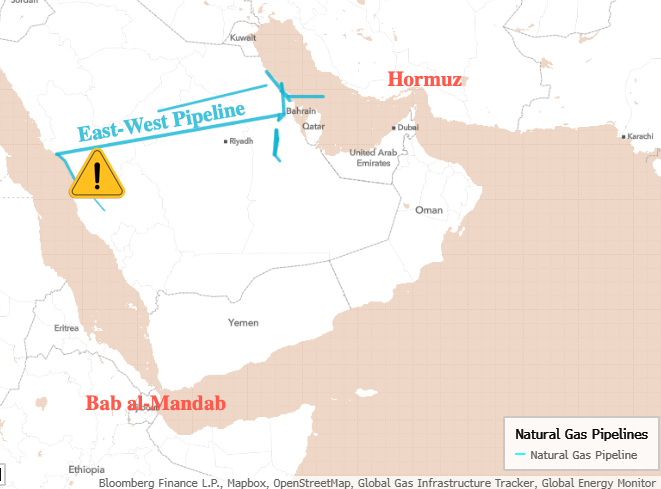
Loadings at the Red Sea port have been halted since drone attacks launched from Iraq struck an East-West pipeline pumping station on September 10. The route had been carrying about 4 million barrels a day, providing Saudi Arabia with a valuable bypass around the Hormuz chokepoint.
Some Asian and European buyers have already missed their loading dates, leaving vessels near Yanbu or still heading toward the port. The Saudis have ramped up crude tanker transits from Ras Tanura through Hormuz, with cargoes available for ship-to-ship transfers in the Gulf of Oman.
Despite this morning’s encouraging reports, Barclays analyst Amarpreet Singh warned that Brent prices may need to climb another 50% to bring supply and demand into balance if current disruptions persist.
Inventory and consumption indicators suggest “prices have a long way to go before supply and demand converge,” Singh wrote in the note.
He pointed out that net Middle Eastern supply losses have narrowed to an estimated 4.7 million barrels a day, down from 12 million to 13 million at the start of the war. But months of disruption have left the market with inadequate buffers to protect against another big supply shock.
Singh forecasts Brent at $95 a barrel in the fourth quarter of 2026, followed by $90, $85, $85 and $80 across the four quarters of 2027. The potential 50% increase represents an upside scenario if disruptions continue.
Separately, UBS analyst Joe Dickinson told clients earlier that “Trump’s approval ratings hit new lows and public Republican dissatisfaction continued to build ahead of the midterm elections. Polymarket is now pricing a 65% probability of a Democratic clean sweep, adding pressure on Trump to deliver tangible progress in negotiations over the conflict in the Middle East.”
Tyler Durden
Tue, 09/22/2026 – 09:25

