

“Repeated And Persistent Supply-Side Shocks” Are Here To Stay
By Michael Every of Rabobank
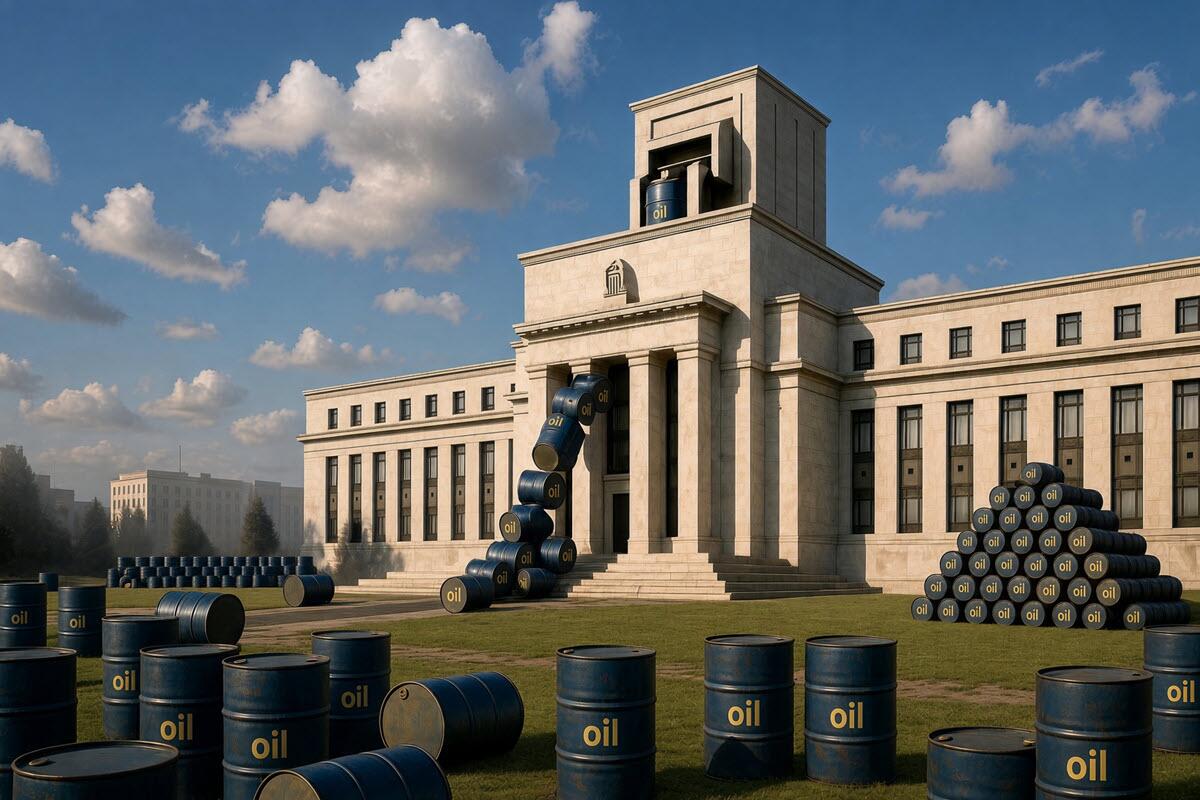
Chicago Fed President Goolsbee just warned the FOMC can’t ignore repeated and persistent supply-side shocks and must respond in a way that will cause economic hardship. However, repeated and persistent supply-side shocks are now the norm, not short-lived, aberrant events.
Putin won the Russian election with a supermajority: fears are escalation is imminent via sabotage in Europe, mobilization, or provocations to NATO. The FT notes a Kremlin-backed forgery scheme moved $6.9bn through global banks, as diplomats blamed France for an EU deal to renew 3,000 Russia sanctions listings lapsing. Trump pressed Zelenskyy to stop hitting Russian refineries, stressing it’s about “diesel, diesel, diesel.” CIA boss Ratcliffe also met with him. Trump additionally announced a “massive” Belarus potash deal to undercut trade with Canada, yet will open two new military bases in Greenland, which Russia will see as a provocation.
Iran, on high alert, threatened to use new weapons vs. new targets if the US escalates. The US says anyone servicing Iranian airlines will be cut off from the dollar system from tomorrow. Gulf states are urging a reset with Iran yet are elsewhere reported to be planning joint military action with the US and Israel. The Houthis are pushing for control of Yemen’s highlands as Trump is said to have called off strikes, likely to keep pressure on the Saudis to join a bigger push. The UK is offering to help the Saudis via air-to-air refuelling, which isn’t much direct help even if it places the UK on the Houthis hit list: PM Burnham has made longer public statements on how to refuel via a cup of tea than on this issue. The EU’s Kallas and Italy urged the EU to reinforce its Red Sea Aspides naval force, as nearby seven Ethiopian rebel groups formed a new anti-government alliance, worsening the geopolitical picture further.
Despite two more tankers being hit, oil is flowing from Hormuz, expensively, and refined products aren’t, making them even more expensive. With VLCC oil tanker daily rates top $1.2m vs. a normal $40,000 – $100,000 and order books are constrained by global shipyard capacity, commodity trader Trafigura just launched a new ocean carrier of its own, Volare Shipping. The US is proposing a $5bn kickstart fund to rebuild Gulf energy sites, but the war must be won first; and global oil and gas discoveries have just hit a 40-year low on investment cutbacks.
Germany announced limited fuel price caps and fuel-tax suspensions, France is pushing for similar emergency action on energy prices, and US Republicans are calling to halt diesel exports. The latter wouldn’t be a lasting solution to higher US prices if markets operate freely in an integrated global system, but a hypothetical invocation of the Defence Production Act to ‘manage’ refineries and a geopolitical closed-loop trading bloc could work such that some have much lower energy prices, others much higher ones.
At which point, consider if we are seeing global bifurcation into blocs, why should the energy sector operate as a ‘one world’ system? Why wouldn’t it be bifurcated to benefit those with energy vs. those without? “Because markets?” Why? “Because war?” Those without energy surrender, not fight. Also note if one holds the Americas’ and Middle East’s oil production and refining, one effectively controls oil; and if one holds the Americas’ and the Middle East’s are on fire, then in *relative* terms, the Americas are winners… and many others are the losers.
Meanwhile, the US coast guard is watching a Chinese marine presence off Alaska, as the US, Japan and South Korea launched joint economic-security talks before the Trump-Xi summit.
Ahead of it, Chinese rare-earth shipments have dropped 20% month-on-month, showing Chinese leverage. Yet USTR Greer suggested the US could support a bilateral trade truce extension of just 3-6 months rather than the end-of-Trump term China wants. That suggests the US has cards to play ahead. Vietnam is also saying a US trade deal is close and denied it is a transhipment hub for Chinese goods. Watch that space closely.
Despite the headlines, perhaps pay less attention to Canada extending an easy-to-say-hard-to-deliver ‘unique relationship’ offer from the EU to the UK,… and to Brazil and Kenya. That’s likely to prove emotionally appealing, realpolitik-naïve middle-power gobbledy-‘BEUKCUK’. Indeed, Mexico is close to agreeing to buy more US goods and fewer from other countries under a new USMCA. That weakens Canada’s negotiating position along with the US-Greenland security deal and the one for Belarussian potash.
Against that bifurcating backdrop, the ECB rolled out a digital euro in wholesale financial markets via its new Pontes (“bridge”) scheme for banks. This new pipe in Eurozone financial plumbing allows tokenised asset transactions to settle using money issued by the ECB, where private distributed ledger technology platforms can now access the Eurosystem’s TARGET services. What is that a bridge towards and what’s the real Pontes? We shall see.
By contrast, after Congress stalled the CLARITY Act, which would have accelerated the global roll-out of US dollar stablecoins, a Strategic Working Office for Rapid Deployment (SWORD) has opened at the International Development Finance Corporation tasked with “high-impact investments that advance US foreign policy, development, and national security priorities.” SWORD might use drops of USD stablecoins to build bridges, or demolish them, in key geopolitical and geoeconomic areas… like the energy sector(?)
So, back to central banks: is it better to make a bad situation worse with higher rates, or watch inflation move further above target? What is a 25bp hike going to do about a VLCC daily rate up 30-40X normal besides impact a housing or corporate loan holder already dealing with the sharp end of that daily rate increase? There is no ‘good’ choice, only bad ones – and in many senses.
Politically, we just saw another German election result where the far-right and far-left trounced the centre, and both populists are on the ascendancy more widely. Chancellor Merz has pledged a “reset” but admitted German conservatives don’t have the “answers.” But who does? The centre was built for a paradigm that arguably no longer exists. More rate hikes, or inflation, into that mix and then what? Australian consumers’ mood is sinking as RBA rates are rising, with another hike whispered for next week as Governor Bullock spoke of a “wild ride” and “limiting indirect effects of supply shocks” today – and the populist One Nation Party’s electoral fortunes are rising with it.
The key point is if the wars vs. Russia and/or Iran were over, energy prices would be lower, so would inflation, and rates could then sustainably follow. Until that happens, it’s hard to make that case. If so, how could the wars end? By the West losing – but the consequences are unacceptable to it. By Russia and Iran losing – but the consequences are even more unacceptable to them. That implies Goolsbee’s “repeated and persistent supply-side shocks” are here to stay, or at least that things will get much worse before they get better.
Then recall central banks were created specifically to finance governments fighting wars. That’s what the Bank of England was set up to do vs. Napoleon, for example. That’s what they also did in WW1 and WW2, and in the US case right up until the Korean War.
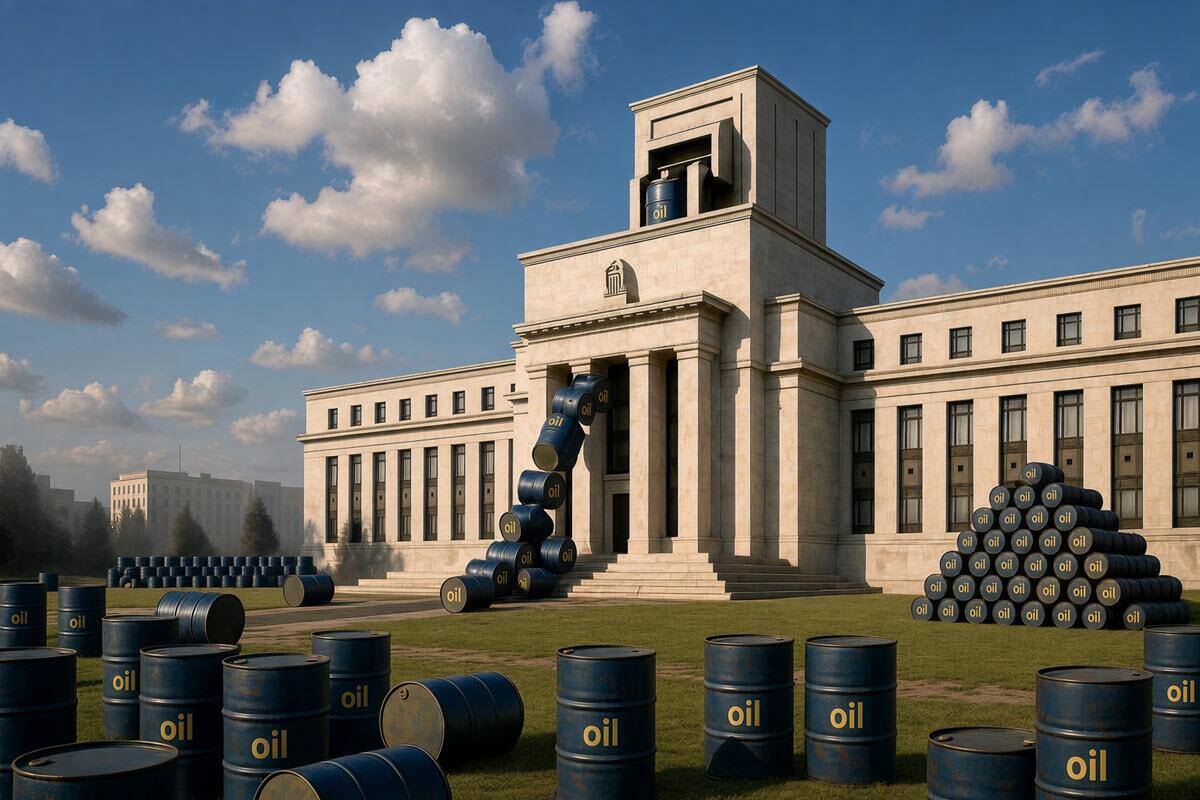
The key question is perhaps how long until a central bank recalls another way to deal with persistent geopolitical supply-side shocks is to help its government achieve ‘resilience’ via regaining physical control of supply chains. That’s what most Developed Markets are supposed to have the power to do when Emerging Markets do not. Such action would be a bridge to a huge structural shift; so would a lack of such action “because markets” or due to a lack of power.
Tyler Durden
Tue, 09/22/2026 – 10:30

