

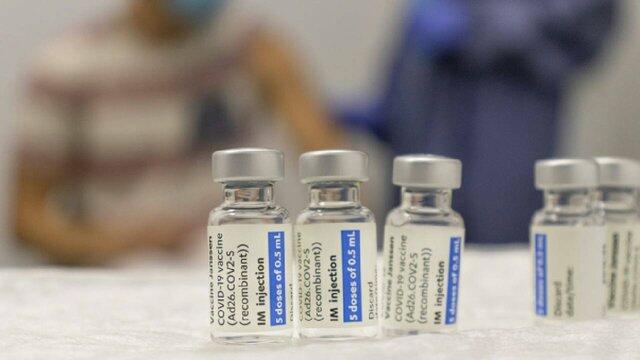
Nurse Deemed ‘Not Disabled Enough’ For Payout After COVID Jab Paralysis
Authored by Steve Watson via Modernity.news,
An NHS nurse in the UK has been denied compensation despite being permanently damaged by a COVID vaccine during a trial.
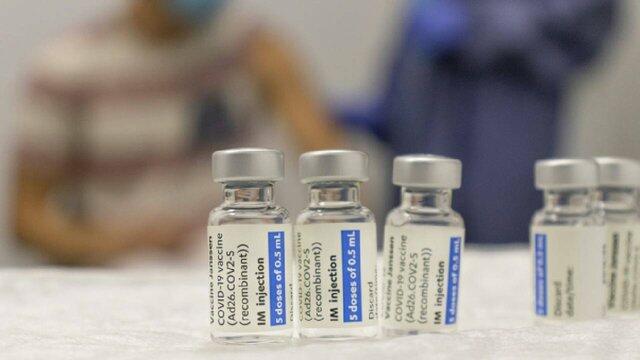
Marie-Claire Hoyle, who volunteered for the AstraZeneca COVID-19 vaccine trial in 2020 developed transverse myelitis two weeks after her second dose, temporarily shutting down the global trial.
The qualified advanced nurse practitioner and NHS England’s network manager for high-consequence infectious diseases, lost the use of her hands, became numb from collarbone to thigh, and still carries permanent spinal cord damage visible on MRI. The Vaccine Damage Payment Scheme acknowledged the vaccine caused her condition yet refused the £120,000 one-off payment because her disability improved below the rigid 60% lifelong threshold.
Nurse struck by rare condition linked to Covid vaccine ‘not disabled enough’ for compensation https://t.co/wuobqdFmB0
— GB News (@GBNEWS) October 16, 2026
Hoyle that’s related how she was on shift when pain hit her neck and spine, spreading within an hour into her shoulders and hands. “I lost the ability to use my hands, I couldn’t hold a pen, I couldn’t hold a toothbrush. I was completely numb from my collarbone down to my thigh level because the signals from my spine and brain had been damaged.”
An MRI confirmed transverse myelitis. The trial paused worldwide while her case was assessed; she survived and recovered enough for it to resume. Permanent damage remains. “I’ve had an MRI since and there is still damage in my spinal cord, which will never heal. I have really poor grip in my fingertips, so I constantly drop things. I still have nerve pain down the left side of my arm and numbness across my central chest and that will never resolve,” she further stated.
She received a high five-figure out-of-court settlement from Oxford University. The VDPS, however, ruled she no longer qualified. “They acknowledged that the vaccine caused my transverse myelitis, based on the evidence I supplied with all my medical records, and at the time I was seriously harmed on a value of up to 60%. However, they said: ‘You aren’t now, so you don’t need the payment.'”
Hoyle, a mother of three who later had her youngest vaccinated and says she continues to support vaccines in principle, wants a scalable system matching actual ongoing harm rather than an all-or-nothing cutoff.
AstraZeneca later withdrew its Vaxzevria vaccine worldwide in 2024, officially citing commercial reasons and the shift to updated formulations. The company had already admitted in court documents that the shot can cause thrombosis with thrombocytopenia syndrome. Kate Scott, whose husband was left with permanent brain injury, said the decision looked less commercial and more like recognition that the product no longer sat “within the acceptable safety parameters,” given 445 confirmed VITT cases and 81 deaths in the UK alone. The company maintained the vaccine had saved over 6.5 million lives in its first year.
Baroness Hallett’s COVID-19 Inquiry Module 4 report, published in April 2026, called the scheme “not sufficiently supportive” and demanded urgent reform: raise the £120,000 payment at least in line with inflation (suggesting over £200,000), introduce graduated payments by degree of injury, and scrap or soften the 60% threshold that leaves people with significant neurological damage with nothing.
The government published its response on 16 October 2026, accepting the need for reform and committing to a review to make the scheme “fit for purpose and delivered effectively,” while noting concerns over administrative costs.
A Department of Health and Social Care spokesman offered “deepest sympathies” and said officials were carefully considering the recommendations.
More than 24,260 COVID-related claims had reached the scheme by 30 June 2026, yet only 264 resulted in awards – just over 1%. Roughly 580-603 claims had causation accepted by medical assessors yet failed the 60% disability bar.
Running costs since April 2022 hit £83 million, more than double the roughly £32 million paid to victims. Transverse myelitis was later listed among the vaccine’s extremely rare side effects, and dosing intervals were widened after cases like Hoyle’s.
Officials maintained benefits outweighed risks, but the scheme’s design – built for older industrial-style injuries – fits poorly with the neurological, fluctuating, and sometimes partially recovering harms seen with these products.
Patterns of injury have been gradually acknowledged. Last year, Post-Vaccination Syndrome research from Yale was published, documenting high rates of brain fog, exercise intolerance, extreme fatigue, sleep disruption, tingling or numbness, and confirmed signals for myocarditis, tinnitus, thrombosis with thrombocytopenia, and Guillain-Barré Syndrome.
A Taiwanese study of 467 healthcare workers, all of whom had received at least three doses, found neurological and psychiatric symptoms matching “long COVID” in a group that had never been infected.
Of the 222 with no record of infection and negative nucleoprotein antibodies, more than 30% reported mild fatigue, nearly 10% reported trouble concentrating, and 11.7% reported worsening memory.
The authors noted no statistically significant difference in symptom severity between those with confirmed infection, asymptomatic infection, and those never infected, yet did not examine vaccination as a possible cause.
A South Korean cohort study of more than 8.4 million people, published in Biomarker Research in September 2025, reported associations between COVID-19 vaccination and elevated risks of six cancers.
Booster doses were linked to a 125% increase in pancreatic cancer risk. Prostate cancer risk rose 69%, lung cancer 53%, thyroid 35%, gastric 34%, colorectal 28%, and breast 20%.
The authors stated that “COVID-19 vaccination could be associated with an increased risk of six specific cancer types” and noted that booster doses substantially affected risks for gastric and pancreatic cancers.
In the United States, the picture is similarly lopsided. The Countermeasures Injury Compensation Program (CICP), which covers COVID vaccines, had received 14,250 claims by 1 October 2026, the bulk alleging vaccine injury. Of 8,369 decisions, only 66 had been compensated and 120 found eligible.
A Senate Permanent Subcommittee on Investigations hearing in April 2026 examined VAERS data showing COVID vaccines associated with more adverse events and deaths than all other vaccines combined over the system’s history, including rates 55 times higher for deaths than the flu vaccine. FDA staff had flagged masking of safety signals and were ordered to stop certain analyses.
Myocarditis and pericarditis signals for the mRNA vaccines appeared in Israel within a month of rollout in early 2021. Israel shared the data with the CDC and EMA in February, yet public and clinician alerts came only months later, after most eligible young people had already received two doses.
An Oxford analysis found an eight-fold risk of myocarditis in under-40s within a week of a second Pfizer dose and a 44-fold risk after Moderna. Hong Kong reported a one-in-3,000 risk in adolescent boys after a second dose and switched to a single-dose policy.
A Thai study of teenagers found 29% with signs of heart disturbance after a second Pfizer dose. No comparable reckoning has followed the delayed disclosure.
In Australia, FOI documents showed 35 people died on the same day as their COVID vaccination. The Therapeutic Goods Administration completed causality assessments for only 24 of them and referred none to its Vaccine Safety Investigation Group.
Of more than 1,000 deaths reported to the TGA’s database, only 14 were officially linked to the vaccines. Where timing data existed, one in four occurred within three days and 39% within a week.
Dr Suzanne Niblett called the claim of thorough review “very misleading” when most cases had not been properly analysed. Dr Rado Faleti noted that in the vaccine-injured community, “not a single person reports being followed-up or investigated by the TGA.”
Meanwhile, new Moderna formulations for the 2026-2027 season received FDA approval in late August 2026, 81 days before the scheduled start of the human Phase 3b/4 safety and immunogenicity study.
Legislation introduced in September 2026 would further tilt the process: S. 3323 would require the CDC director to adopt ACIP recommendations unless unsupported by a preponderance of peer-reviewed evidence, while raising the bar for withdrawing recommendations or removing entries from the Vaccine Injury Table.
Hoyle’s case is not isolated. Hundreds of people whose injuries medical assessors linked to the vaccines sit below the arbitrary 60% line and receive nothing from the state scheme, even as the bureaucracy costs more than the payouts.
The inquiry has forced an official admission that the current rules do not match the injuries that occurred. Whether the promised review produces real graduated support or simply more process remains to be seen.
People who stepped forward under official assurances of safety and necessity now face the same bureaucratic gatekeeping that defined the rollout.
Accountability for the injuries, and the freedom to weigh risks without coercion or denial, still lag behind the volume of claims.
Tyler Durden
Sat, 10/17/2026 – 16:00

