

SpaceX Targets 80,000 Cell Sites To Challenge Telecom Giants As Wall Street Weighs In
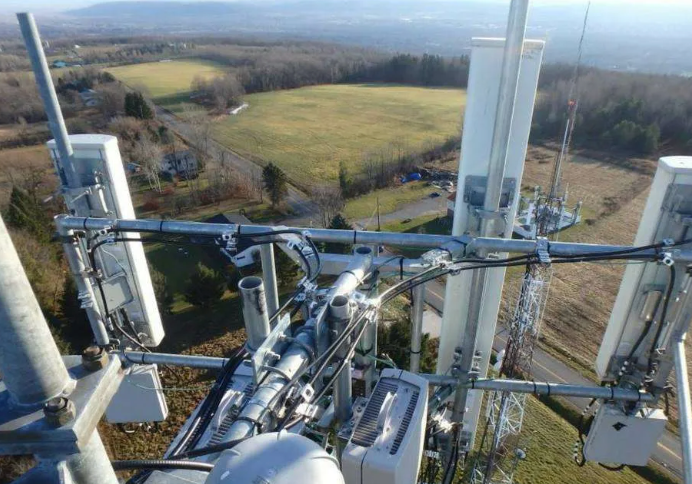
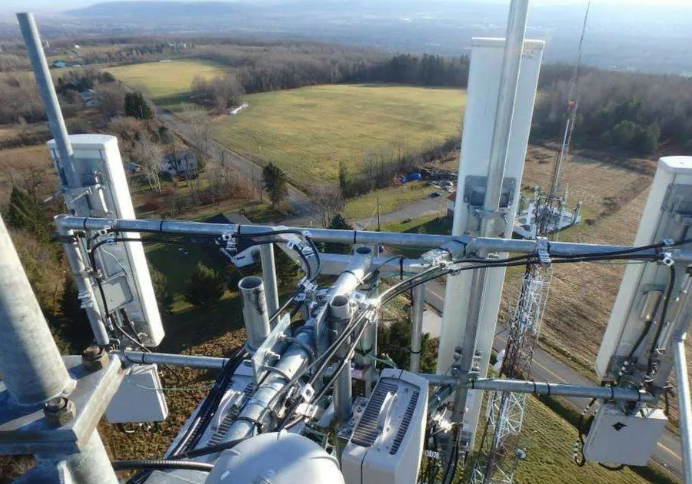
Elon Musk is accelerating plans to build a fourth major nationwide wireless carrier, with SpaceX seeking access to at least 80,000 US cell sites, according to Bloomberg News. The prospect of a new rival to AT&T, Verizon, and T-Mobile lifted tower stocks in premarket trading, while shares of those legacy carriers fell as traders continued to assess that new emerging competitive threat.
The report stated that SpaceX is in talks with a number of tower companies, including Crown Castle, which, along with American Tower Corp. and Vertical Bridge Holdings, is among the largest owners of cellular towers.
“You can assume that we’re talking to all parties,” Crown Castle CEO Chris Hillabrant said Wednesday when asked about discussions with SpaceX, Amazon and other satellite telecommunications providers.
Crown Castle shares jumped as much as 10% in late trading following the report, while AT&T, Verizon, and T-Mobile each fell about 5%.
The report follows news earlier this month that SpaceX acquired low-band spectrum and received Federal Communications Commission approval to launch 15,000 satellites designed to connect directly to smartphones.
This is the last critical piece of the spectrum puzzle needed for SpaceX to provide complete phone coverage in America
— Elon Musk (@elonmusk) October 8, 2026
Leasing tower space would establish ground coverage, including in buildings, under bridges, in homes, and in places where satellite coverage is ineffective. The satellites would help bridge gaps in tower coverage in remote places and areas without obstructions.
“We will be building out our terrestrial networks so there’s broad-based connectivity anywhere that SpaceX and Starlink are allowed to operate,” Musk told investors on an earnings call earlier this week. He said satellite launches and spectrum purchases would put Starlink Mobile on the path to become a major US carrier.
“Whether SpaceX ultimately leases anything close to that figure remains uncertain, but the reported scope suggests a far greater level of commitment than spectrum accumulation alone. AT&T, Verizon, and T-Mobile shares are trading down in after-hours trading, adding to an already difficult year for the group,” Bernstein analyst Laurent Yoon wrote in a note.
Separately, BNP Paribas analyst Sam McHugh offered his first take:
Would this be good enough to compete in wireless?
The 80,000-tower figure is at the upper end of the telcos’ tower counts (TMUS has c. 85k, alongside c. 60k small cells). If SpaceX did build out to this many sites, even with the limited spectrum it has today, the service would be somewhat comparable to that of the existing carriers, given that it would start with no customers loading the network. However, it would not be capable of matching the existing carriers when loaded with millions of subscribers. This also somewhat undermines the argument that SpaceX can have a structural cost advantage by using its satellites for coverage or pursuing a more “femto or small cell” strategy, which, in a roundabout way, is one positive to take from these headlines.
Do we think they will do it?
It depends on what “It” is… Replicating the wireless carriers’ networks (towers, spectrum, distribution, etc.) from scratch looks like a mammoth exercise, with very questionable payback for the company. So why would SpaceX do this? We do think it has a long-term ambition to build a more upload-focused network to complement its satellites that can provide connectivity to edge / physical AI (cars, robots, etc.). If, along the way, it can make enough noise and scare a telco into giving it an MVNO, then that would be a big win for SpaceX.
Would they buy instead?
In addition, by talking down the industry and depressing multiples, SpaceX creates additional optionality/upside on potential acquisitions, which, in our view, is a much clearer path to value creation (with TMUS potentially being the most credible target). It also recently acquired X and Cursor, showing it is more than willing to buy to accelerate its ambitions.
MVNO pressure?
As we wrote in Further SpaceX Spectrum Thoughts, our view is that we are past the point at which one of the carriers would fold and give SpaceX an MVNO. All that would do is help facilitate a more economical buildout for SpaceX, as it would allow the company to start generating revenue today, prove the business case, and then begin targeting investment in areas with high subscriber density. Without an MVNO/roaming deal, however, SpaceX will have to substantially build out a network before having a reasonable product proposition for customers, massively depressing the IRR.
What to watch for next?
-
Given that the telcos are unlikely to budge and SpaceX has time on its hands (buildout obligations are long-dated), we continue to think this uncertainty will persist until at least the Upper-C band auction in April next year, when SpaceX will have the opportunity to put incremental capital to work to prove its commitment to a consumer-focused mobile network (as opposed to its existing spectrum holdings, which are probably better suited to an IoT-like service).
-
If SpaceX does sign a tower deal, how many sites are covered and for what duration will be critical to assessing its ambitions.
-
Another spectrum deal (SpaceX or someone else). There are pockets of spectrum still out there that SpaceX or the telcos could move on before the C-Band auction (details at the bottom of this note), and the risk here is that SpaceX acquires more, or a telco acquires more defensively.
-
SpaceX touted the possibility of hosting an investor call to outline more specifics of its wireless ambitions soon. No firm event has been confirmed yet.
-
We continue to field questions around “Title 3 data roaming” requirements in the US, a topic we addressed earlier this year. See SpaceX’s Backdoor MVNO: Expert Call Takeaways. We think this is a dead end for SpaceX. Still, after the midterms, we do see a scenario where SpaceX potentially tries to bring legal action against the telcos on the basis of a “concerted refusal to deal”, or perhaps attacks the satellite JV (SpaceX) as a way to exert more pressure. Indeed, the SpaceX CFO referred to the telcos as a cartel at a public investor conference in September.
Tyler Durden
Fri, 10/23/2026 – 08:35

