

EU Climbs Escalation Ladder With Beijing, Plans Wider Curbs On Chinese Imports
Europe’s political elite is belatedly confronting the electoral cost of deindustrialization, as right-wing gains in local elections expose surging voter anger over globalist policies that have crushed the industrial base. The push to curb cheap Chinese imports suggests Brussels is scrambling for political survival, as Nomura analysts recently said elections across the continent over the next year and a half are expected to shift right.
Bloomberg reports that the EU is preparing restrictions on imports of chemicals, furniture, and machinery from China, expanding efforts to shield domestic manufacturers and narrow the massive trade deficit with China, which stands at $404 billion. The report cited people familiar with the matter.
“Our industries have called for action and we have heard them, and we will respond, including some more safeguards,” Commission President Ursula von der Leyen said earlier this month.
The proposed safeguards build on earlier news that Brussels aims to implement the Chinese hybrid vehicle cap in December to shield the EU’s crumbling automotive industry, as cheap overseas cars gain market share and leave domestic companies like VW laying off tens of thousands of workers.
Brussels has finally chosen to move up the “escalation ladder” with China, risking retaliation from Beijing as its own political power appears to be eroding across Europe after decades of backfiring globalist policies that have left the continent with a hollowed-out industrial base.
EU trade chief Maroš Šefčovič is expected to discuss trade with Chinese counterparts early next year, as Brussels must perform a delicate balancing act to avoid provoking Beijing into imposing export restrictions on critical materials and permanent magnets.
Earlier this month, we first reported “Better Late Than Never?” and our verdict was “just 10 years too late.” The more interesting question is how far Brussels is willing to climb up the escalation ladder with Beijing.
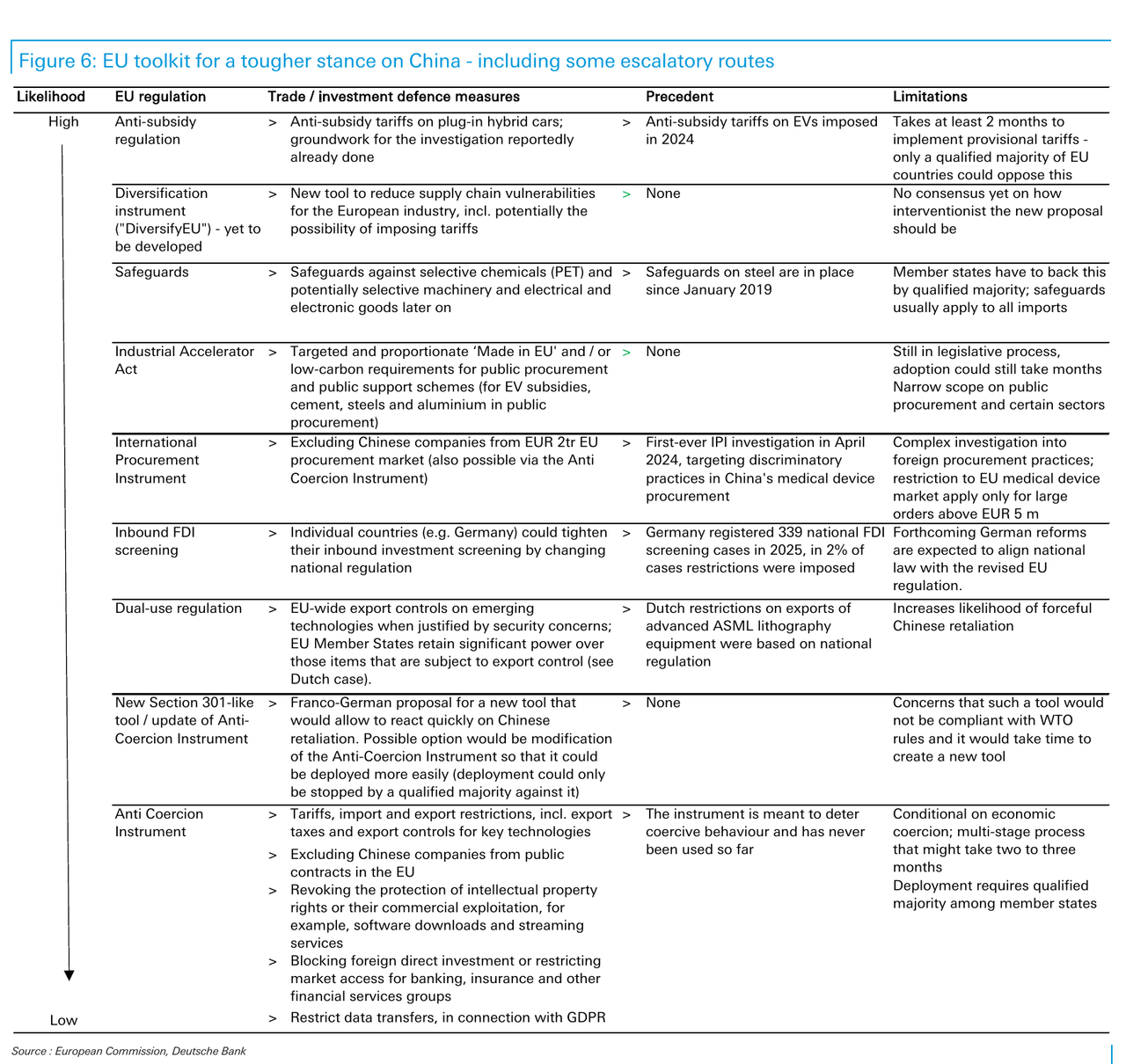
Deutsche Bank’s Marion Muehlberger answered that in a ten-question Q&A published earlier this month, ahead of Šefčovič’s trip to Beijing, titled “Crunch time for EU-China trade relations” (available to Pro subscribers). The centerpiece is a single table, which may be the most useful cheat sheet on EU-China trade policy we have seen: every tool Brussels could deploy against Beijing, ranked from most to least likely, with the precedent and the catch for each one.
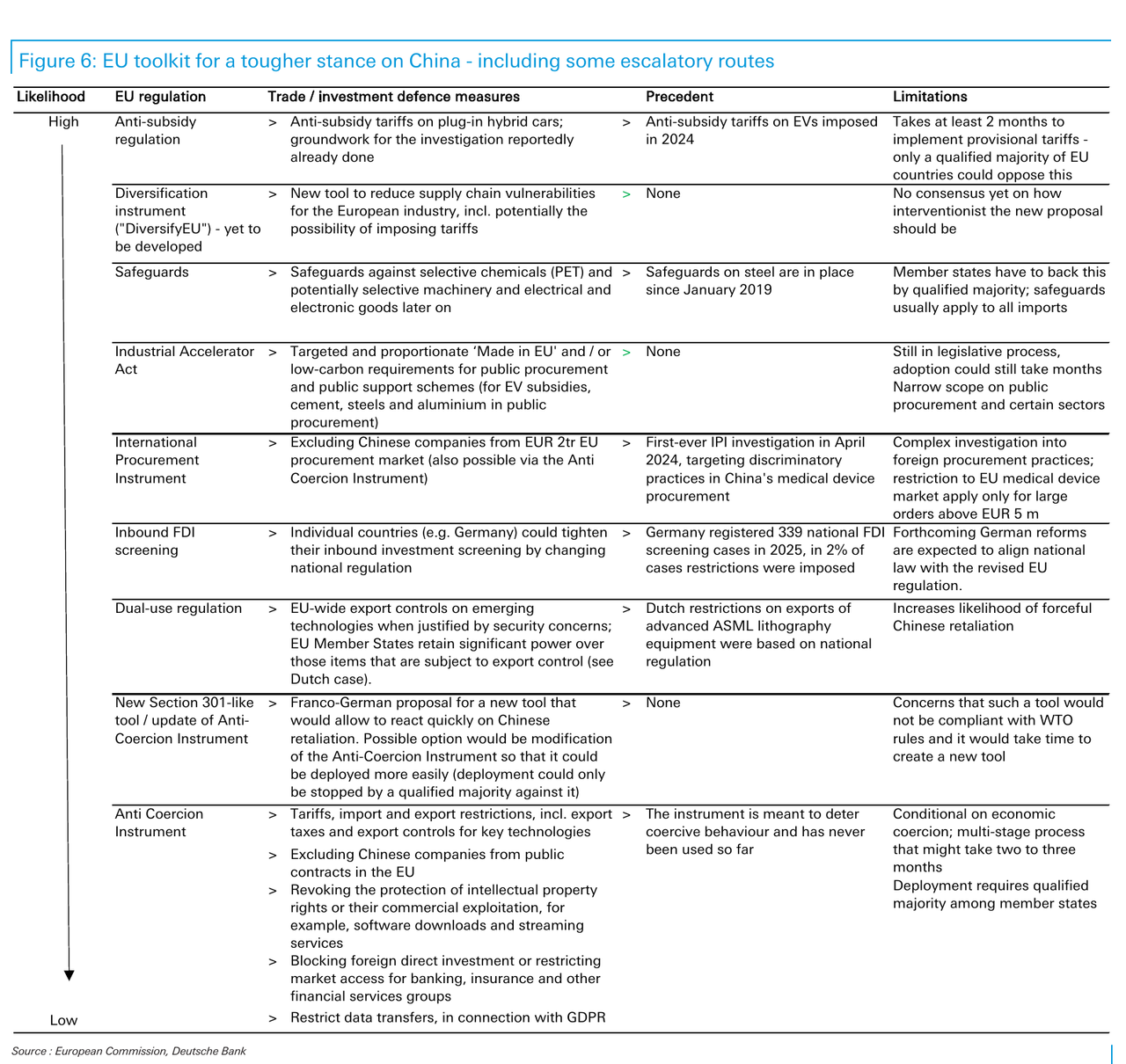
So far Brussels is willing to raise tariffs and cap imports. But the higher it climbs up the escalation ladder, the greater the risk that Beijing pulls the rare earth supplies, starving the very factories European elites are scrambling to save.
Tyler Durden
Mon, 10/26/2026 – 08:20

