

Showdowns
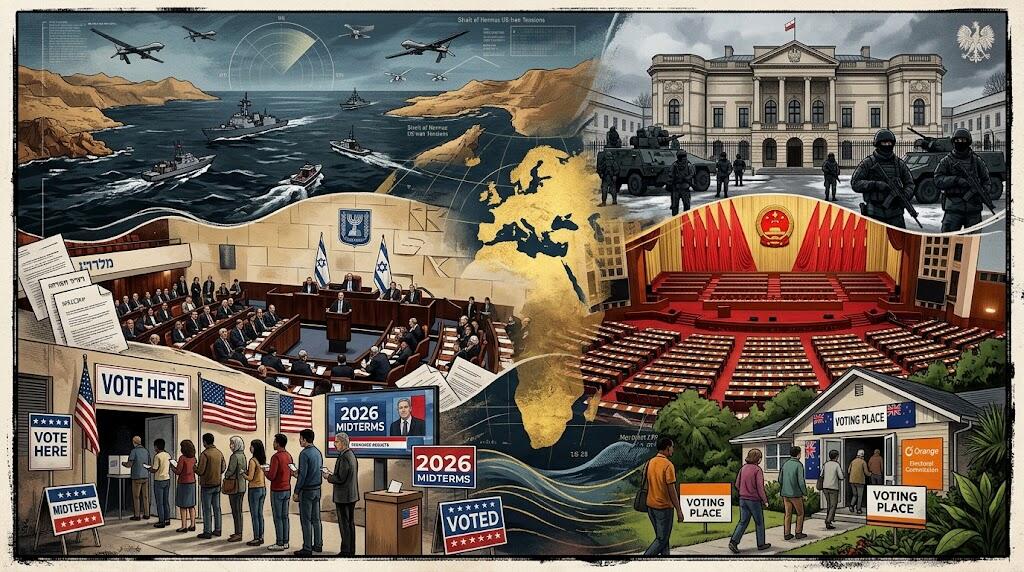
This week is shaping up as a series of showdowns.
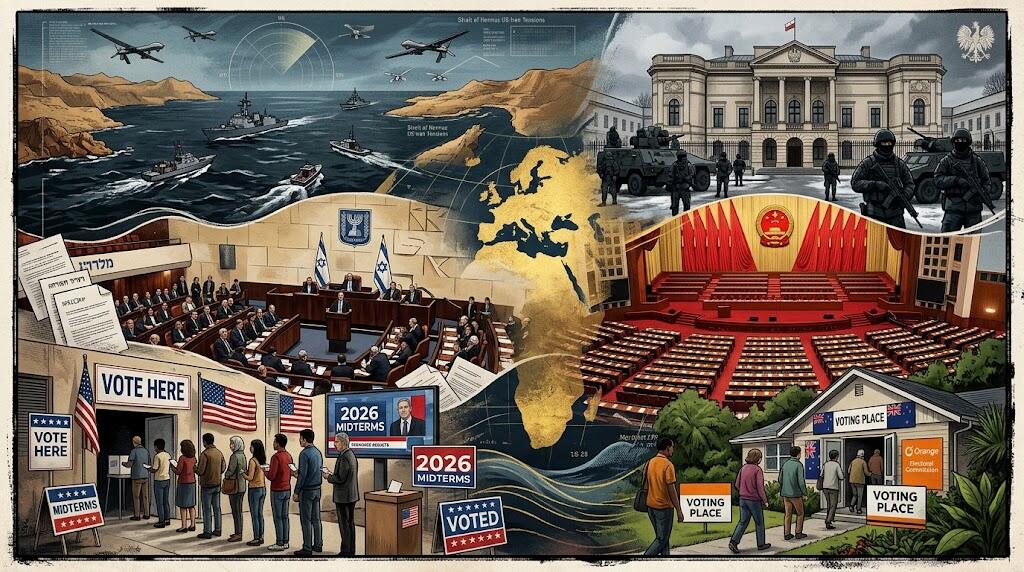
In the United States we have the midterm elections where prediction markets favor the Democrats overwhelmingly to take control of the House and, less assuredly, to also net control of the Senate.
Flowing on from the midterms we see heightened risk that President Trump will make good on his hints to resume the war against Iran. Belligerents on both sides have commented in recent days that this time the gloves will be off and the list of targets expanded. Active Brent crude futures settled 2.4% higher on Friday but have opened a little softer this morning. US equities were dumped mightily with the NASDAQ composite index seeing particularly heavy declines on Friday, but Asian stocks are mixed this morning. Treasury yields were steady despite a strong lead from Europe where most sovereign yields (with the exception of France, Italy and Greece) finished lower. France’s credit rating was placed on negative outlook by Fitch.
Democratic Senator for Connecticut and vocal Trump critic Chris Murphy was just hospitalized after suffering an apparent stroke. Over the weekend he told media that he had been briefed on the administration’s new attack plans, calling them “insane” and suggesting that they would lead to “devastating escalation and the likely destruction of our commitment to the rule of law”. Iranian figures have said that “there are no geographical limitations” to retaliation if the war restarts. That is seen as a warning that not only Gulf countries would be targeted, but possibly also European countries involved in assisting the US war effort. Cyberattacks are also considered likely to be part of any response.
Israel, the US’s partner in war against Iran, is mired in political horse trading following last week’s indecisive election result that saw incumbent PM Netanyahu’s bloc lose its majority in the Knesset. Netanyahu was reportedly champing at the bit to launch strikes on Iran before the poll but is rumoured to have been reigned in by President Trump and resistance from the chief of the IDF.
Axios reports that Netanyahu is now urging Trump to strike immediately after the midterm elections, but negotiations are underway behind the scenes in a renewed attempt to reach a deal that avoids war. Trump will want concessions on Iran’s nuclear program; Iran won’t want to give them. Iranian Foreign Minister Araghchi says that a plan to re-open Hormuz within two days (the offered timeline seems to be getting shorter and shorter) is being explored, but without progress on the nuclear issue it seems unlikely that the US would give up its leverage over Iranian oil flows.
The Israeli opposition bloc, led by former IDF chief Gadi Eisenkot, failed to secure sufficient seats to govern in its own right and must now contemplate a deal with Arab parties or with ultra-orthodox Jewish lawmakers to secure minority government. Both options are fraught with difficulty. In the case of the former, even if an agreement with Arab parties could be struck, it would require opposition leaders to renege on campaign promises not to form a government with those parties. In the case of the latter, Eisenkot would likely need to drop his requirement that members of his government accept mandatory military or national service – which he won’t want to do.
Israeli President Herzog has reportedly invited Netanyahu and Eisenkot to talks on Wednesday in the hopes of forming a national unity government. That seems unlikely to occur as Netanyahu – the leader of the party with the largest seat count – would probably not accept an opposition figure replacing him as Prime Minister, while opposition figures would find it difficult to comprise on their campaign premise of ousting Netanyahu. It could be the case that Netanyahu’s best play is to bide his time, allow opposition negotiations to form government to fail, and hold out for fresh elections. Of course, events may well have overtaken us by then.
Meanwhile, Poland is facing something of a constitutional crisis following moves by Prime Minister and former President of the European Council Donald Tusk’s government to deploy troops to secure the country’s constitutional court building. Polish President Karol Nawrocki was en route to Senegal for a trade mission at the time and dramatically instructed his jet to turn around and return to Warsaw to address the unfolding crisis.
Tusk and his allies have been critical of the makeup of the constitutional court, arguing that some members were appointed illegitimately by the previous Law and Justice Party government in 2015. Four of six new appointments to the court made by Tusk’s government have not been recognised by sitting members, who argue that the constitutional requirement to take oaths of office before the President have not been fulfilled. Right-wing figures have accused Tusk of launching a judicial coup, while Tusk and his allies have similarly accused Nawrocki and opposition figures of being too close to Russia.
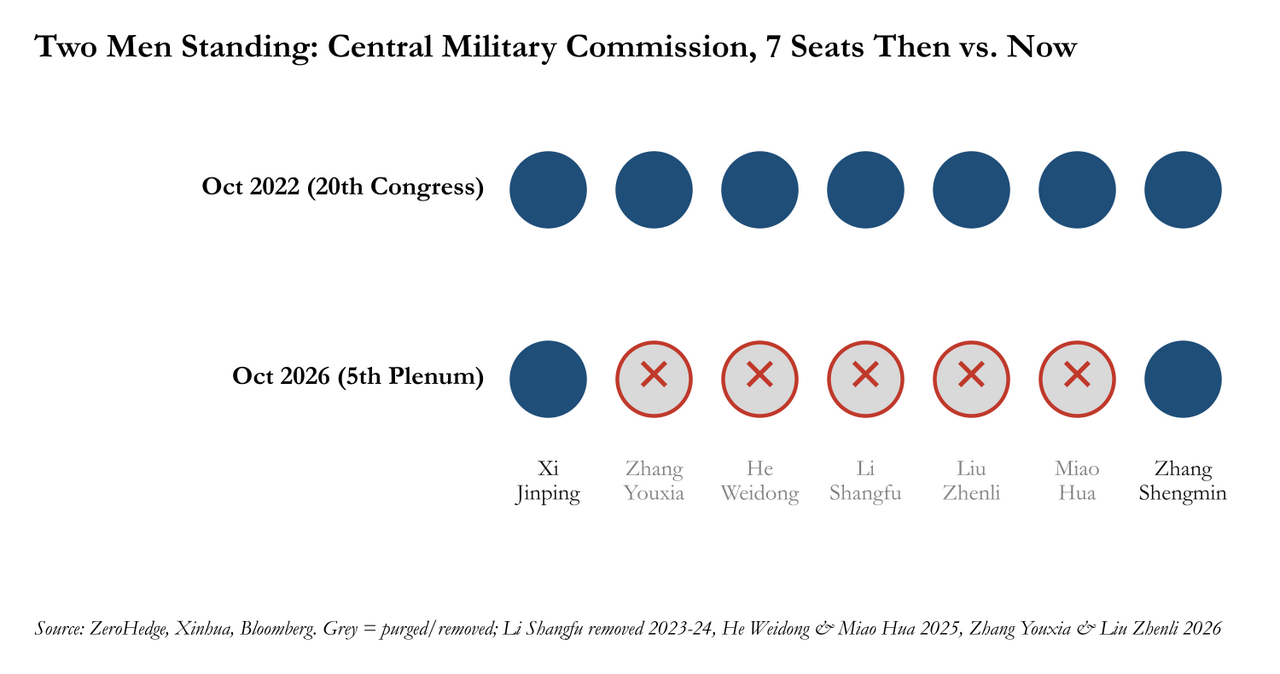
In China last week’s plenary session of the Communist Party’s Central Committee saw its lowest attendance since the Mao Zedong era as President Xi Jinping cracks down on figures accused of corruption. The Wall Street Journal reports that up to a quarter of attendees that were on the Central Committee when the current term began four years ago were absent from the meeting. Many of those have been ejected in a series of purges that have seen Xi consolidate his grip on power.
China’s seven-seat Central Military Commission – the supreme leadership body of the Chinese armed forces – currently only has two serving members: Chairman Xi himself and Vice Chairman General Zhang Shengmin. General Zhang was this week appointed to China’s twenty-member Politburo. The scope of the purges at the top of China’s military hierarchy have raised questions among some analysts regarding China’s preparedness to fight a war over Taiwan in the near term.
Meanwhile, in New Zealand voters are preparing to head to the polls this weekend for a general election. The governing right-wing coalition of the National, ACT, and New Zealand First parties is favoured by prediction markets to secure a second term, with most recent polling pointing towards the right-wing bloc extending its advantage over a presumptive left-wing bloc led by Labour’s Chris Hipkins.
A shock decision by the Reserve Bank of New Zealand last week to leave the Official Cash Rate unchanged at 2.75% may prove a handy fillip for the incumbents. The opposition Labour Party has pledged to reinstate the RBNZ’s ‘maximum sustainable employment’ mandate which was abolished by the present government when it came to power to narrow the central bank’s focus to fighting inflation.
If the right-wing bloc is to succeed, tensions will remain over trade, immigration, climate policy and the degree of government intervention in markets. The Libertarian-oriented ACT party favours broad-based deregulation and market-oriented approaches, the more conservative New Zealand First sees a much greater role for the state in directing economic activity and social issues. Here, just as elsewhere, reconciliations are never easy.

