

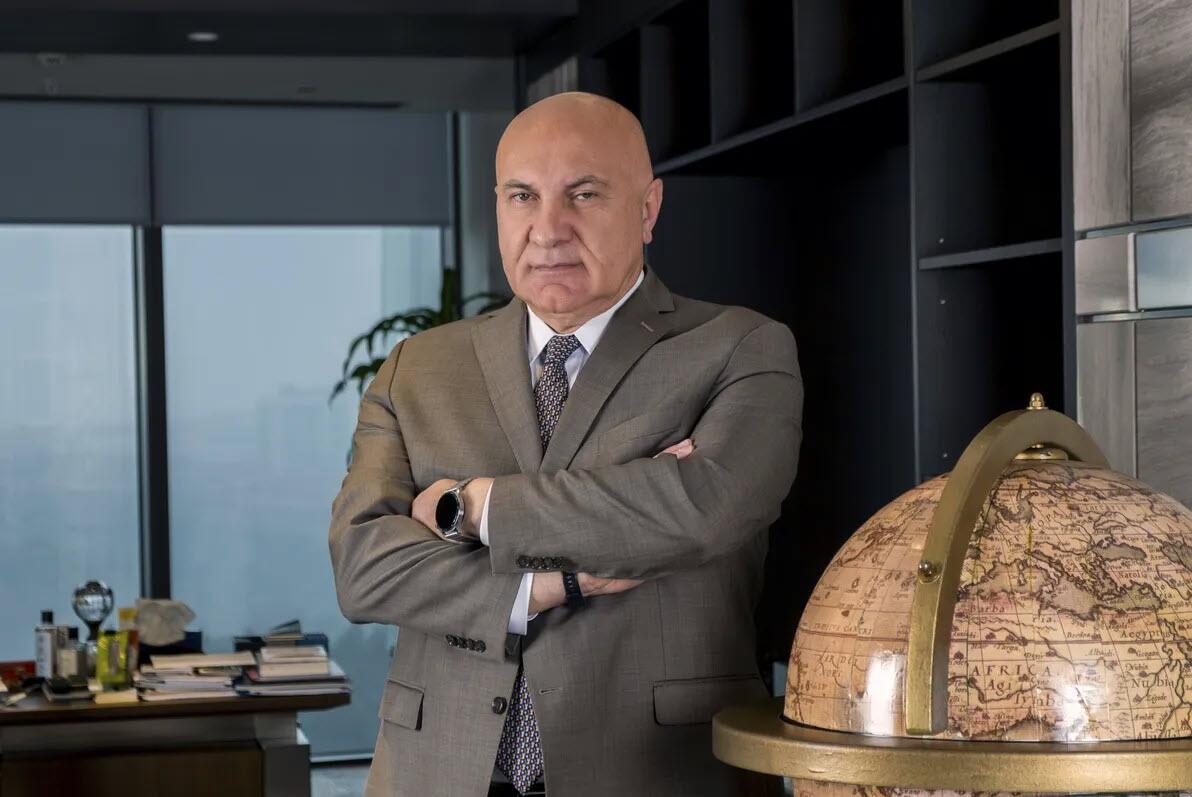
Kazakhstan’s Copper Heist? Turkish Tycoon Readies Arbitration After Astana Gives His Mines To A Week-Old Startup
Kazakhstan has spent the past four years telling foreign investors that the Nazarbayev era of cronyism is over.
A Turkish billionaire who sank roughly $200 million into two Kazakh copper mines is about to test that claim in front of the World Bank.
According to Turkish business outlet Patronlar Dünyası, Robert Yüksel Yıldırım’s Turkish-Dutch CoreX Holding is preparing to file at ICSID, the World Bank’s International Centre for Settlement of Investment Disputes, after Kazakhstan’s government sat on its acquisition of the Koktaszhal and Kyzylshoky copper deposits in the Karaganda region for two years… and then handed the subsoil rights to a local company that had existed for about a week.
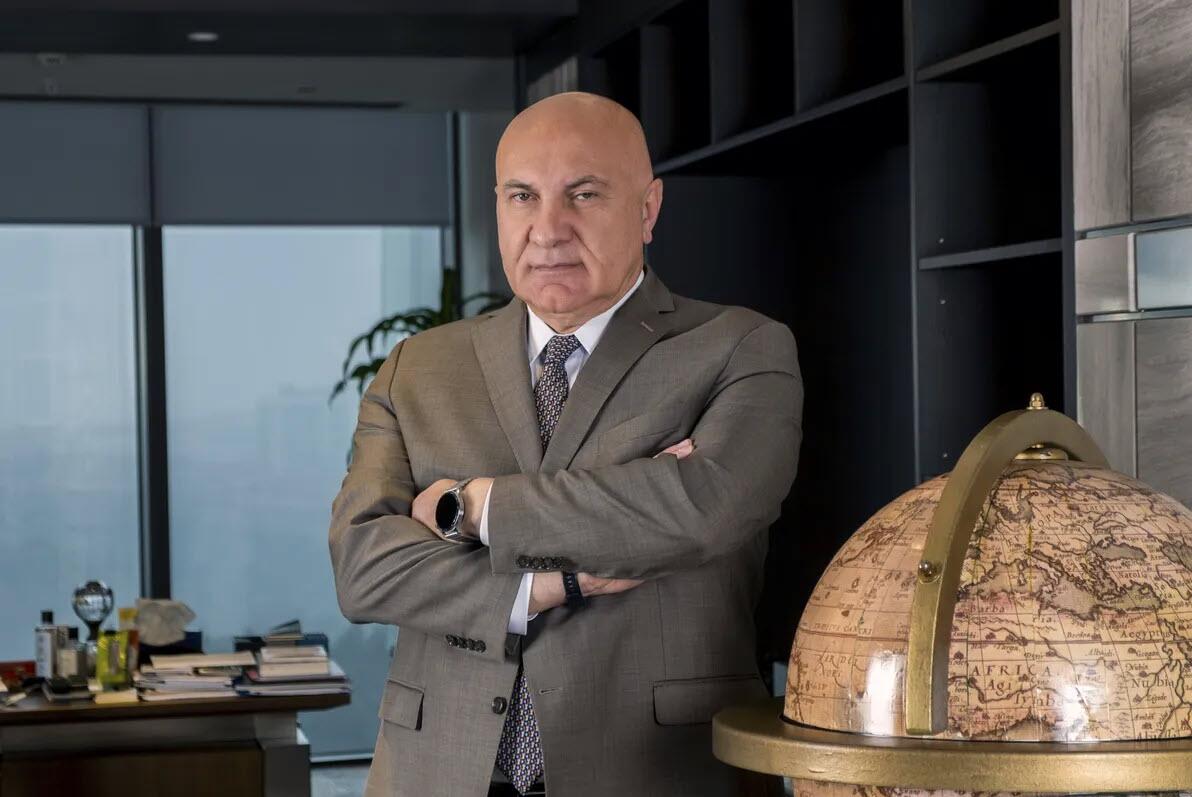
CoreX says it is preparing claims both in Kazakhstan and internationally, demanding either a reversal or compensation for what it calls, without much ambiguity, an expropriation.
Two Years Of Paying Someone Else’s Bills
The backstory goes like this. In January 2024, CoreX signed an agreement to buy 100% of Altai Polymetals LLP and Terekty Ken Baiytu LLP, the operators of the two deposits. The companies were, to put it gently, not in great shape: debts near half a billion dollars, including to the EBRD, which had been an early lender to the project.
The deal needed one thing to close: Kazakh government approval of the change of ownership. Which, as it turns out, never came.
So CoreX did what any buyer does with an asset it doesn’t yet own: it paid for everything anyway. Over roughly two and a half years, the company says it covered miners’ wages, settled debts to third parties, paid operating costs and even paid fines imposed by the Kazakh state on the companies it was still waiting for permission to buy. The total comes to somewhere between $180 million and $200 million, depending on whose count you use (an industry memo circulating on the dispute says $180 million; Patronlar Dünyası says “nearly $200 million”).
Put differently, CoreX was keeping the lights on, and the government was cashing the checks for the fines.
The “Council For Attracting Investments” Attracts An Investor
Then came the end of March 2026, and a meeting of Kazakhstan’s Council for Attracting Investments, a name which, as one observer quoted in the memo dryly noted, “may prove to be ironic.”
The council was chaired by then-First Deputy Prime Minister Roman Sklyar, one of the most senior ethnic Russians in Kazakh politics. It instructed the Ministry of Industry and Construction to ensure that a company called Altyndara Ltd. receives the subsoil-use rights to Koktaszhal and Kyzylshoky “on a priority basis.”
And when the Investment Council takes up a project, its decisions typically also tell government agencies to fast-track environmental permits and land allocations, give priority access to the electricity grid and extend other preferences. In other words, the new owner gets the mines and the red carpet. CoreX, which signed the deal and funded the project for two years, got nothing.
So who is Altyndara?
Well, that is where it gets interesting:
- It was registered at the Astana International Financial Centre about a week before the council met.
- Public corporate records list a single individual as its founder, with no public record of where the money behind the company comes from.
- On April 14, it was publicly presented as the project’s new investor, with plans to spend more than $500 million, process the ore domestically and supply Kazakhstan’s manufacturing and automotive industries.
That is a $500 million plan from a company with no visible funding, no mining track record and a corporate history measured in days. Nothing says “rules-based investment climate” like a week-old shell outbidding a company that already spent $200 million.
Follow The Automotive Industry
The memo points to Altyndara’s director, Farid Alidarov, who previously ran the Lisakovsk branch of Orken LLP, part of the Qarmet Group. Qarmet belongs to Kazakh oligarch Andrey Lavrentyev, who has emerged from relative obscurity to become a key player in Kazakhstan’s auto sector (note Altyndara’s stated plan to supply the “automotive industries”). Patronlar Dünyası goes further, reporting outright that Lavrentyev is behind Altyndara and has close ties to the administration in Astana.
The connective tissue, per local commentary cited in the memo, is the “well-established understanding” that Sklyar is Lavrentyev’s administrative patron, sometimes described as his business associate. Local media have called Lavrentyev a protégé of Sklyar. Neither man, as far as we can tell, has publicly addressed the copper decision.
Sklyar, for his part, has done rather well since March: on May 5, President Tokayev appointed him head of the Presidential Administration, effectively the second most powerful office in the country. And in a touch of timing nobody could script, one of his first duties in the new job was to greet Turkish President Recep Tayyip Erdogan at Astana Airport on May 13, about six weeks after his council reassigned a Turkish company’s mines.
We assume the topic did not come up on the tarmac. Or maybe it did, and that is why we are now talking about arbitration.
Kazakhstan Has Been Here Before (And Lost)
CoreX is hardly a tourist. It entered Kazakhstan in 2014 with the Voskhod chrome mine, followed with the roughly $500 million Qazak Soda project, and says that it and its predecessor have invested more than $1.4 billion in the country since 2013 (Patronlar Dünyası puts it at about $1.5 billion), with more than $3 billion planned over the next five years. Yıldırım, who also chairs Turkish football club Samsunspor, is reportedly the single largest investor in Kazakhstan’s mining sector. CoreX has already sent notice to its banks and investors that it will fight.
And Turkish investors suing Kazakhstan is a genre with a track record, mostly in the investors’ favor:
- Rumeli Telekom and Telsim v. Kazakhstan (ICSID ARB/05/16): two Turkish companies lost their controlling stake in KaR-Tel, then the country’s second-largest mobile operator (today’s Beeline Kazakhstan), through Kazakh court proceedings in 2002. In 2008, an ICSID tribunal ordered Kazakhstan to pay $125 million. Astana’s attempt to annul the award failed.
- Aktau Petrol Ticaret v. Kazakhstan (ICSID ARB/15/8): Turkish investors in an oil transhipment terminal at the Caspian port of Aktau said court bailiffs stripped them of their assets in favor of a third party. In 2017 the tribunal held Kazakhstan responsible for the bailiffs’ conduct, which the national courts failed to correct, and awarded $22.7 million (about $30 million with interest and costs). An annulment bid was rejected in 2019.
Here is the important difference. In Aktau, the claimants had to prove that courts and bailiffs acted at the government’s direction. This time, there is nothing to prove: the instruction to hand Altyndara the rights came from a government council chaired by the First Deputy Prime Minister, in writing. The government’s fingerprints are on the minutes.
CoreX also has some choice of venue. Both Turkey and the Netherlands have long-standing bilateral investment treaties with Kazakhstan, and a BIT holds a government responsible for arbitrary action and illegal decisions within its jurisdiction. When the body in charge of the business environment is also the one reallocating the asset, a tribunal probably won’t need long to find the arbitrary part.
“New Kazakhstan” Meets The Old Playbook
The timing could hardly be worse for Astana. Tokayev’s “New Kazakhstan” program, rolled out in 2022 after the January unrest that ended the Nazarbayev era, was sold as a clean break from exactly this kind of insider asset allocation. About 4,000 Turkish companies operate in Kazakhstan, Turkish investment tops $6 billion, and Turkish contractors have completed some $30 billion of projects there. And with copper the metal everyone from Washington to Beijing wants to lock up, Kazakhstan has been marketing itself to Western capital as a modern, rules-based, investable source of critical minerals.
That pitch is a lot harder to make when the case file reads like 1999.
Arbitration would be slow and painful for both sides: ICSID cases routinely take years, and Kazakhstan has historically fought awards all the way through annulment. But CoreX is probably less interested in a 2031 award than in a settlement, and international attention is exactly the leverage that gets one. As the memo puts it, Kazakhstan is “desperate to put the past behind it and present itself as a modern, rules-based, investable country.”
Our guess: Astana quietly finds a “compromise” before the tribunal is even constituted, because the alternative is a very public ruling on whether “New Kazakhstan” is new at all. Then again, the last two times a Turkish investor made this argument, Kazakhstan chose to fight… and pay.

