

Beijing’s Stock Rescue Turns More Desperate: Regulators Reportedly Halt IPOs
China’s version of the “Plunge Protection Team” was back in action on Tuesday.
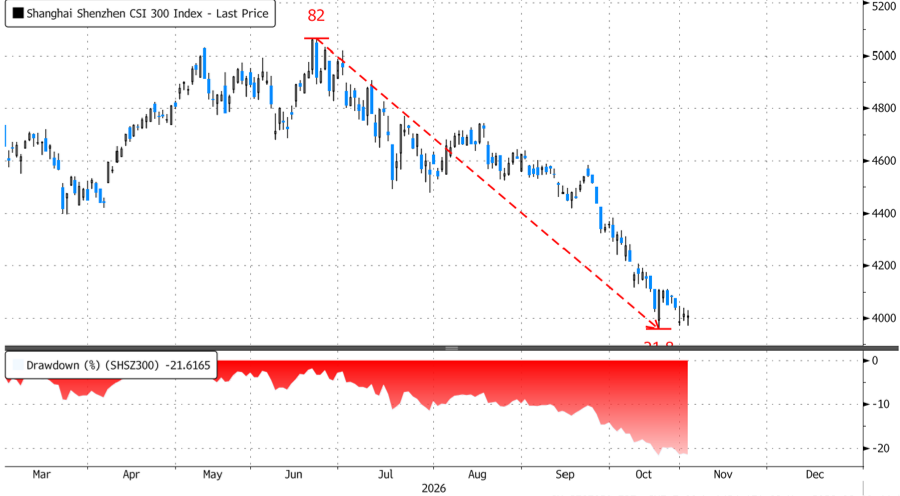
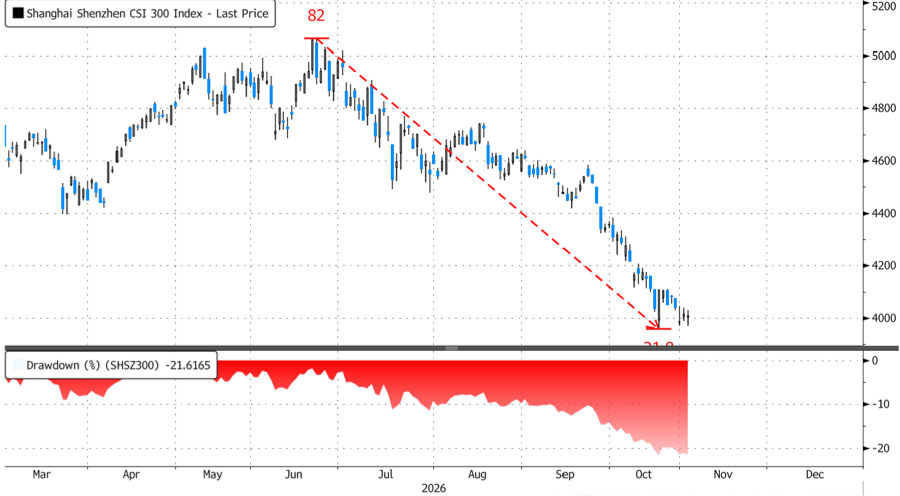
The Financial Times reports that the securities regulator has instructed investment banks to pause initial public offerings, curbing new equity supply. The reported intervention follows a series of measures aimed at reversing the bear market, suggesting Beijing is increasingly uncomfortable with the stock downturn that began over the summer.
The report says that the China Securities Regulatory Commission delivered informal “window guidance” in meetings with major investment banks over the last few days. The new restrictions would remain in effect until the CSI 300, mainland China’s benchmark index, stabilizes and reverses out of a bear market.
Authorities on Monday announced plans to inject $15 billion through a swap facility. This swap would let brokerages and funds exchange eligible assets for highly liquid central bank assets, increasing their ability to buy equities. State-backed fund purchases of stocks have also occurred, but none have reversed the decline in the CSI 300.
“Chinese regulators reportedly told banks to hold fire on company listings and large share sales in an effort to bolster the country’s struggling stock markets. More sign of coordinated efforts by authorities to stabilize equity market weakness,” UBS markets analyst Jason Cheng wrote in a brief note.
UBS sales trader Lucy Zhang said, “Regulators are encouraging fuller use of the two existing stock-support facilities, which is marginally positive for sentiment and liquidity but it is more about deploying existing policy firepower than fresh stimulus.”
The FT quoted Thomas Mathews, Asia-Pacific head of markets at Capital Economics, who said Beijing’s rescue efforts in stocks were “unlikely to generate a lasting turnaround unless paired with something that addresses the structural challenges more directly.” He said, “That means boosting earnings growth, which in the near term probably means monetary or fiscal support.”
Sam Konrad, investment manager at Jupiter Asset Management, said: “This is an example of why we don’t have a fundamentally positive view on the long-term outlook for Chinese equity markets. It’s a suggestion that Chinese equity markets are reliant on government support to try and boost them.” He added: “Over the long term, Chinese equity markets have been some of the worst-performing equity markets in the world. We think the economic system in China means growth is not translated into earnings growth.”

