

NTSB Finds “Very, Very Significant” Evidence Miles From Doomed Learjet’s Crater
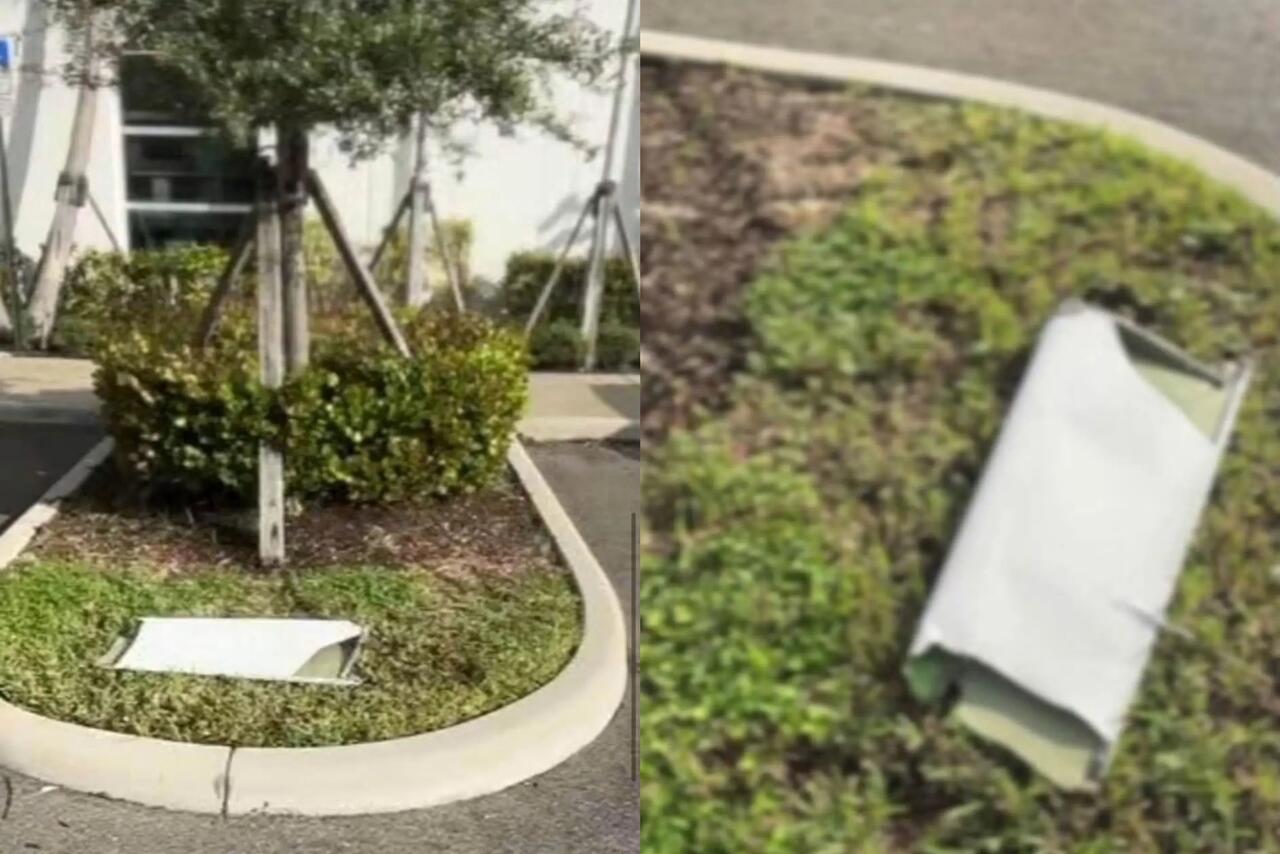
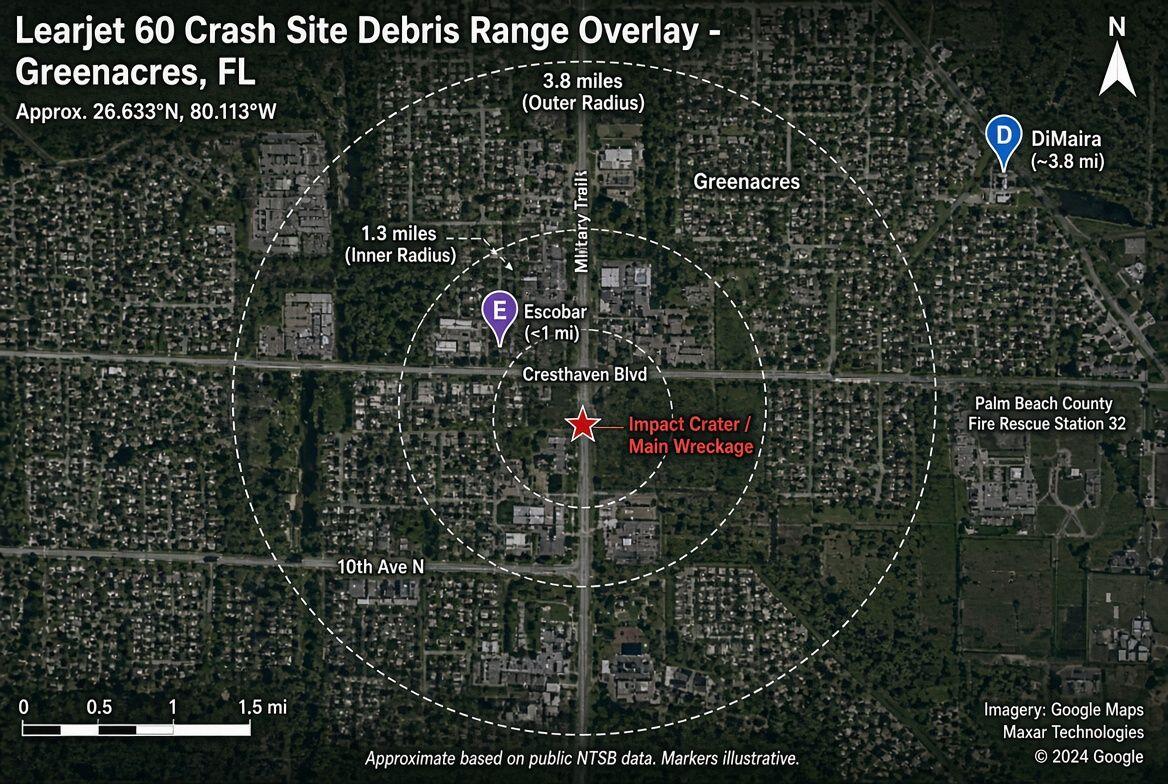
Federal investigators have recovered most of the left elevator from the Learjet 60 that slammed into a Greenacres, Florida, neighborhood on Sunday, in three pieces scattered between 1.3 and 3.8 miles from the impact site, the clearest sign yet that the jet was coming apart before it hit the ground and killed all nine people aboard.
“Finding that piece is a very, very significant bit of evidence,” National Transportation Safety Board member Tom Chapman told reporters Tuesday.
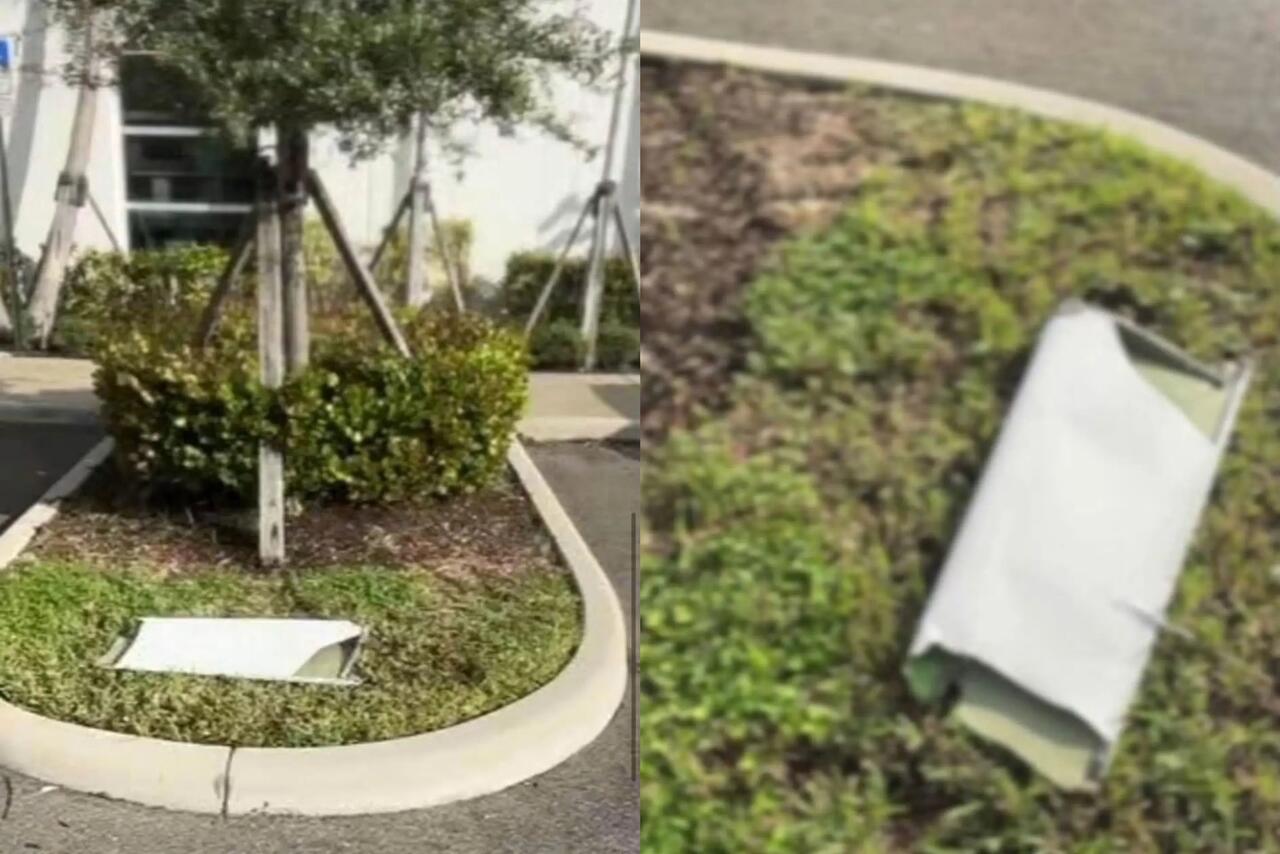
The elevator controls the plane’s pitch, and Chapman said investigators can’t yet say whether losing it caused the loss of control or whether it was torn away by the forces of the dive. “So it’s going to take some more analysis,” he said.
Even if it had stayed attached, Chapman doubted it would have let the crew pull out at the speed the jet was falling. Investigators say the Learjet was going faster than its certified maximum speed, and the FAA said it struck the ground at about 350 feet per second.
As we reported yesterday, a claim was already circulating online that a flight control surface had been found several miles from the crash site, while aviation watchers floated “Mach tuck,” the nose-down pitch a jet can develop as it nears the speed of sound, as a possible mechanism. On Tuesday the NTSB confirmed that pieces of the tail came down miles from the crater.
Still images from video of the final moments appear to show the entire horizontal stabilizer missing from the top of the tail before impact, according to the Epoch Times. Investigators also have “dash cam footage and multiple eyewitness accounts that will help us better understand the condition of the aircraft,” Chapman said.
The crash site sits less than 10 miles from President Trump’s Mar-a-Lago estate. Asked about any link to Secret Service operations, Chapman was blunt: “There is no evidence of connection. Purely coincidence.”
The jet, registered N722BD, left Austin-Bergstrom International Airport at about 10:37 a.m. ET on Sunday, bound for North Eleuthera in the Bahamas. At about 35,000 feet, the crew reported light clear ice and moderate turbulence and asked to climb to 37,000. Less than 30 seconds after controllers approved the climb, they reported descending and called a mayday. “We are in an overspeed condition descending 20,000 feet per minute,” the crew radioed, according to the Associated Press.
As we reported Sunday, Flightradar24’s last ADS-B return put the jet at 8,750 feet, with a peak descent rate of more than 32,000 feet per minute, and a radar analysis placed it in a thunderstorm core near Wellington at about 12:48 p.m. Investigators still can’t say whether it flew through a thunderstorm, and Chapman said weather remains a key focus.

Among the dead are Austin tech entrepreneur Adam Robinson, 45, his wife, Helen Sharp, 40, and their children, Emma, 4, and Charlie, 2. Three other passengers, among them the family’s nanny, were also killed, along with captain Jeff Gregory, 55, and co-pilot Nathalia Gadelha Filgueiras, 20.

The AP reported that Filgueiras’s license was not rated for command of the flight. As we noted yesterday, aviation attorney Zachary Gorwitz cautioned against assuming she was at the controls just because she was the one working the radio. The 22-year-old jet was owned by Aurora Aviation, which does business as Upper Jets, ABC News reported.
On the ground, about 600 nearby residents were displaced, and one man in a vehicle suffered a leg injury. Crews removed an unstable utility pole Tuesday morning so work could begin on the water-filled impact crater, which investigators expected to enter as early as Wednesday. Chapman expects to find more of the aircraft there, likely in small pieces given the force of the crash.
Maintenance records show the jet had a cockpit voice recorder installed, but investigators don’t know whether it was aboard on the final flight. A preliminary report is expected in about a month, and a probable cause determination will take more than a year.
A Learjet has survived losing an elevator before. In December 2006, a Learjet 36 operated by L-3 Communications Flight Capital lost its right elevator while maneuvering off San Diego in clear weather, and the pilot leveled the wings and landed safely back at North Island Naval Air Station.

