

Jensen Huang Had A “Romantic Relationship” With An Alleged Chinese Spy: Reports
The U.S. government believes Nvidia CEO Jensen Huang had a romantic relationship with Alice Huang, a Megaspeed executive whom American intelligence believes was recruited to spy for China’s Ministry of State Security, the Financial Times reported Friday, according to people familiar with the matter.
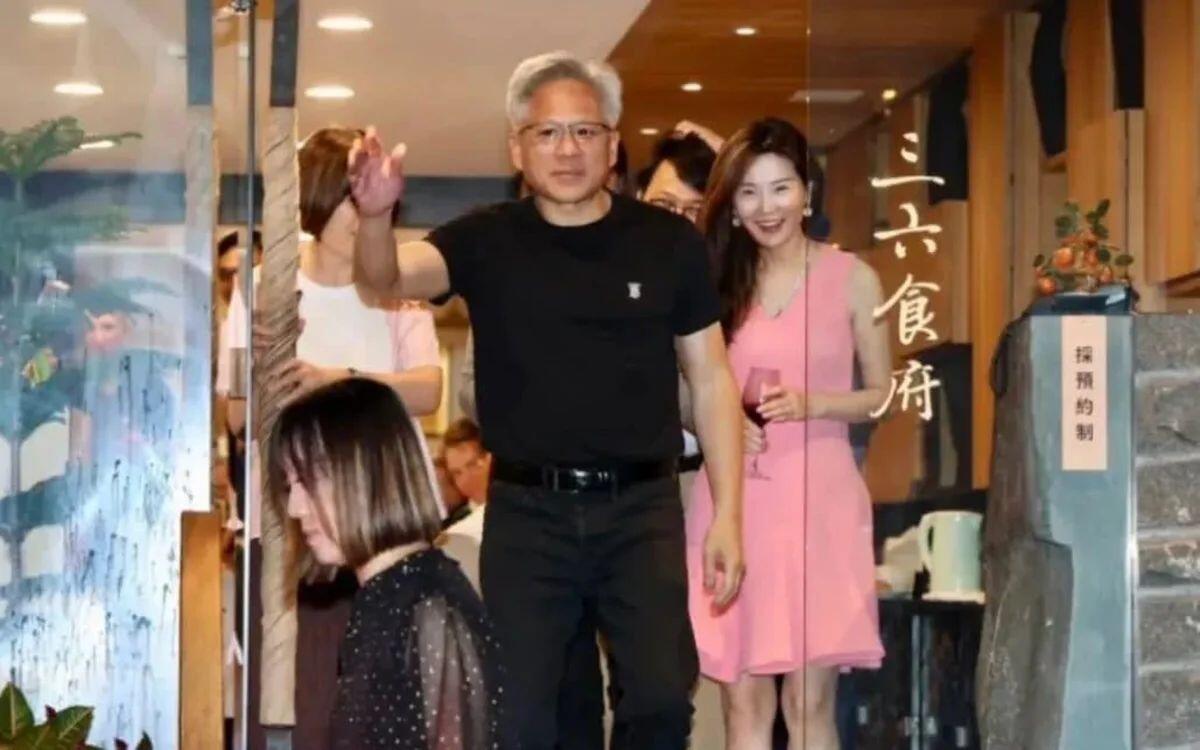
According to the report, U.S. officials wrote a memo earlier this year – based on information obtained by American intelligence, which said Huang had been romantically involved with her. The memo was shared with a small group of top officials shortly before President Trump traveled to Beijing for his summit with Xi Jinping. Nvidia declined to comment on the memo and on the assertions that Huang had an intimate relationship with Alice Huang, who is not related to him.
That came hours after the New York Times reported on a memo that circulated among top policymakers in the Trump administration last spring cited intelligence that Alice Huang was a spy for the Ministry of State Security, Beijing’s main intelligence agency. According to that report, she was recruited to collect intelligence on Huang as part of a drive to learn more about American AI chips and potentially influence the company to push for its most advanced chips to be made available to China.
None of it appears to have cost Huang his access to the president. When Trump flew to China in May, Huang was not among the chief executives who left Washington on Air Force One, however after Trump learned Huang had been left out, he called the Nvidia CEO – who flew to Alaska and boarded the presidential jet during a stopover, the FT reported. In September, Huang attended the state dinner Trump held for Xi during his U.S. visit.
As we reported last week, U.S. intelligence agencies were conducting electronic surveillance of Alice Huang, a Chinese citizen, for at least a year, and that Trump was briefed last year on Huang’s relationship with her but chose not to do anything about it. On Thursday, the Republican chairmen of the House Foreign Affairs Committee, the Intelligence Committee and the Select Committee on the CCP asked Huang to sit for a closed-door briefing on Nov. 18 about his dealings with her.
Alice Huang speaks English well and has relationships with executives at the highest levels of the AI chip industry, including Huang and the leaders of Gigabyte, one of the top assemblers of Nvidia supercomputers, according to people who have met her. It is unclear when the two first met. In 2024, around the time they were photographed together at a bar in Taipei, Megaspeed began a multibillion-dollar purchase of advanced AI chips. Photos and videos of the two together have been circulating on social media.
pic.twitter.com/KWd6NOzTeA
❓ Judging by Their Body Language, What Is the Relationship Between Jensen Huang and Alice Huang?At the 1:03 mark, Alice Huang kisses Jensen Huang on the cheek (and Jensen Huang actively leans his face toward her). Some people say this is neither an… https://t.co/ndBBIeLkiu
— Inconvenient Truths – Jennifer Zeng Reports (@jenniferzeng97) November 2, 2026
Megaspeed has been building data centers in Southeast Asia and renting their computing power to Alibaba, which the Times describes as a backdoor way for China to get at advanced Nvidia chips that the U.S. bars Nvidia from selling there directly. The company, spun off from a Chinese gaming company in 2023, has come under U.S. scrutiny for allegedly smuggling advanced Nvidia chips into China; Nvidia ran an internal probe and found no evidence of wrongdoing, according to the FT.
The network of Shanghai and Zhejiang companies and investors Alice Huang was connected to also has a financial link to China’s military establishment, through an investment in a cybersecurity subsidiary of China Electronics Technology Group, one of the country’s largest makers of military technology, the Times reported.
Peter Mattis, a former CIA counterintelligence analyst who now heads the Jamestown Foundation, told the Times that China’s spy agency sees technology as “the key fight for dominance in the economic world.” “Jensen is someone you’d want to influence because he wields a lot of power and is at the crux of a world-shaping technology,” he said.

And Huang has spent years lobbying Washington to let chip makers sell AI technology to China, arguing it would create competition for Huawei and slow its AI development. In 2025, he persuaded Trump to roll back a prohibition on AI chip sales to China and allow Nvidia to sell a less powerful chip there, then struck a deal with the president to sell Nvidia’s second-most-powerful chip, the H200, to China, with the U.S. taking a 25% cut. Trump later considered letting Nvidia sell China its latest Blackwell chip before backing off. In May, Huang said at an investor conference that China should not have access to Blackwell or the forthcoming Rubin chip. U.S. national security officials have privately expressed frustration about Huang, according to the FT.
Nvidia spokesman John Rizzo told the Times the company does not share classified information with its customers, and that customers do not ask Nvidia to press the U.S. government to change its chip policies on China. He has maintained that Huang’s interactions with Alice Huang were “not unusual.” A spokesman for the Chinese embassy called the Times’ reporting “unsubstantiated” and “nothing but smears against China”; the embassy did not respond to the FT. Alice Huang could not be reached for comment, and the White House and CIA declined to comment.
Meanwhile, the chips Huang fought to sell are reaching some strange places. The Commerce Department has approved roughly two dozen Chinese firms to buy or handle Nvidia’s H200 chips, some with ties to companies under U.S. sanctions, the Times reported Saturday. One, New Matrix, was cleared to assemble the chips into AI computers, yet its listed address in a Beijing industrial park is an empty shell with wires dangling from the ceiling, and its owners have ties to Wise Road, a Chinese private equity firm the U.S. blacklisted in 2024 for helping the Chinese government acquire strategically sensitive chip companies. Another approved assembler, Maginfra, also appeared deserted when a Times reporter visited; analysts believe it is an offshoot of Inspur, which is on the U.S. entity list for working with the Chinese military.
“I have a ton of concerns that neither the Commerce Department or Nvidia is doing the due diligence needed to ensure that the licensing terms are being followed,” said Liza Tobin, the former China director for the White House National Security Council. Rizzo told the Times that “it makes no sense for the Chinese military to depend on American technology,” while a spokesman for the Commerce Department’s Bureau of Industry and Security said it carefully reviews all applications for national security risks.
Huang has until Nov. 11 to tell the three chairmen whether he’ll show up on Nov. 18 – the day after Nvidia reports earnings.
