

Saudi Arabia Turns To South Korea, Ukraine To Bolster Air Defenses
Amid difficulty in defending its territory during wars with Iran and Yemen, Saudi Arabia is seeking to bolster its US-made air defenses by partnering with additional countries and producing missile interceptors and drones domestically, the Los Angeles Times reported on Monday.
Saudi Arabia is a major purchaser of US weapons and has built the foundation of its air defense systems on US-made THAAD, PAC-3 Patriot, and Hawk missile systems. However, the kingdom has had difficulty defending itself from cheaper and more numerous Iranian and Yemeni ballistic and cruise missiles and drones.
Since the start of the US-Israeli war on Iran in February and Saudi Arabia’s renewed war against Yemen’s Ansarallah-led government in July, Riyadh has depleted supplies of its US-made interceptors, while suffering attacks on its oil refineries, pipelines, and airports.
As a result, the Kingdom is in a “scramble to find alternatives to US weapons systems,“ including with assistance from South Korea, Greece, Pakistan, Turkey, the UK, and Egypt.
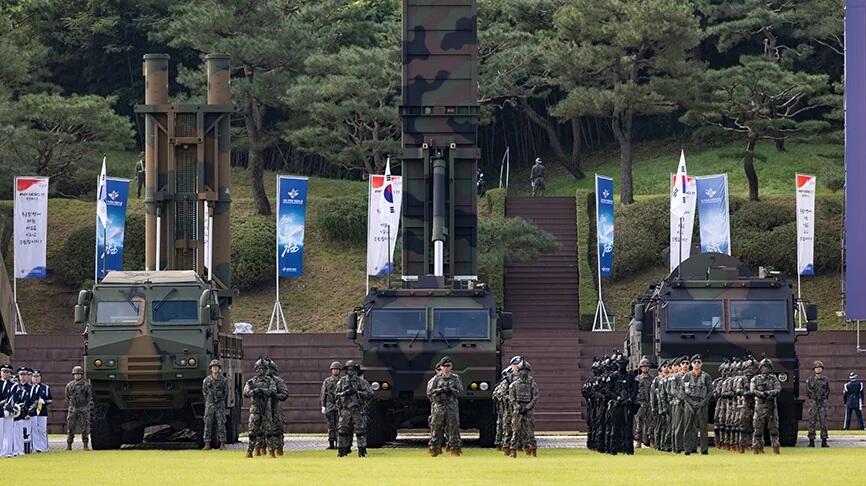
Even before the Iran war began, Saudi Arabia had signed a $3.2-billion missile defense deal with South Korea to complement its arsenal of US-made missile interceptors.
Riyadh is also looking to manufacture interceptors on Saudi soil. In February, Saudi start-up SR2 Defense Systems reached an agreement with US-based Vector to produce “attritable systems” – cheap one-way drones that can be expended in large numbers to counter incoming attacks.
Saudi Arabia has difficulty defending from large numbers of Iranian and Yemeni attacks in part due to the size of its territory and widely dispersed infrastructure. In the first two months of the war against Iran, the Islamic Republic fired more than 1,000 missiles and drones at Saudi Arabia.
Because standard interception procedure calls for firing two interceptors at every incoming projectile, it is estimated Saudi Arabia had already used up roughly 86 percent of its interceptor inventory by the time its war against Yemen began in July, the Times noted.
As a result, Yemen’s Ansarallah-led armed forces were able to strike Saudi targets, such as its vital East-West Oil Pipeline and Riyadh International Airport, with “devastating effect.”
Saudi Arabia has ordered additional Patriot PAC-3 interceptor missiles from US weapons firm Lockheed Martin. However, the missiles take anywhere from 24 to 30 months to produce, and the kingdom is competing against the 19 other countries that also use the missiles to procure them.
Earlier this year, Lockheed signed a $58 billion contract with Saudi Arabia to triple PAC-3 production capacity by the end of 2030. But ramping up production will take time, and it is unclear how quickly Saudi Arabia’s order can be filled. Lockheed can currently only produce 600 Patriots per year, and the US Army itself placed an order last year for 2,000 Patriot missiles that must be fulfilled.
Even if the kingdom can acquire enough US missiles, it is cost-prohibitive to spend $4 million for each PAC-3 or $12 million for each THAAD interceptor to destroy a drone or ballistic missile that costs its enemies less than $100,000 and can be produced much more quickly.
In response, the Saudi military has tested cheaper interceptors such as the P1-Sun by the Ukrainian manufacturer SkyFall. The Saudis have also called on allies France and Britain to deploy warplanes to the kingdom to shoot down incoming drones.
Saudi officials have also requested military assistance from allies Pakistan and Turkey following the signing of the Mecca Pact military alliance in August.
At the same time, Greece maintains a Patriot battery in the port city of Yanbu, the final destination of the East–West oil pipeline, to counter Yemeni attacks on Saudi Arabia’s Red Sea coast.
