

Rare and critical minerals have become a strategic asset class within global capital markets due to their essential role in electrification, energy storage, industrial manufacturing, and digital infrastructure. The International Energy Agency (IEA) projects that in climate-driven scenarios, demand for key clean-energy minerals rises sharply to 2040 (e.g., lithium demand growing by 40x+ in its stated scenario set), reflecting the scale of the energy transition and associated infrastructure buildout.
Minerals such as lithium, cobalt, copper, nickel, and rare earth elements are classified as “critical” by multiple jurisdictions due to their limited substitutes, concentrated supply, and direct linkage to high-growth industries. The IEA reports that demand growth remains robust: in 2023, lithium demand rose by 30%, while demand for nickel, cobalt, and graphite grew ~8–10% (Global Critical Minerals Outlook 2024 – Market Review).
Global electrification targets, electric vehicle adoption, renewable energy deployment, and expansion of data-center capacity have materially increased mineral intensity per unit of economic output. The IEA Global EV Outlook details how EV supply chains intensify demand for battery minerals and conductive materials. In parallel, the IEA projects global electricity consumption from data centres is set to more than double to ~945 TWh by 2030 (IEA: Energy and AI), increasing demand for copper-intensive grid connections, transformers, and power infrastructure.
On the supply side, expansion remains structurally constrained. According to industry research summarized by Mining.com, the average timeline from mineral discovery to commercial production typically ranges between 10 and 15 years, driven by permitting requirements, environmental assessments, infrastructure development, and multi-billion-dollar capital expenditure. In parallel, global supply remains highly concentrated. The IEA Global Critical Minerals Outlook 2024 reports that more than 70% of global cobalt mine production and a majority of lithium refining capacity are concentrated in a small number of jurisdictions, increasing geopolitical and supply-chain risk for downstream industries.
Governments in major economies have responded with national critical-minerals strategies, incentives, and industrial policy measures to reduce dependency and strengthen supply chains. For example, the United States and the European Union have formal critical-minerals frameworks focused on supply security, refining capacity, and strategic sourcing.
For near-term commercial context, industry coverage continues to emphasize accelerating lithium demand tied to EVs and storage and the importance of supply-chain investment through 2025 and beyond (Metals Hub: What’s driving lithium demand in 2025 and beyond).
In this environment, mineral-linked investments are increasingly evaluated as long-duration infrastructure exposure rather than short-term commodity trades.
Within this market context, a regulated Security Token Offering (STO) linked to rare and strategic mineral assets is now available for participation. The STO is structured to provide exposure to mineral-related economic value without direct involvement in mining operations, logistics, or jurisdiction-specific operational risk.
Participation details and official documentation are available at the project’s STO platform:
RockRail STO
Market & Offering Overview
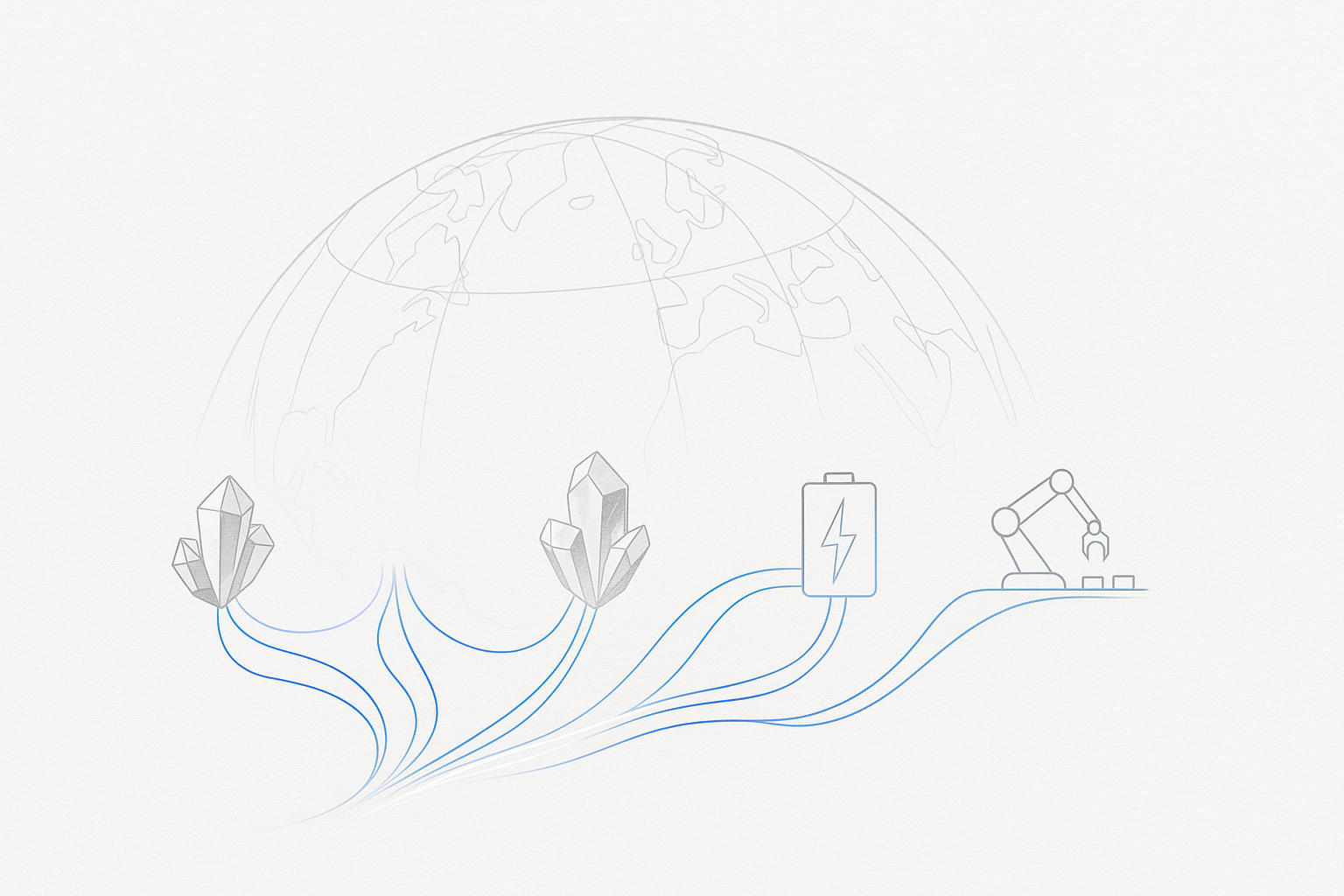
The STO aligns with long-term industrial demand trends for minerals designated as critical by major economies. These resources underpin battery manufacturing, power transmission, renewable energy systems, industrial automation, and high-density computing infrastructure.
The investment structure emphasizes regulatory compliance, predefined issuance limits, and transparent ownership records supported by blockchain-based infrastructure. This framework is designed to broaden access to mineral-linked value while maintaining alignment with established financial regulations.
Key characteristics include:
• Exposure to economically essential mineral resources
• Fixed supply and defined allocation framework
• Regulated STO participation model
• No operational exposure to extraction or processing
• Alignment with long-term global infrastructure and energy investment
Additional Information
Further information regarding eligibility requirements, structure, and participation terms is available through the official STO platform:
Access the STO here

