

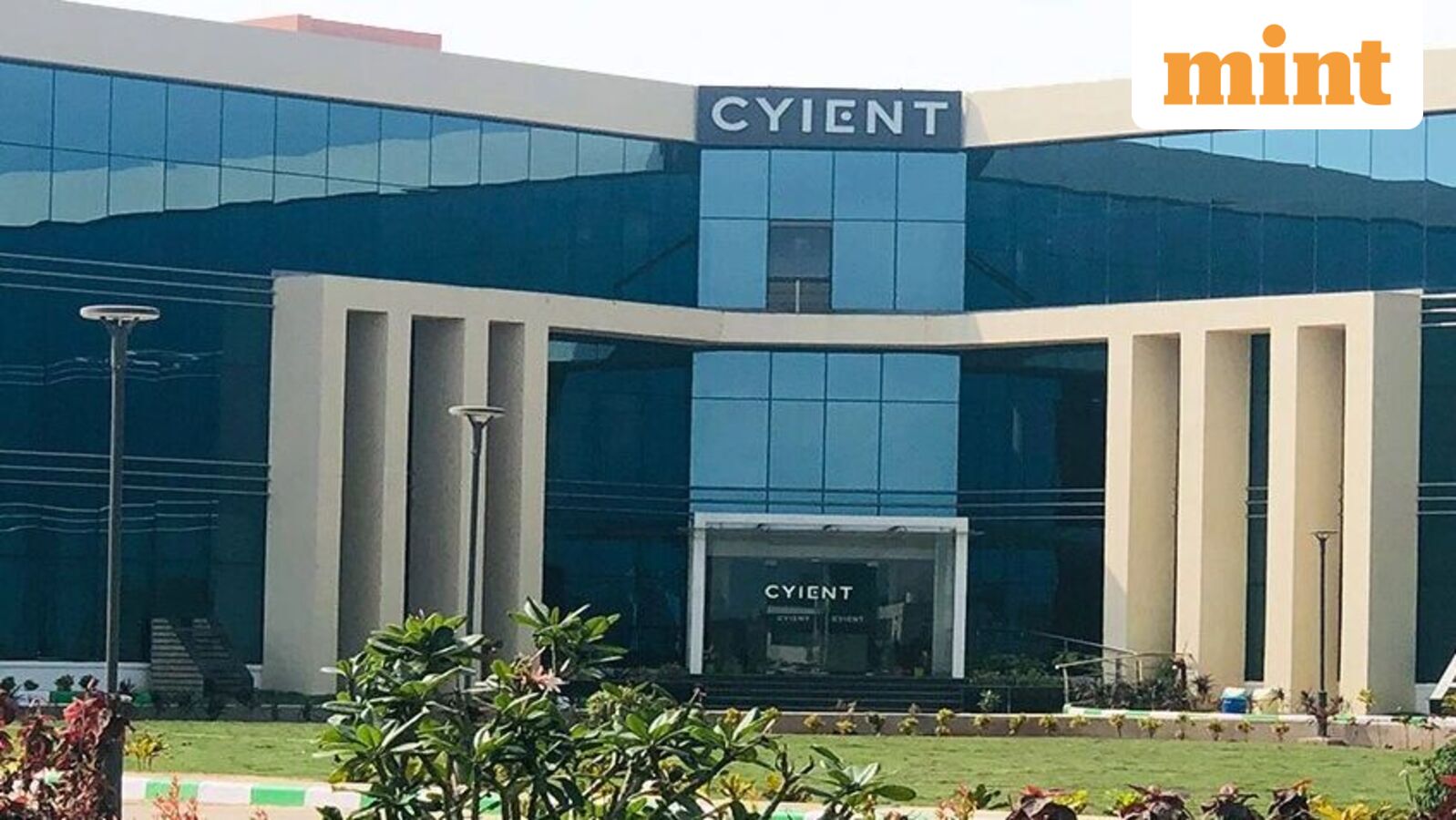
Over the last few years, Cyient stock has been plagued by revenue growth challenges and margin pressures at the company.

Summary
Over the last few years, Cyient stock has been plagued by revenue growth challenges and margin pressures at the company.
Stocks that create generational wealth belong to the companies that have demonstrated remarkable resilience and growth across market cycles.
Such stocks are the cornerstones of many wealthy investors’ portfolios.
However, some companies that hold the promise of delivering such great returns to shareholders often struggle to impress the market. Such is the case with Cyient Ltd.
Over the last few years, the stock has been plagued by revenue growth challenges and margin pressures at the company.
View full Image
But what does the future hold for the company? Does it have the potential to create generational wealth?
Cyient: The Company
Cyient is a technology company based in Hyderabad. It has been in the engineering and software business for over three decades.
The company’s competitive advantage lies in its software and hardware expertise across sectors like transportation, communication, energy, aerospace, and healthcare.
It has an electronics manufacturing subsidiary, Cyient DLM and a semiconductor subsidiary, Cyient Semiconductors.
Financials
Cyient’s sales and net profit have grown at a CAGR of 10.7% and 13.7%, respectively, over the past five years. Its Return on Equity (ROE) and Return on Capital Employed (ROCE) have averaged 14.7% and 20.4%, respectively, during the same time.
In FY26, the company’s revenue was down marginally by 1.25% YoY at ₹7,268 crore. The net profit was down 28.56% at ₹463 crore. The hit to profitability was the group’s strategic investments in the semiconductor business during the year.
Cyient’s order book stood at ₹2,417 crore at the end of March quarter.
The company pays regular dividends. The payout ratio is about 50% of the company’s profits.
While Cyient itself is debt-free, its electronics manufacturing subsidiary, Cyient DLM, does operate with some debt. Cyient DLM sharply reduced its debt from ₹240 crore in FY25 to ₹106 crore in FY26.
In FY26, Cyient DLM delivered a net profit growth of 7.65% YoY at ₹73.2 crore but revenues were down 16% YoY ₹129.8 crore.
When announcing the FY26 annual results, the board approved the buyback of equity shares worth ₹7,200 crore at a price of ₹1,125 per equity share, comprising the purchase of 6.4 million shares, representing up to 5.76% of the company’s total paid-up share capital.
The buyback price is significantly higher than the stock price. The buyback will be for all shareholders except the promoters.
Semiconductor Business
The company is investing in chip design, digital engineering, and intelligent manufacturing via its new subsidiary, Cyient Semiconductors.
The company has won the ministry of electronics and information technology (MeitY)-backed Semiconductor Complex of India Ltd fab modernization program.
To back its ambitions with manufacturing muscle, Cyient Semiconductors has partnered with GlobalFoundries, to offer design enablement, technical consulting, and chip fabrication access.
Cyient Semiconductors will also distribute GlobalFoundries’ manufacturing services, essentially bridging fabless chip innovators with world-class fabrication infrastructure.
As reported in the media, Cyient Semiconductors has announced a strategic financing transaction with funds managed by EAAA India Alternatives (Edelweiss) and affiliated co-investors.
The total investment is $30 million. The funds will be deployed for three purposes:
- Product R&D across custom power semiconductors and custom Application-Specific Standard Product
- In-house semiconductor validation and testing infrastructure in India
- Working capital
The transaction includes equity of about $10 million, valuing the company at $500 million, as well as structured debt of $20 million to support long-duration growth.
The company now has a semiconductor subsidiary valued at half a billion dollars, and Dalal Street has taken notice.
Last April, Cyient acquired a 74% majority stake in Kinetic Technologies to strengthen its presence in data centre power chips.
Growth Plans
Going forward, Cyient will invest in a domain-led and AI-enabled portfolio, with a focus on delivering intelligent engineering solutions at scale for its global customers.
The semiconductor business is also a priority for the management.
Also Read | Where does India stand in its chip ambitions?
Conclusion
The Indian semiconductor industry is expected to cross $100 billion by 2032, driven by an increasing demand for smartphones, wearables, automotive parts and computers.
To reduce dependence on imports of semiconductors, the MeitY has launched the India Semiconductor Mission (ISM) with a massive capital commitment.
Additionally, the government’s ‘Make in India’ initiative and the production linked incentive (PLI) schemes offer incentives to establish semiconductor manufacturing facilities in India.
The company is making the right moves in this space.
The EMS business also holds good long-term potential.
However, the company faces challenges of scaling up and delivering continued profitable growth.
Execution delays, reliance on foreign partners for technology, and global demand slowdowns can create problems.
Investors should evaluate the company’s fundamentals, corporate governance, and valuations of the stock as key factors when conducting due diligence before making investment decisions.
Disclaimer: This article is for information purposes only. It is not a stock recommendation and should not be treated as such.
This article is syndicated from Equitymaster.com

