

The Massachusetts Abortion Law Could Backfire On Democrats
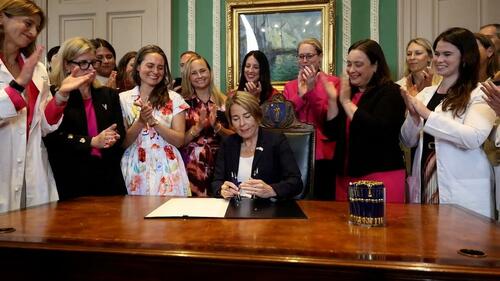
Massachusetts Gov. Maura Healey spent this week signing away one of the last hard limits on abortion in a state that already ranked among the most permissive in the country, and now even some of her own party’s lawmakers think she went too far.
The Prioritizing Patient Access to Care Act strips away the state’s statutory ban on abortions after 24 weeks of pregnancy. Physicians in the state can now perform abortions at any point in the pregnancy, based on their own professional judgment, with no gestational cutoff written into law. The measure also expands legal protections for providers, shielding them from consequences that once accompanied performing procedures deep into the third trimester. Critics have a simple way of describing what changed: abortion in Massachusetts is now legal up until the moment of birth.
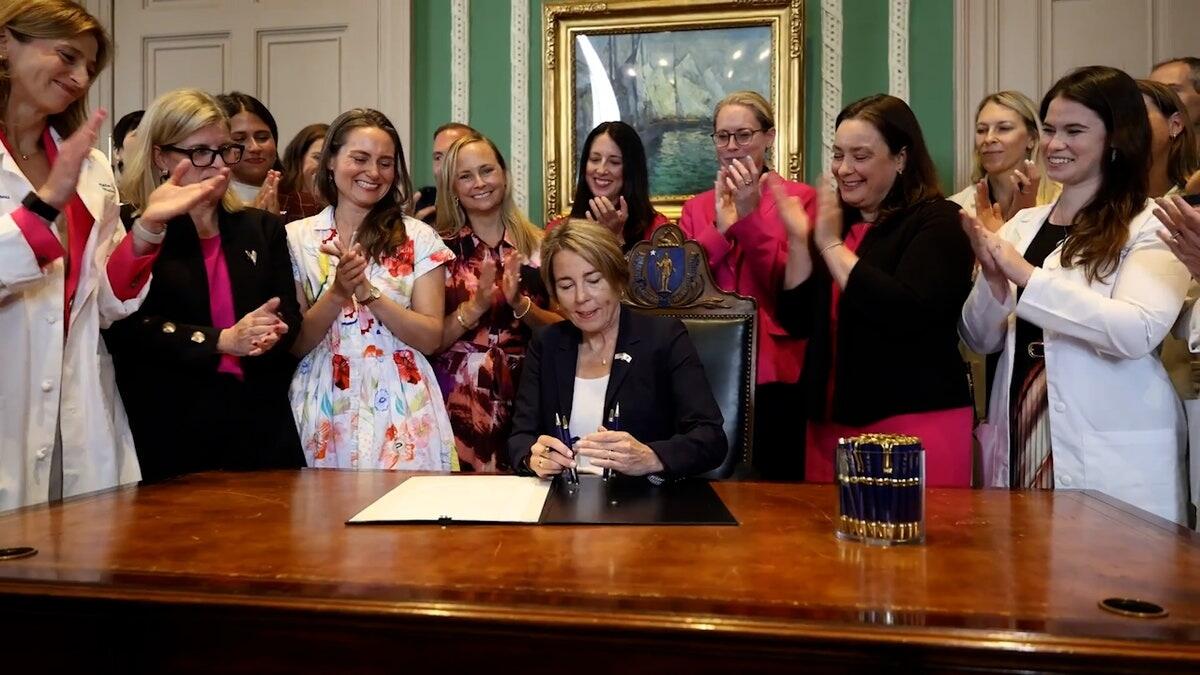
The bill cleared the Massachusetts House 119-33 on July 22, and the vote broke down almost exactly the way you would expect in a legislature that Democrats control by an overwhelming margin. Almost exactly, but not quite. Nine House Democrats voted with Republicans against the bill, and several of them made clear that their objections went beyond politics.
Rep. Jeffrey Turco, a Winthrop Democrat, did not hold back.
“This new law represents an extremist and dangerous position,” Turco told Fox News Digital.
He added that the law “allows abortion anytime, unrestricted, and in many cases, publicly funded until the moment of birth.” Turco also complained about the process itself, saying the bill was “rushed through the legislative process in two weeks, without an opportunity for the public to weigh in.” He called the result “out of step with the views of the average person in Massachusetts” and added, “The new law is barbaric.”
Rep. Chris Markey raised a different kind of objection, one rooted less in outrage than in unease about where the law leaves physicians.
He said the bill “creates a very slippery slope” and “puts doctors in a very difficult ethical dilemma.”
Markey argued the law conflicts with what most of his own constituents actually want.
“While many are pro-choice, you can still be pro-choice and see this law as going beyond the norms of acceptability.” Rep. Dennis Gallagher, also a Democrat, said he simply saw no need for the law in the first place.
Healey’s office defended the bill by pointing to what it described as an ongoing “assault” on reproductive rights nationwide since the Supreme Court overturned Roe v. Wade.
“I’ve heard heartbreaking stories from women and families who were preparing to welcome a healthy baby into their family, only to receive devastating news later in their pregnancy,” Healey claimed, describing families who traveled long distances and paid out of pocket rather than relying on doctors they already trusted.
A 2024 poll by the Reproductive Equity Now Foundation found 66 percent of Massachusetts voters supported expanding abortion access after 24 weeks, with 34 percent opposed.
That number will get cited endlessly by supporters of the law. It also happens to describe one of the bluest electorates in America, which is exactly the problem Democrats elsewhere are about to run into.
National polling on abortion has never lined up neatly with the binary pro-life versus pro-choice framing that dominates cable news. Gallup has tracked the moral acceptability of abortion since the early 2000s, and its 2025 survey found 49 percent of Americans consider it morally acceptable, down from a record 54 percent in 2024. Gallup’s Values and Beliefs poll from May of this year found 48 percent of Americans want abortion legal in all or most circumstances, split between 33 percent favoring all circumstances and 15 percent favoring most. Meanwhile, 49 percent want it to be illegal or legal only in a few circumstances, split between 17 percent favoring illegality and 32 percent favoring rare exceptions. That split has held steady on the broader question of legality since at least 2022.
Read those numbers together, and a pattern emerges. Most Americans lean pro-choice in the abstract, yet a majority still wants some boundaries. This instinct is a lot closer to Bill Clinton’s old “safe, legal, and rare” formulation than to anything resembling abortion without limits. Massachusetts Democrats just passed a law that abandons limits entirely, and the timing of this is very inconvenient for them.
Democrats already face a midterm environment complicated by a socialist insurgency inside their own coalition, an ideology that polls poorly with the general electorate.
Layering abortion extremism on top of that gives Republicans a matching set of arguments heading into November: a party too far left on the economy and now demonstrably too far left on one of the few issues where most voters still want some compromise.
Tyler Durden
Sat, 08/15/2026 – 21:35

