
Europe’s Looming Existential Crisis
Authored by Kenneth Timmerman via American Greatness,
Americans pay little attention to Europe, other than to sneer at the Euro-elites and bemoan the fecklessness of European leaders.
I am guilty of both sins. Mea culpa.
But I am also aware of the coming existential crisis facing Europe as a whole and the European Union quite specifically.
It comes in several flavors, and all of them are bitter.
First is the shock and embarrassment posed by the influx of 72,000 North African Muslim wannabe migrants into Ceuta, one of two tiny Spanish enclaves in Morocco, just miles away from the Spanish mainland near Gibraltar.
The inability—or unwillingness—of the Spanish authorities to repulse them has provoked a Europe-wide reaction, prompting Italy’s center-right prime minister, Giorgia Meloni, to impose passport controls on visitors from Spain for the first time since the Schengen accords of 1995 created a “borderless” European space.
Spain retaliated last week, imposing controls of its own on visitors from Italy.
This week Meloni teamed up with her center-left Danish counterpart, Mette Frederiksen, to jointly condemn uncontrolled migration.
“We are both proud of Europe’s Christian cultural heritage and want to protect it,” they said on Monday. “We expect those who come to our countries and choose to make Europe their home to respect our values and not seek to impose ways of life on us that we do not share.”
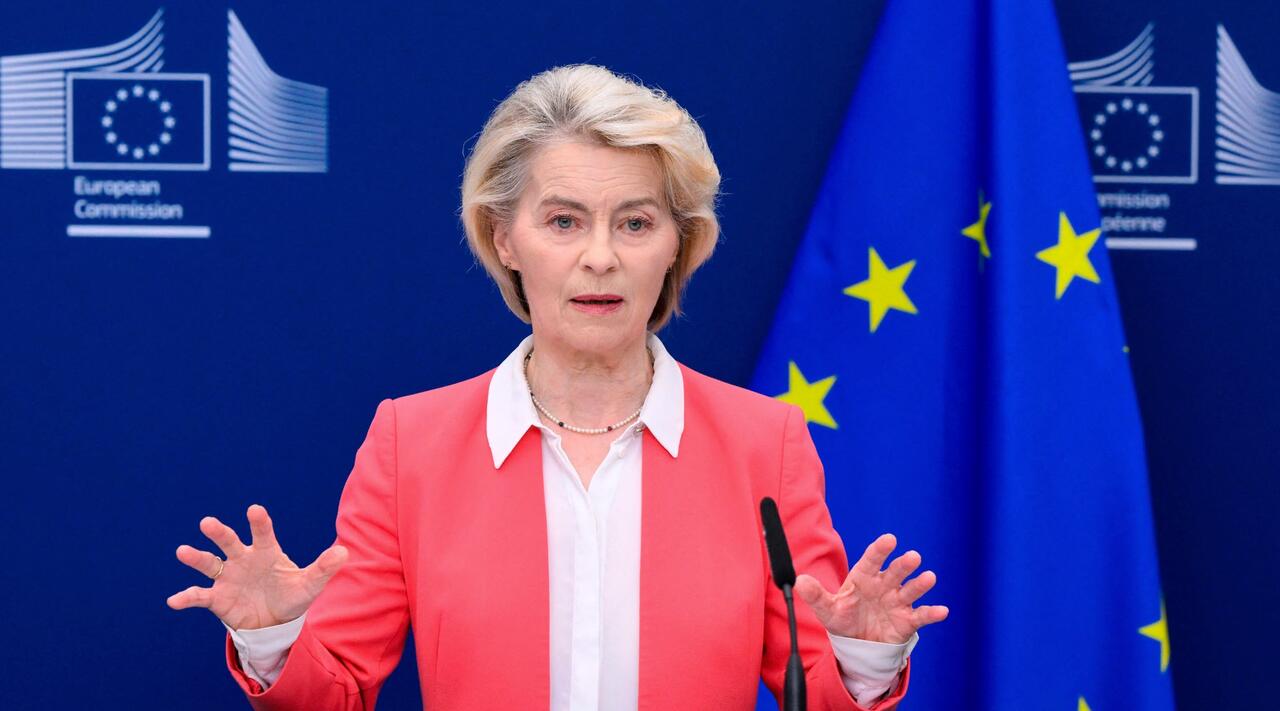
Meloni drafted a letter to European Commission President Ursula von der Leyen condemning lax EU immigration policies, which was joined by Frederiksen and 21 EU leaders.
Immigration has been a long-simmering issue since German Chancellor Angela Merkel opened the floodgates to hundreds of thousands of Syrian “refugees” in 2015. The Ceuta stampede is just the latest chapter.
Fabrice Leggeri, a Frenchman who was executive director of the EU Border and Coast Guard Agency from 2015 to 2022, fought tooth and nail to standardize EU immigration procedures and to transform his bureaucratic backwater into a real law enforcement agency.
He was stymied by the European Commissioner in charge of Home Affairs, Ylva Johansson of Sweden. “Don’t worry,” she said. “You don’t need guns and uniforms because migrants come in search of love. Europe is an aging continent, so whether you like it or not, it is your job to welcome migrants.”
Next comes EU enlargement.
Standing at the gates to join the EU’s 27 member states are tiny Montenegro and Albania. Then comes Iceland, should its citizens approve a resumption of EU membership talks in an upcoming referendum.
While only Albania, which is predominantly Muslim, is controversial, their accession could open the door to membership talks with Ukraine and Serbia.
Ukraine would require a peace deal with Russia, which would be less likely should Ukraine be rewarded with EU membership. Serbia, a Russian ally and gateway to the Russian economy, poses its own problems.
And finally, there is the whole question of democracy and freedom.
EU citizens rail incessantly over the often ridiculous regulations enacted by the unelected bureaucrats of the European Commission that affect their daily lives.
Many of these are motivated by Europe’s powerful “Green” parties and lobbyists. Others stem from the left-wing, anti-capitalist, anti-farmer bias of the Eurocrats.
One case in point: the reintroduction of wolves onto agricultural lands where the predators had been eradicated generations ago. Today, the wolf packs are protected as endangered species even as they devastate sheep herds from Sweden to southern Italy.
I know farmers who brave the authorities and secretly hunt down wolves endangering their livelihoods. They operate as a veritable underground resistance movement, communicating using coded texts, always watchful of the police.
It’s a running joke that a young Swedish girl could get gang-raped by Syrian immigrants, and the police wouldn’t lift a finger. But if a farmer got caught killing a wolf, they would exhaust every investigative and prosecutorial resource to put him away for years.
European Commission President Ursula von der Leyen is certainly aware of the dissenters among the European Parliament, mainly from the populist or center-right parties.
But instead of accommodating them, she is attempting to reinforce the powers of the unelected Commission by doing away with the existing rule of unanimity when it comes to foreign policy decisions.
For years, Hungarian leader Viktor Orbán vetoed European Commission policies that invariably criticized Israel, supported the Palestinians, or criticized the United States.
His election loss only emboldened Ms. von der Leyen, who frequently clashed with Orbán personally and in public.
Now she wants to allow a simple majority of member states to approve foreign policy dictates, a shift that would essentially create the “tyranny of the majority” America’s founders warned about 250 years ago.
Former Belgian Prime Minister and European Council President Charles Michel is scathing in his criticism of von der Leyen. “Today, the Commission is trying to take control. That’s not in line with the [EU] treaty,” he told a Belgian magazine in April. “There is super authoritarian governance.”
Much but not all of those new powers came during the COVID years and in response to the war in Ukraine. But the anti-democratic gene runs deep among the Eurocrats.
Former Czech President and Prime Minister Václav Klaus lived through decades of Soviet Communism imposed on his country after World War II. Already in 2009, he was warning about the lack of democratic institutions within the EU.
“The present decision-making system of the European Union is different from a classic parliamentary democracy, tested and proven by history… Here, only one single alternative is being promoted, and those who dare think about a different option are labelled as enemies of European integration.
“Not so long ago, in our part of Europe we lived in a political system that permitted no alternatives and therefore also no parliamentary opposition. It was through this experience that we learned the bitter lesson that with no opposition, there is no freedom. That is why political alternatives must exist.”
Europe and the EU are at a crossroads.
Down one road, Europe will become increasingly authoritarian and increasingly centralized, while its founding cultures will be increasingly marginalized and demeaned in favor of Muslim immigration and multiculturalism. These were the faults that led to Brexit, Britain’s withdrawal from the EU.
Down another road, Europe will return to its roots, celebrate its diverse cultures and its Christian and Jewish heritage, and honor the wishes of its member states and their people.
Count me skeptical, but I don’t see that democratic alternative on the horizon, at least not yet.
Tyler Durden
Tue, 08/18/2026 – 02:00

