

Europe Scrambles For Innovation And Defense As US Decouples From “Global Order”
For decades the European elites have pretended as if US integration into the progressive agenda is an afterthought on the way to a liberal Utopia. The EU has long criticized Americans as backwards in their principles and politics, while at the same time being desperately dependent on American consumers, American innovation and American military might. They simply never considered the possibility that the US might walk away from the old post-war arrangements.
Well, now it’s happening and the European establishment doesn’t know what to do.
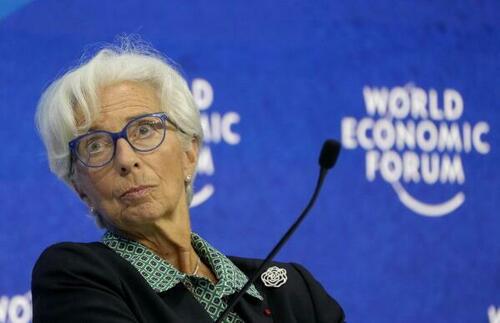
ECB chief and former head of the IMF, Christine Lagarde, took to the podium at the World Economic Forum’s International Business Council in Geneva, Switzerland this week to discuss the growing uncertainty in Europe.
“Europe’s post-war growth model rested on three mutually reinforcing pillars. Today, all three are weakening as the international environment changes….”
“The third pillar was a stable, rules-based global order, underpinned by a US security umbrella. That environment allowed European supply chains to deepen, and enabled firms to organise investment around efficiency rather than resilience. Today, that global order is under pressure. Geopolitical tensions are bringing critical dependencies and chokepoints into sharper focus, while Europe faces growing security threats on its doorstep…”
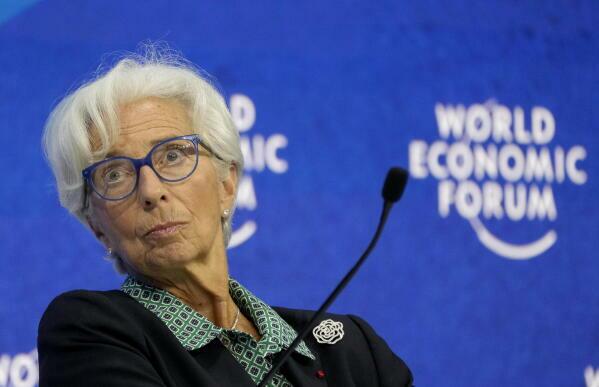
The WEF and its members have been suspiciously quiet in the past two years about their globalization projects. The media coverage for the council meeting in Geneva has been thin. It would seem, though, that the agenda so openly and enthusiastically promoted by the WEF during the Covid pandemic is not going as planned.
This event may be one of the clearest indications of the state of globalism since the failure of the pandemic coup and the return of the Trump Administration in 2025. Largarde called for “better integration” across Europe for defense and more innovation, otherwise the region might miss out on the next digital revolution of AI.
“In some respects, Europe is well placed to make the most of new technologies. We have a world-class research and knowledge base. The EU accounts for around 6% of the world’s population but as many as 15% of its researchers. It also produces almost one-fifth of the world’s most-cited scientific publications.
The challenge lies in turning that knowledge into commercial success and ensuring that new technologies diffuse across the economy. Too often, the barriers that prevent firms from scaling also hold back that diffusion…”
In other words, European governments are realizing that extensive bureaucratic barriers and overt taxation is crushing new businesses and preventing natural growth. Better late than never…unless it’s too late.
Europe’s economy is on a fast track to disaster. An estimated 30-40 million migrants (legal and illegal) have entered the region in the past 10 years alone. Most of these migrants come from third-world countries with no wealth, no skills and are largely dependent on European welfare systems in order to survive.
Mass immigration has not led to the “explosion” in economic activity promised by multiculturalists. In fact, the countries with the most migrants face increasing joblessness, housing shortages, inflation and a strangulation of taxpayer subsidies. Meanwhile, as the US undergoes mass deportations of migrants, the economy is improving, including growth in GDP, manufacturing jobs and housing relief.
National rental vacancy rates in the US climbed to around 7.2–7.3% by late 2025/early-mid 2026 (highest levels since 2017). European vacancies are frozen at around 1%-3%. The situation is dire.
The very globalists that created this mess are now complaining that, without US integration, they are about to sink into economic crisis. This has inspired multiple European governments to dump funding into tech startups in a last-ditched effort to catch up to the US and China. They are seeking to close their $1 trillion investment gap, but they plan to use taxpayer money to do it. As Lagarde notes:
“Innovative European firms can often finance their early growth, but a gap tends to open as they scale. According to the European Investment Bank, EU and San Francisco-based scale-ups raise broadly similar amounts during their first five years of operations. But by the tenth year, EU scale-ups have raised roughly 50% less…”
“Fragmented capital markets can also incentivise young, innovative firms to vote with their feet. Some 12% of EU scale-ups have relocated outside the EU, most notably to the United State…”
It’s unlikely that the EU plan for socialized funding and “capital market integration” will accomplish much without far more freedom and less taxes for entrepreneurs. The elites pretend they want to revitalize economic growth but every new policy tends to cripple free markets with greater centralization.
It is interesting, however, that these socialist and socialist-adjacent economies are struggling to function and survive the moment more free markets systems like the US walk away. It’s almost as if socialist systems are parasitic and require host organisms to feed off of, otherwise they begin to die.
Tyler Durden
Thu, 08/20/2026 – 02:45

