

Food Supply Alert: Ukraine Grain Exports Collapse As Black Sea Attacks Choke Global Shipments
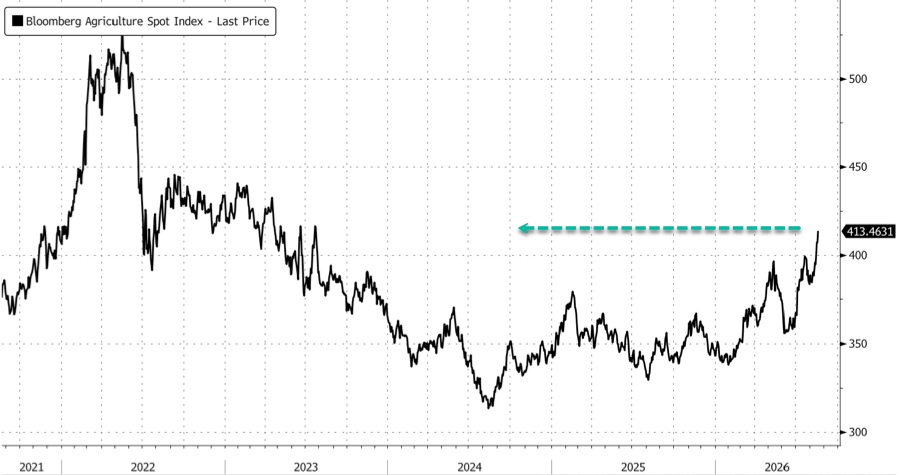
Upward momentum in agricultural prices, as tracked by the Bloomberg Agriculture Spot Index, should be ringing inflationary alarm bells. The breakout comes just one week after JPMorgan analyst Nora Szentivanyi warned that the next global food crisis could materialize as early as next year.
Multiple shocks are converging all at once across the global food complex, including continued disruptions in the Strait of Hormuz, rising El Niño risks, and adverse weather across the US agricultural belt.
This note focuses on another emerging chokepoint: Europe’s breadbasket, where intensifying attacks in the Russia-Ukraine war have shuttered critical Black Sea grain export terminals.
Reuters reports that global wheat importers are preparing for tighter supplies and higher prices as tit-for-tat attacks on Black Sea ports and bulk carriers continue to disrupt shipments during the region’s peak export season.
Those attacks have shuttered grain terminals and forced shippers to delay or cancel dozens of cargoes. Ukraine reported 35 attacks on vessels in port, 22 at sea, and 67 against port facilities in July, compared with just 14 such incidents during all of 2025.
Ukraine has damaged Russia’s grain export terminals in an attack on the Novorossiysk port, while Russia has struck grain infrastructure in Ukraine’s Odesa region. Tit-for-tat attacks between the world’s major grain exporters threatens food security in import-dependent countries. pic.twitter.com/YxwIQApNYI
— Shogri (@shogri786) August 14, 2026
Asian processors booked between 2 million and 2.5 million tons of Black Sea wheat for delivery from July through September, representing about 30% to 50% of regional import demand, according to Singapore-based traders. Traders are fretting over some grain shipments won’t arrive in time because of the widespread disruptions.
At the importer level, Egypt and Indonesia are among some of the top countries exposed to Black Sea shipments. Egypt, the world’s largest wheat importer, sourced more than 82% of its first-half imports from Russia and Ukraine. Indonesia contracted for roughly 600,000 tons from suppliers in the region for delivery in July to September.
One Singapore-based trader who sells Black Sea wheat to millers in Asia told the outlet, “The cargoes were due to start arriving from mid-August, but many ships could not go in to load. Buyers are thinking about replacing some of these cargoes with other origins, such as Australia, North America and Argentina.”
Maxence Devillers, a grain analyst at Argus Media, said buyers facing delayed or entirely canceled shipments from the region “will have to find other solutions by the end of the month.”
🌾 #Ukraine and #Russia dropping out of the market could trigger a new global #grain #crisis
Further escalation of attacks on Ukraine’s and Russia’s port and grain logistics could sharply reduce Black Sea supplies.
Read more 👉https://t.co/g4GuYe7TZA pic.twitter.com/yHgfFSnk0G
— UkrAgroConsult (@UkrAgroConsult) August 20, 2026
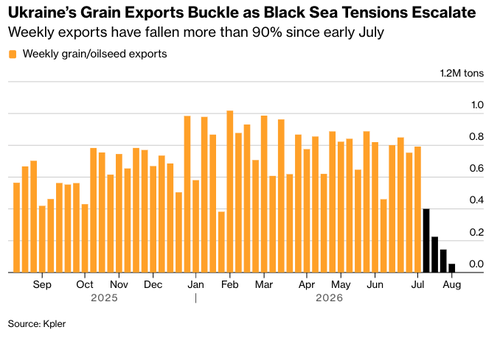
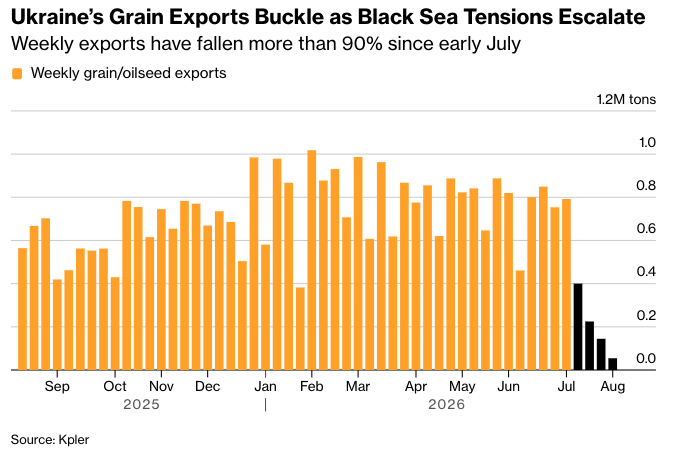
Separately, Bloomberg pointed out that Russian attacks on Odesa have nearly halted Ukraine’s grain exports this peak harvest season. Total grain shipments from Ukraine have amounted to about 500,000 tons since the start of August, equivalent to roughly 20% of the country’s potential exports. The Greater Odesa ports normally handle about 90% of Ukraine’s grain shipments.
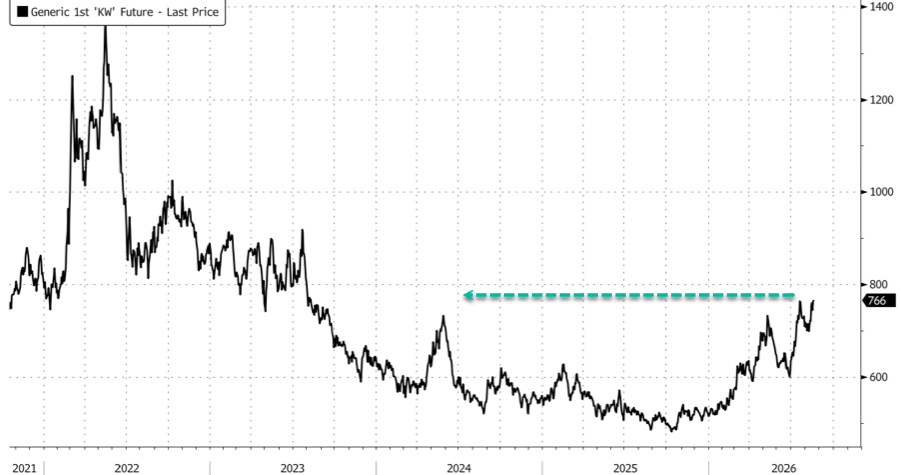
The escalating Black Sea attacks across Europe’s breadbasket have pushed Chicago wheat futures to a two-year high.
A broader gauge of agricultural commodities, the Bloomberg Agriculture Spot Index, is also breaking out, signaling real-time inflationary pressure building at the raw-material level of the food system.
A must-read: “Won’t Be Short-Lived”: JPMorgan Warns Next Global Food Crisis Could Erupt Next Year
Tyler Durden
Thu, 08/20/2026 – 15:20

