

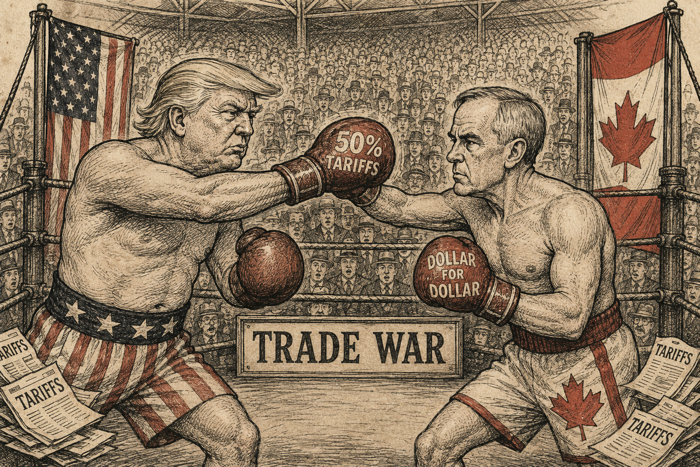
Canada-US Trade War Erupts, Setting New 50% Tariffs On Canadian Goods
US-Canada trade negotiations collapsed at the 11th hour, just before the midnight deadline, triggering 50% tariffs on about $20 billion worth of Canadian goods (under a never-before- used Section 338 provision of the Tariff Act of 1930) and prompting globalist-aligned, China-sympathizing Prime Minister Mark Carney to promise an equivalent response.
“Tonight, Canada declined to finalize the trade deal under the terms agreed earlier this week,” the United States Trade Representative wrote on X early Saturday morning.
The USTR continued:
Despite the U.S. offer to Canada to receive the best treatment of any major exporter to our market, new demands and walk-backs of other commitments by Canada have upended the careful balance reached in the past days. In addition, Canada is continuing to maintain its prolonged retaliation against the United States, including, among other things, flat-out prohibitions on certain American goods and services.
For decades, Canada has enjoyed the most favorable access to the U.S. market of any country. And from the beginning of President Trump’s trade program, Canada has continued to enjoy the best treatment in the world, even after, like China, retaliating against the United States. This week, the United States agreed to provide even better treatment to Canada, offering significant tariff reductions on steel, aluminum, autos, and lumber.
The U.S. offer was also forward-looking and included a historic economic and national security partnership to cooperate on export controls, combat transshipment, enhance digital trade, and align certain external tariffs. The offer would have led to supply-chain coordination on aerospace, complementary actions to address unfair trade practices, critical-minerals cooperation, increased enforcement against imports produced with forced labor, and the announcement of formal U.S.-Mexico-Canada Agreement (USMCA) negotiations.
This is a missed opportunity for Canada to partner with the United States, which is the fastest-growing economy in the G7.
Tonight, Canada declined to finalize the trade deal under the terms agreed earlier this week.
Despite the U.S. offer to Canada to receive the best treatment of any major exporter to our market, new demands and walk backs of other commitments by Canada have upended the careful…
— United States Trade Representative (@USTradeRep) August 22, 2026
Canada responds:
The deal has collapsed. The tariffs commence in moments. The relationship has dissolved. A Trade War is Afoot.
I’ve been telling my followers for years the divide between the USA and Canada was too great to fix without massive concessions by Canada. Well, here you go. THE… https://t.co/yiNSLJENbG
— TheLastRefuge (@TheLastRefuge2) August 22, 2026
Carney, the former governor of both the Bank of England and the Bank of Canada, as well as the former chairman of Brookfield Asset Management, which has an estimated $23 billion in China-linked assets (as of 2021), blamed Washington for the breakdown in trade negotiations. He pledged to match the new US tariffs “dollar for dollar” to protect Canadian workers and businesses.
But Carney’s commitment to deeper North American economic integration warrants close scrutiny, given Brookfield’s substantial commercial exposure to China.
Read:
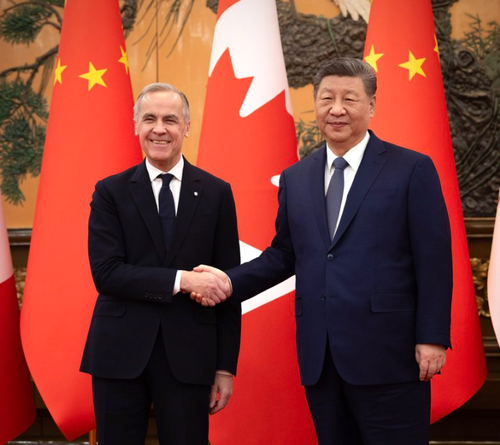
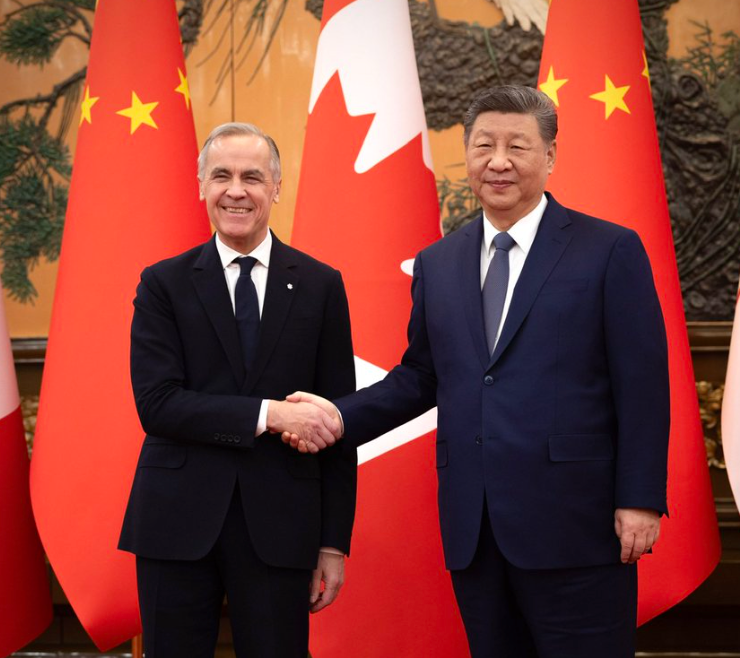
Carney’s previous and questionable business links to Beijing were brought into focus earlier this year following a visit to China, when he noted how much the world had changed since the last visit by a Canadian prime minister a decade earlier and suggested that renewed progress and partnership with China positioned both countries for the emerging “new world order.” Translation: Carney’s allegiance might be with the West but, instead, to the East.
Canada’s Mark Carney to China: Our ‘Progress’ and ‘Partnership’ Perfectly Position Us for the NEW WORLD ORDERpic.twitter.com/0BcPrsEmaJ
— TaraBull (@TaraBull) January 15, 2026
Carney’s decision to suspend negotiations and pursue a tit-for-tat trade conflict with the Trump administration will inevitably fuel questions about Ottawa’s move toward a prolonged tariff battle that would raise costs for American businesses and consumers at a politically sensitive moment, potentially creating another economic headwind for Trump ahead of the US midterm elections.
Carney suspended trade talks to influence the U.S. midterm elections. Carney takes his marching orders from the DNC. He’s betting the entire farm on the Democrats taking control of Congress.
— Julian Assange (@ImJulianAssange) August 22, 2026
The proposed US-Canada trade deal would have reduced US tariffs on Canadian steel and aluminum to 25%, lowered automotive duties to 15%, and eliminated a 10% levy on lumber. It also included cooperation on export controls and digital trade, as well as formal negotiations to renew the US-Mexico-Canada Agreement.
Tyler Durden
Sat, 08/22/2026 – 11:05

