

What Happens When A Metal The West Can’t Live Without Runs Short
At the end of last week, the Trump administration’s halt to tungsten scrap exports took effect, as the U.S. and its allies confront a deepening supply crisis and race to find new supplies.
China’s export restrictions are accelerating the West’s campaign to secure ex-China supplies, reinforcing our U.S.-China decoupling theme and placing a major spotlight on the largest Western tungsten miner: Almonty Industries.
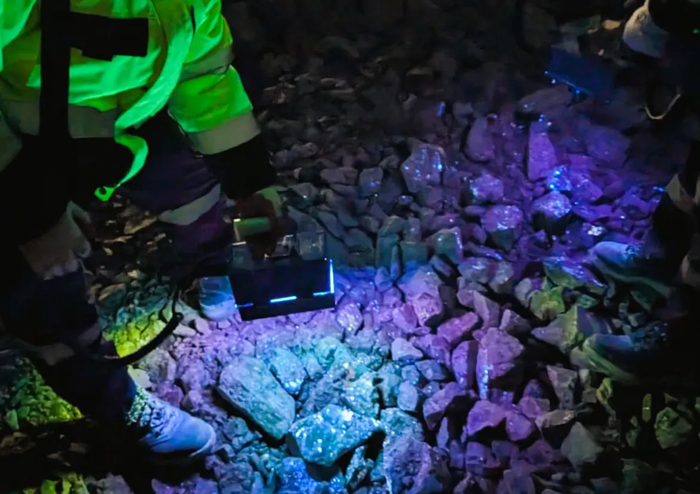
The miner operates in Portugal and is ramping up its prized Sangdong Mine in South Korea, which is expected to account for roughly 40% of Western tungsten production once it reaches full capacity.
To understand the global tungsten crisis, readers must first remember the metal’s critical importance to the modern economy.
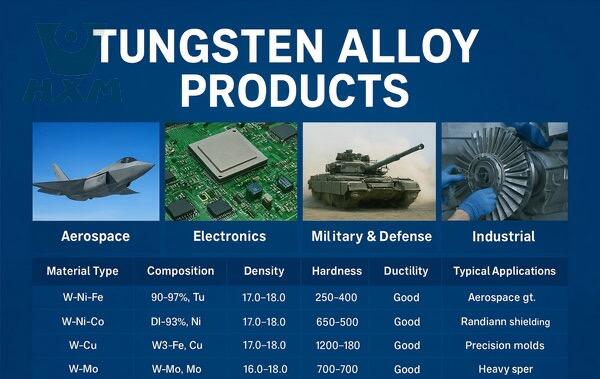
Tungsten is essential to defense systems, industrial tooling, semiconductors, automobiles, energy infrastructure, electronics, artificial intelligence, and the power-grid buildout. Put simply, it is one of the building blocks of the industrial economy, yet its supply chain remains fractured and heavily exposed to China.
Almonty CEO Lewis Black’s latest snapshot of the global tungsten market, the severity of the supply crisis, and the West’s race to secure ex-China supplies deserves close attention.
Almonty is emerging as the leading pure-play Western tungsten miner and a critical supplier capable of helping break Beijing’s grip on the market.
Here is CEO Black’s assessment:
Everyone keeps asking me when the tungsten price falls back. I understand the instinct, but it’s a distraction from the thing that matters: what happens when a metal you can’t do without becomes hard to buy. The last two weeks gave a few answers to that.
As of last week, no American can export tungsten scrap without a license. All of it – 100 percent – stays home, at least for the next year.
The plants that turn that scrap into something useful are already sitting in the United States, most of them European or Japanese owned. We collect it here, process it here, and the midstream product goes on to Europe. That cycle carries on exactly as before, and the country is in no danger of drowning in a pile of metal it can’t handle.
So why the rule, with all its talk of national defense? Because a handful of American operators had found a tidier deal: sell the scrap straight to China at a premium – the very country the rule is built to shut out. That’s the door Washington just shut. Who said patriotism was dead?
Those businesses know who they are. And so do we.
Tungsten markets
Michael Dornhofer, ISBP – assessment as of 28 August, 2026
For the situation on the tungsten market, a Chinese associate, with whom I spoke this week, found the right words, “off-season sleep”. So, prices in China and in the west are stable. APT CIF Rotterdam/Baltimore is still around 3000 USD/mtu WO3 for APT; concentrate prices are between 2400 and 2600. Anyhow, while some downstream customers hope (or should I say dream) that prices might drop soon, other stakeholders see a persisting supply problem in all western countries.
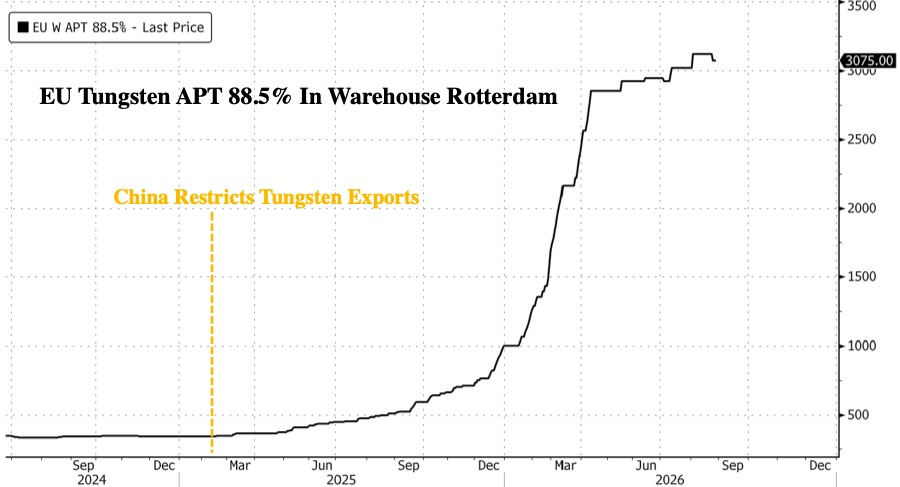
Why can one see the situation so differently? It is a fact that tungsten prices in China are now significantly below western prices, and it is widely understood that China had set the world market price for several decades. What’s different now is that since February 2025, for each individual export of intermediates, the Chinese Ministry of Commerce has to grant an export license. And as they are very restrictive (only 28 t APT could be exported in first half 2026!) there is now a firewall between Chinese domestic market and rest of the world.
Everyone understands that, as China stood for 80 per cent of the tungsten world market, without APT/Oxide from China, there is a shortage on tungsten raw material in the west. And if there is not enough tungsten raw material, coming from new sources, there is no logic argument that prices should drop significantly.
Of course, after the tungsten price went up eightfold in just over one year, there can always be a technical correction, but in principle, prices cannot go back, even close to levels, seen previously.
Michael Dornhofer is founder of ISBP (Independent Supply Business Partner) in Graz, Austria. He has spent more than 20 years in tungsten, including 13 years at Wolfram Bergbau und Hütten, Sandvik’s tungsten business, and has worked as an independent agent and consultant to the tungsten and hard metal industry since 2019.
The buyback, and the thinking behind it
Last week the board approved buying back up to $300m of our own shares – about five percent of the company – over three years.
It comes out of Sangdong’s earnings, spread across those three years, so the balance sheet stays intact. The convertible we priced in June dilutes existing shareholders by a little over 7 percent if it converts. Buy back 5 percent, and most of that dilution goes away. We priced the convert with the stock around $21, so anywhere below that, buying our own stock is the smartest money we can spend.
Yes, it can look like money in one door and out the other. But it comes in from the mine and goes back to the people who own the mine. That’s where it belongs.
The alternative was buying a boat. An institutional shareholder asked what I’d do with the cash; I admitted I’d been eyeing up a superyacht. He asked if he could use it. Two weeks a year, I said. He wanted to know whether the SEC would allow it. Nobody’s tested that, as far as I know – but the upkeep would have ruined me anyway. So my dream of a floating company vehicle will have to wait. (Edit from David Hanick – Almonty’s in-house counsel: Please note that this is said in jest. Mr Black is most definitely not buying a superyacht.)
Down on volume, up on margin
Panasqueira’s output dropped this quarter, and that was the plan. When the tungsten price is this high, we go after the low-grade ore – the material we’d ignore in a normal market because it wouldn’t pay. High prices make it pay. So we mine it and bank the margin, and the good grades stay in the ground for another day. Fewer tonnes come out of the mine. More money goes in the till. And because we’re taking ore we’d otherwise have left alone, the reserve lasts longer.
That’s the difference between an operator and a junior sitting on someone else’s money. A junior takes what the market gives it. An operator decides what to mine and when. The number that matters came in at a little over 60 percent – gross margin for the quarter. On a 136-year-old mine, running a fifth of the grade we have waiting in Korea. Show me another mine that does that.
What I’m reading
The auto industry’s China crisis
Honda’s chief executive Toshihiro Mibe went to China to see how its carmakers build so fast, and left rattled. New models there take under two years – half the time Honda needs. Xiaomi, a phone maker that started building cars two years ago, has swapped the assembly line for robots and single-piece castings and turns out a thousand cars a day. Honda’s own sales in China have gone from 1.6mn in 2020 to 640,000. “We have no chance against this,” said Mibe. His answer: pull thousands of engineers into a revived R&D arm and hope they can close the gap. Being the giant counts for nothing when someone hungrier builds faster.
For when the screen goes dark
Europe pays for everything by phone now, and yet weirdly the value of banknotes in circulation keeps climbing. Cash is vanishing from the checkout and piling up in drawers and safes instead. When a blackout knocked out power across Spain and Portugal last year and the card terminals died, the only money that still worked was the paper kind. The European Central Bank has drawn the obvious lesson and now treats cash as resilience – the backup for the day the network falls over. Or the zombie apocalypse finally comes.
Buying from yourself
Nvidia is putting up to $105bn behind a new data center for OpenAI – which OpenAI will then fill with Nvidia’s own chips. Money goes out as investment and comes back as revenue. The market calls it circular financing, and it’s nervous about it. The figure started at a reported $250bn and shrank to $105bn once investors saw the shape of it. Nvidia’s boss insists it’s nothing of the sort, and that OpenAI will pay its own way. Maybe. But if the customer needs the chipmaker to fund the purchase, you have to ask whether it can stand on its own.
Opinion
Everyone forecasts the West staying short of tungsten for years. On the face of it, that’s everything a producer like me could want: high prices, customers with nowhere else to go. For the most part, it is. But it also comes with challenges.
Most shortages destroy demand through price. Something gets too expensive, so people use less or design it out. Tungsten doesn’t work that way. You use so little in any finished product, whether a cutting tool, a gearbox or a semiconductor, that the price could double and nobody would stop building the thing.
What kills tungsten demand is absence. When a manufacturer can’t get the material at all, the line stops and the product goes unbuilt, and a shuttered plant rarely reopens. And you can’t engineer around it: in the work tungsten does, nothing else has the hardness or takes the heat. So a shortage suits me right until it starts shutting Western factories for want of material. I’m better off with more tungsten reaching those factories, not less – even if it comes from my rivals. A starved supply chain loses the demand I depend on.
In the media
Hot again, apparently. The Wall Street Journal ran the numbers this week under the headline “Tungsten Stocks Are Hot (Again),” with us on track for our best month in over a year. What I liked was the “again” – the paper remembers when tungsten was a curiosity, a metal people bought in little cubes for the novelty of the weight.
The retail crowd is paying attention too. Michael Sikand – an investor with a good nose for these things – put out a long interview the two of us did. His three-line version for his audience: no AI chips and no missiles without tungsten, the price up roughly sevenfold since China pulled back, and Sangdong capable of around 40 percent of the world’s non-China supply. Not a bad summary of a story that took me a decade to build.
A defense take on the shortage. National Security News set out why Western militaries are exposed on tungsten: 30 years with barely any US production, and a Pentagon rule that from January turns away Chinese-origin metal. They quoted me saying what I’ve said for years – America walked away from tungsten and left China to it.
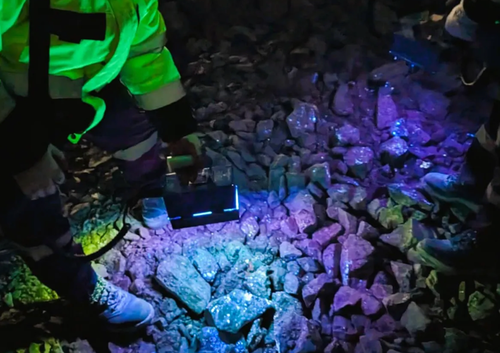
A television crew went down Sangdong. Korean broadcast news took its cameras underground – blasting in the dark, tungsten glowing blue under UV light, 4.7 kilometers of tunnels – and came up with the same conclusion we keep making: a mine the West wrote off 30 years ago is now one of the few places outside China that can actually supply the metal, with most of its output already spoken for by the United States.
Watch Here: Sangdong At Center Of Western Race To Secure Tungsten
. . .
Tyler Durden
Tue, 09/01/2026 – 07:45

