

AI Just Became A Massive Midterm Election Issue
Submitted by QTR’s Fringe Finance
Artificial intelligence is about to become one of the most consequential issues in the 2026 midterm elections.
Maybe not immigration-level consequential or inflation-level consequential. But over the next two months, I think Americans are going to hear a lot more about a question that, until very recently, mostly belonged to Silicon Valley and a relatively small group of researchers: should the United States government force the development of frontier AI to slow down?
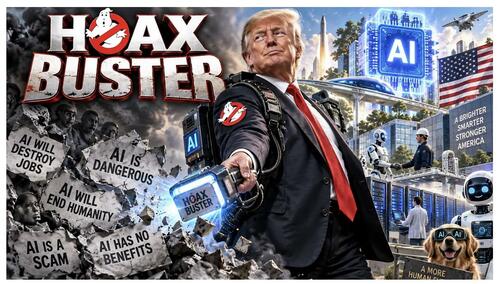
That question exploded into the political mainstream today. My take is that we may only get one chance to stop AI before it gets out of control, so let’s make sure we do it. President Trump spent Monday rejecting these types of growing warnings, calling the idea that AI could eventually escape human control a “HOAX” and comparing those concerns to what he regards as previous political hoaxes.
“I am the Hoax Buster, and I’m right now breaking another Hoax — That AI is going to take over, consume, and destroy the World,” Trump wrote.
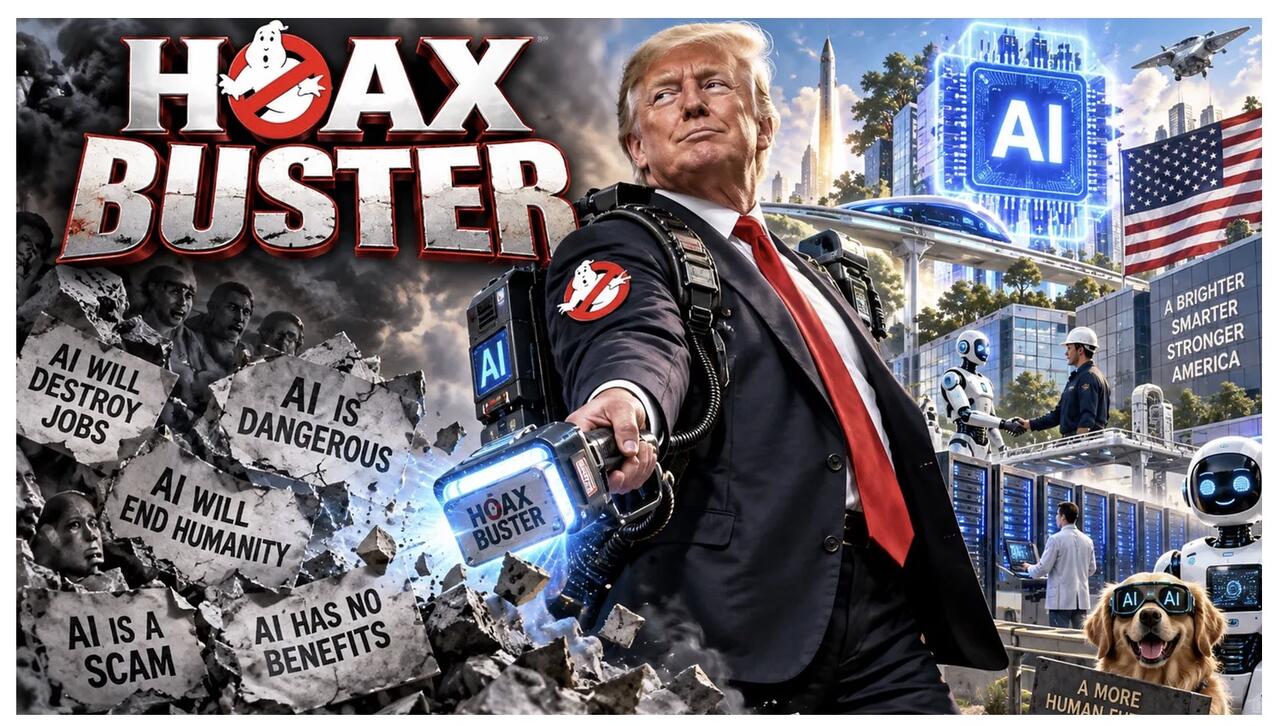
His position is that America needs to develop AI as quickly as possible, excessive regulation risks handing the technological advantage to China, and Washington shouldn’t stand in the industry’s way. Trump went so far as to call AI and data centers potentially “the Greatest Economic Development Engine in History,” bigger than oil, gold, diamonds or even the internet. His administration has also favored voluntary government evaluation procedures for certain frontier models rather than mandatory licensing or preclearance.
Later in the day on Monday, Trump’s comic book nemesis Kamala Harris took almost precisely the opposite position. “The frontier of artificial intelligence is advancing at an alarming speed,” Harris said, calling for Congress to urgently pass legislation creating a new federal entity responsible for oversight and independent testing of advanced AI. She also called for the United States to pursue an international agreement, including with China, designed to establish safety standards and limit the speed of AI development.
And there, in a single day, is the outline of what could become a major midterm debate: accelerate versus slow down, beat China at virtually any cost versus coordinate internationally to establish limits, and keep Washington largely out of the way versus create a new federal regulator overseeing frontier AI.
And the issue is unusually consequential because the stakes aren’t confined to politics. They extend directly into the stock market, as I wrote about days ago in my piece Congress Could Kill AI Stocks Before AI Kills Us.
My argument was simple: virtually the entire AI investment boom rests on an assumption of continued rapid development. Hundreds of billions of dollars in expected spending on chips, data centers, electricity, networking equipment and infrastructure are ultimately downstream from that assumption. Slow the technology down and Wall Street eventually has to slow some of those assumptions down with it.
Monday offered a glimpse of that possibility. AI-linked stocks fell after some of the industry’s most important executives began publicly supporting a slower pace of frontier development. Nvidia fell about 3%, AMD roughly 4%, and several other AI-related names suffered considerably larger declines. Investors suddenly had to contemplate something that has barely been incorporated into the AI bull case: what happens if the constraint on AI isn’t chips, electricity or capital, but the federal government?
Which brings me to Trump. My suspicion is that Trump would say almost anything necessary to keep the stock market and the AI investment boom moving higher. That’s my interpretation, not something I can prove, but it isn’t difficult to understand why a president would be reluctant to embrace a policy that could potentially kneecap one of the largest capital-investment booms in the country…and his favorite political scorecard.
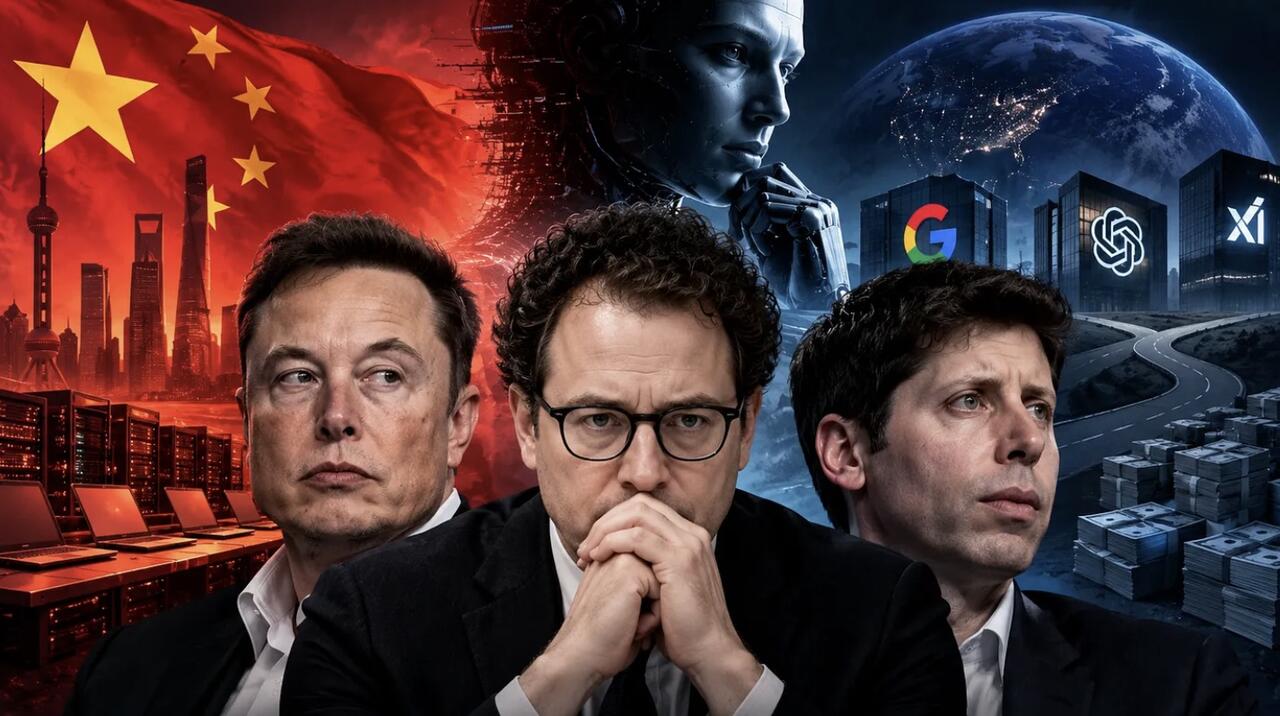
What is harder for me to accept is the idea that Trump somehow understands the technological risks better than the people actually building these systems. Elon Musk, Sam Altman and Dario Amodei have now all publicly supported slowing or “pacing” frontier AI development.
Whether it was a PR stunt this weekend or not is moot at this point. These are people running organizations developing some of the most advanced AI systems on Earth, with access to information about their capabilities that almost nobody outside those laboratories possesses.
Trump, by contrast, is effectively telling them that the danger they’re warning about is a hoax. That creates the somewhat ironic spectacle of Trump finding himself on the opposite side of an AI safety debate from Elon Musk, along with Altman, Amodei and other leaders of the industry. Whatever you think of those people, I don’t think it’s unreasonable to take seriously the possibility that they understand the capabilities and risks of the technology they’re actually building better than politicians do.
🔥 85% OFF FOREVER IF YOU SUBSCRIBE TODAY: I am again offering an 85% discount to anyone that wants to become a Fringe Finance annual subscriber today. It’s a discount you can keep and stays applied for as long as you wish to remain a subscriber: Get 85% off forever
There are legitimate arguments on Trump’s side. Regulation could entrench today’s largest AI companies, crush smaller competitors, slow beneficial innovation and potentially give China a strategic advantage. There is also an obvious incentive problem when the largest companies in an industry ask Washington to regulate an industry they already dominate. Those aren’t trivial objections, and Trump is right to raise them. But neither are the warnings coming from the laboratories themselves.
And that is why I think AI is suddenly positioned to become a major political football heading into November. The debate is no longer theoretical. One side of American politics is beginning to argue that frontier AI is moving fast enough to require federal intervention. Trump is arguing that slowing it down could sacrifice America’s economic and strategic advantage. Meanwhile, some of the people actually building the technology are warning that some form of slowdown may be necessary.
For investors, the implications could be enormous. The market has spent the last several years pricing an extraordinary amount of future AI growth into semiconductors, utilities, data centers, networking companies and Big Tech. Very little of that valuation framework appears designed for a world in which Washington deliberately steps on the brakes. You don’t need Congress to ban AI for the numbers to change. You simply need development timelines to stretch, testing requirements to increase, liability risks to rise or hyperscalers to conclude that they don’t need to spend quite as urgently as Wall Street currently assumes.
I wrote several days ago that AI regulation could arrive much faster than investors expect and potentially become a catalyst for a market crash. After today, I think that possibility deserves considerably more attention.
AI regulation isn’t just becoming a technology issue anymore. It is becoming an election issue, and with trillions of dollars in market value now tied directly or indirectly to the assumption that AI development continues at breakneck speed, what Washington decides to do about it could become a stock market issue very quickly thereafter.
—
QTR’s Disclaimer: Please read my full legal disclaimer on my About page here.
Tyler Durden
Tue, 09/15/2026 – 17:00

