
Germany’s Debt King Merz Gets a Greek Lesson in Fiscal Policy
Submitted by Thomas Kolbe
Revenge is sweet. It tastes all the sweeter the longer one has had to wait for it to arrive, and the deeper the pain of the humiliation that preceded it.
Some may still have the images of the great debt crisis of a decade and a half ago before their eyes: German politicians, led by then-Finance Minister Wolfgang Schäuble, traveled to Athens at regular intervals to make sure everything was in order. Greece, the supposed sinner of the debt crisis, had gone off the rails, accumulated too much debt and was quickly made the scapegoat for the financial-market and sovereign-debt crisis. It was convenient – because it diverted attention from Germany’s own failures.
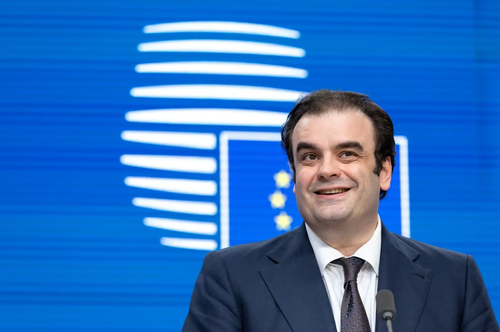
That someone had apparently left a score to settle was made clear by Greek Finance Minister Kyriakos Pierrakakis in an interview with Handelsblatt on Monday. When the conversation turned to the debt question, Pierrakakis, who also serves as president of the Eurogroup, noted that reforms in fiscal policy might be painful at first, but would ultimately pay off politically and economically.
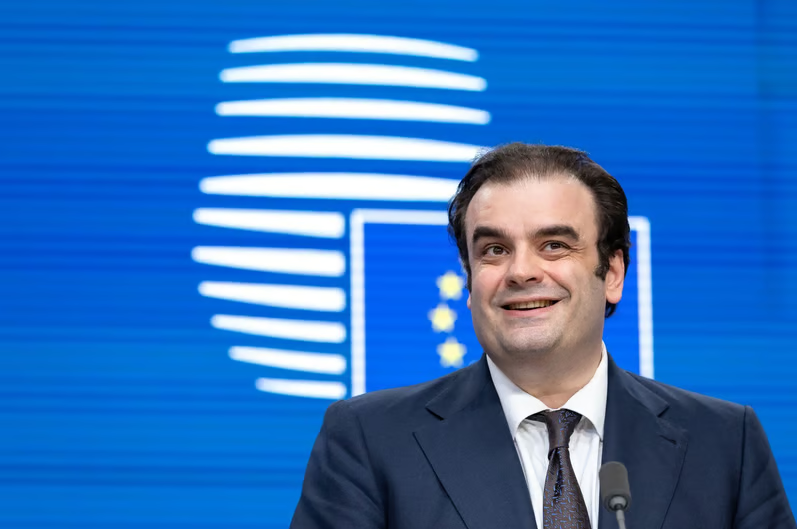
The man is right. And Berlin should listen to him, because the debt club around Friedrich Merz is knowingly driving the budget into the wall with new borrowing of more than 5 percent next year.
It really does sound like an open score to settle when the Greek generously praises Germany’s economic potential in flowery language while at the same time noting that the country is not untouchable: “Germany is the industrial locomotive of Europe” — Pierrakakis is mercilessly putting his finger on the wound. For he cannot have failed to notice how rapidly the country is economically destroying itself, how quickly it is deindustrializing in the grip of climate fanaticism and mutating from a nation of tinkerers and engineers into an open-air institution for moralists and degrowth ideologues.
While Germany has embarked on the road to second-class status, Greece is gradually growing out of its permanent crisis. The problem with the local economy remains the euro: The Greeks actually need a significantly devalued currency in order to compete more effectively on international markets. After the introduction of the euro and the cheaper borrowing costs made possible by Germany’s credit anchor, the country slipped into an artificial debt trap — the land of spendthrifts and pleasure-seekers, according to the ugly narrative.
German banks and insurers had invested as much as 45 billion euros in Greek bonds at the time — money for which German taxpayers ultimately had to foot the bill. Distorted interest rates caused by the introduction of the euro and the euro debt club’s highly heterogeneous economies were bound to produce such a disaster — and the next debacle is already taking shape: Debt is rising everywhere, while interest rates are climbing. The bond market is responding by selling government bonds, thereby driving up the cost of servicing debt through higher interest rates.
Were Greece’s efforts toward austerity and thrift ultimately in vain?
Whether the moment of the great debt reckoning has now arrived is rather unlikely — there is still plenty of room to push the sovereign-debt crisis to the point of rupture. Nevertheless, much is reminiscent of the period 15 years ago, when the bond market reacted in a similar way and the U.S. housing crisis spread through the market mechanism to the fragile European sovereign-bond markets. Greece, the EU’s smallest economy with the highest level of government debt, was hit first before the dominoes began to fall.
Schäuble’s Greek counterpart at the time was Giannis Varoufakis: an intellectual, committed socialist who stood up to the Teutons and the Troika of the European Central Bank, the International Monetary Fund and the European Commission — until his party Syriza and Prime Minister Alexis Tsipras were brought to their knees.
The consequence: austerity policy. Massive pension cuts, hospital closures — the shrinking of the welfare state. The Greeks experienced their social-policy Waterloo and have since managed to reduce their government debt ratio from the peak of the crisis, around 180 percent, to 146 percent.
Chapeau! The Greeks deserve every bit of respect in the face of the lax fiscal policies all around them — whether in Italy, Germany, France or Spain. Athens is staying the course, voting conservatively and struggling through this painful period of adjustment.
In the Handelsblatt interview, Pierrakakis becomes something of a fiscal-policy armchair philosopher: The cost of doing nothing, he says, is ultimately higher for everyone than the cost of reforms. That may be true. But the lesson contains a kernel of truth that will not move the German governing coalition even a millimeter toward the mountain of necessary reforms growing larger by the day.
Because consolidating this year’s 180-billion-euro deficit-ridden chaos budget would imply corresponding spending cuts. Tax increases would strangle the economy — Germany would have to begin with remigration, end development aid, reform the welfare state and seriously consider what to do about the war with Russia and the massive military buildup it entails.
The pain of austerity is still ahead for the Germans. Whether it is brought about through the bond market or through the harsh cuts of a reform government makes no difference.
All in all, it was a memorable interview because it describes Germany’s changing era from the perspective of the underdog. Above all, Pierrakakis’ remark that Germany has economic potential should resonate for a long time in its ironic sharpness. Because the country has overstretched its public finances and now lives on credit — just as the Greeks once did.
* * *
About the author: Thomas Kolbe, a graduate economist, has worked for or over 25 years as a journalist and media producer for clients from various industries and business associations. As a publicist, he focuses on economic processes and observes geopolitical events from the perspective of the capital markets. His publications follow a philosophy that focuses on the individual and their right to self-determination.
Tyler Durden
Tue, 09/22/2026 – 02:00

