

Pezeshkian Lashes Out In UN Speech: The Nuclear Bombs Are In Israel, But Inspectors Sent To Iran
Summary: Pezeshkian Addresses UN
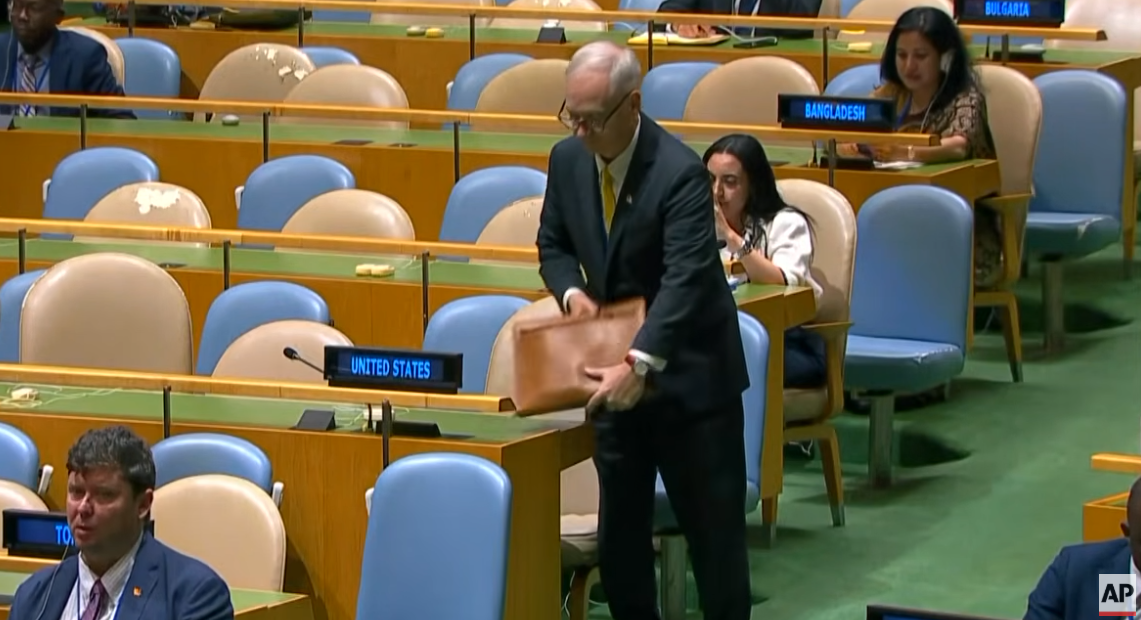
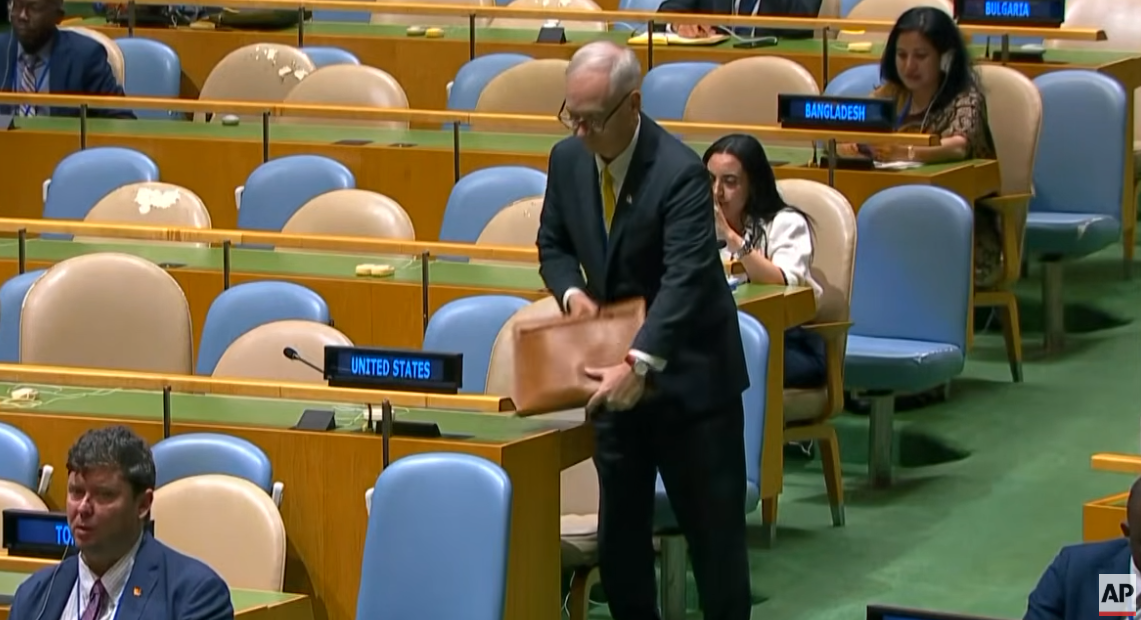
As expected, the United States delegation immediately walked out as Iran’s president began speaking, in front of what was not a very well attended address to begin with. He listed out a series of war crimes by the US aggressor but an accompanying theme was Iranian defiance while under the bombs. He also featured the Minab girls school attack by the US, underscoring that innocent children were killed – but contrasting this with Iran’s response, saying it did not hit civilian populations
Iran’s enemies have been make to learn we will not surrender, Pezeshkian declared. “They imposed the war on us, but we proved that we are not afraid of fighting a war, one that is defensive in nature.”
Another theme was the ongoing hypocrisy over the fact that “atomic and nuclear bombs are in the hands of the Israeli regime, but the inspectors are sent to Iran.” Pezeshkian further recalled that Iran while behind the table of negotiations came under the surprise bombs of US and Israeli warplanes. He repeated that “Israel has the [nuclear] bombs… and has not allowed a single inspection, yet they are rewarded.”
He also said, “The US wants to sacrifice the population of a country in order to seek its illegitimate goals” and so “This will become a world much more dangerous for all of us.”
On Hormuz and the question of negotiations, he said that the strait cannot be used for passage of weapons that will be used against Iran. While Iran is ready for diplomacy it strands ready to keep using its military power, the Iranian leader said. Overall, the speech did not focus very heavily at all on the prospect of new talks with Washington – something perhaps intentionally left out to appease domestic hardliners in the Islamic Republic.
* * *
Watch: Iran’s President Pezeshkian speaks
Immediately upon the Iranian leaders starting his speech, the US delegation walks out.
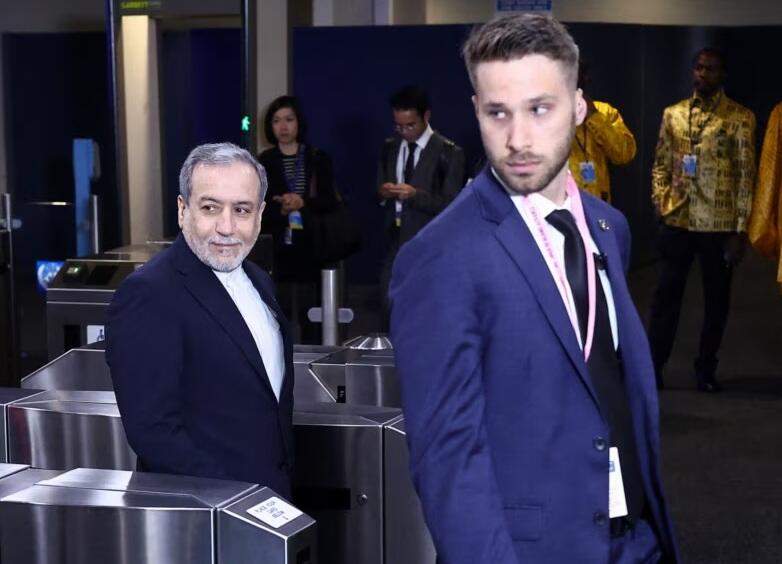
Earlier: We once again have differing versions of a key meeting in the aftermath of a significant and rare US and Iranian diplomatic encounter. The Tuesday 3-hour meeting on the sidelines of the UN General Assembly in New York was headed by Tehran’s foreign minister Abbas Araghchi, and on the other side by Trump’s envoys Steve Witkoff and Jared Kushner.
The US side had called the talks “very productive” – with the suggestion that the Iranians were in the mood to compromise for the sake of achieving a swift ceasefire and peace deal. However, The Guardian reports Wednesday, “Iran has pushed back on claims that it dropped former preconditions for reopening the strait of Hormuz in surprise talks held in New York under the mediation of Qatar…”.
“Trump said the three-hour talks held in a room at the UN headquarters had gone very well and been very productive,” the report continues. “He suggested further talks were possible imminently, which led to the price of a barrel of Brent crude to fall to below $100 (£75) for the first time in two weeks. Witkoff said the talks had been ‘encouraging, constructive and successful.’“
In Tehran, foreign ministry spokesperson Esmail Baghaei did not convey that there has been any shift in Iran’s negotiating position:
“The interaction that took place with the American side was through Qatari mediation. This interaction was aimed at conveying Iran’s conditions, including the end of the war in all its dimensions, the cessation of American aggressive actions, the naval siege, and the economic war, the release of Iranian assets and so on.”
The Iranian delegation conveyed to the US side the precise five conditions that Tehran has been pushing all along, the Iranian official insisted..
Among the ‘biggest asks’ – which the Trump administration has thus far shown openness to – is the release of all Iranian frozen assets. Instead, Trump and his Treasury Secretary Scott Bessent have only sought to tighten the anti-Tehran noose with ‘Economic D-Day’ and secondary sanctions targeting anyone still doing business with Iran.
On Sept. 20, the Iranian parliament speaker said that Tehran had “clearly communicated” its strict conditions to Washington via mediators:
- The chief negotiator warned that there would be “no return to the previous negotiating framework or reopening of the Strait of Hormuz” unless Iran’s preconditions were met.
- “We must both fight and negotiate,” Qalibaf said in remarks to the parliament, criticizing what he described as approaches that offer “no clear path to ending” the conflict. “This view…effectively takes the country toward an endless, exhausting war.”
Iranian ‘hardliners’ are said to be outraged upon learning of the Tuesday Kushner-Witkoff meeting, and so much of Tehran’s messaging in the aftermath has also been geared for domestic consumption:
Iranian Foreign Minister Araqchi’s move in dealing with Witkov was done without coordination with the relevant authorities, according to Tasnim, citing sources
US state-funded RFERL has listed out the following responses from within Iran:
Some called for impeachment proceedings to be launched though they were not clear if they wanted Araqchi or Pezeshkian out of office. One user charged that the meeting was “an even bigger mistake” than Pezeshkian traveling to the US for the UN General Assembly.
“If anyone’s met and negotiated with the Americans, they better stay there. [Iran] is a country for honorable people,” wrote Vahid Azizi, an economist and former official at the Iranian National Tax Administration under hard-line late president Ebrahim Raisi.
Hard-line commentator Mohsen Maqsudi said it was “sheer stupidity” to negotiate with Washington while “under threat” and cause a drop in oil prices. Tehran has been hoping that the rise in fuel costs will pressure Trump into ending the war.
Hardliners ask: why negotiate with the Americans at all, and why provide optics which will push down the price of oil? Supreme National Security Council secretary Mohsen Rezaei has sought to calm domestic criticisms on Wednesday:
“If the United States does not comply,” he said, the Strait of Hormuz will remain closed and negotiations will not resume. He added that the U.S. must first “earn the trust of the Iranian people.”
Today, on the sidelines of the United Nations General Assembly, we engaged in lengthy talks with the Iranian delegation through the mediators, who shuttled between the two sides throughout the day. They successfully completed a round of discussions that we hope will prove…
— Special Envoy Steve Witkoff (@SEPeaceMissions) September 22, 2026
Like Washington, the Iranian side does not want to ‘endless war’ – but has also vowed to outlast the Trump administration. The US President himself has lately conceded that the Iranians are waiting till after the November midterm elections to strike a deal, expecting that the Republics will lose Congress.
Tyler Durden
Wed, 09/23/2026 – 10:46

