

Bessent Plays Hardball With “Bloomberg Bros”: Yields Spike As Treasury Accepts Just 68% Of Maximum Buyback Offers
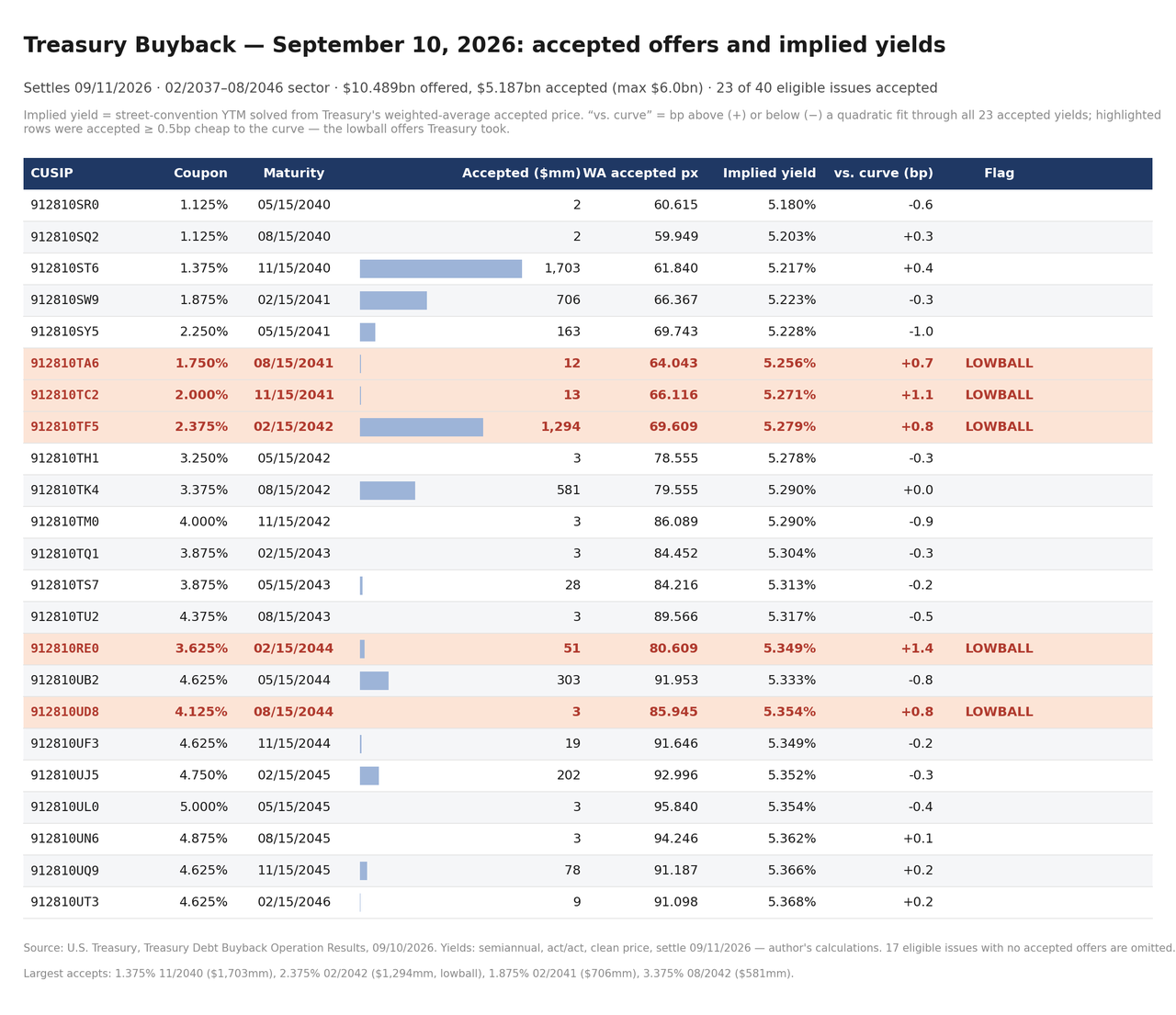
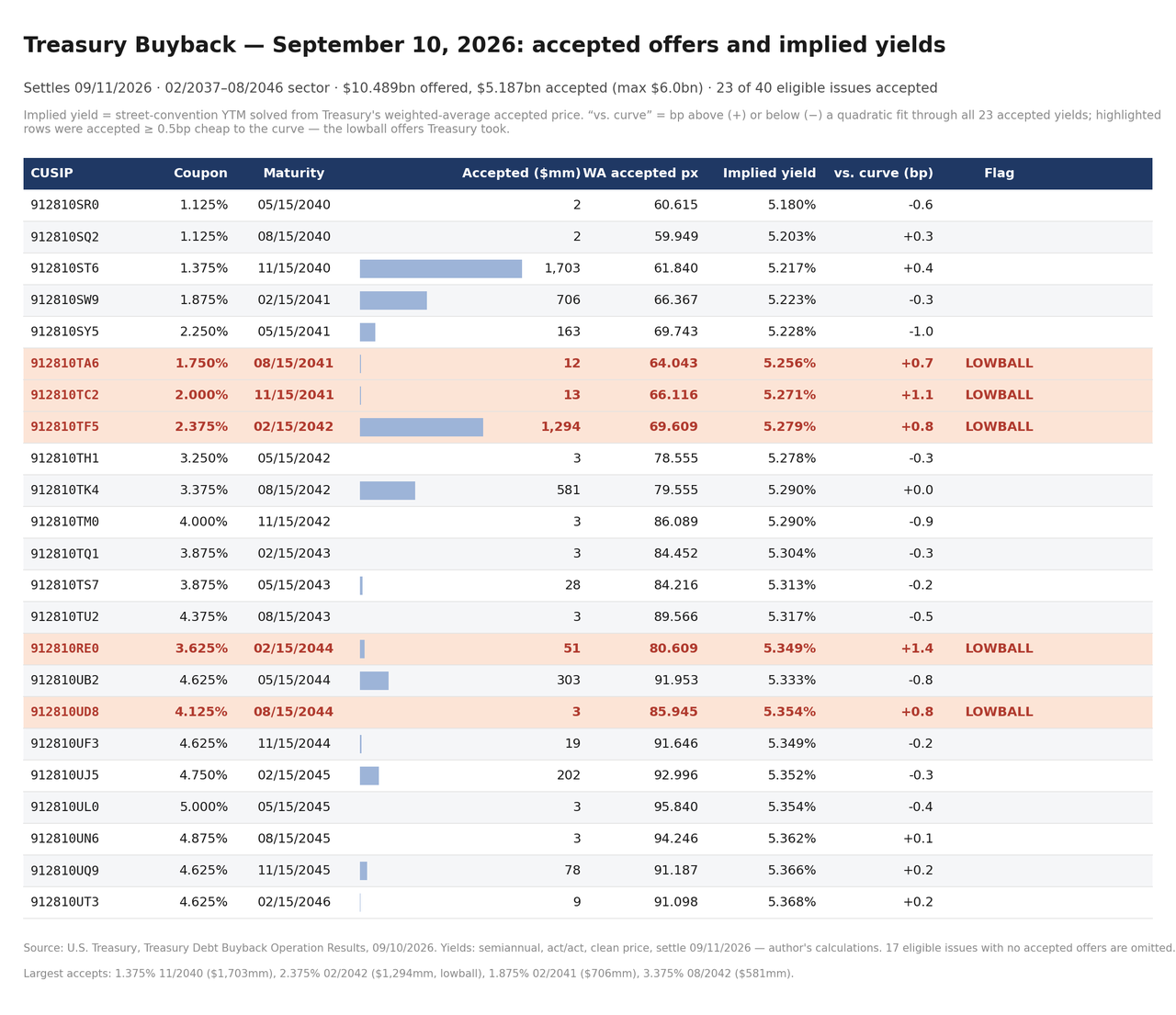
Two weeks ago, treasury yields spiked to a 3 year high (still well below 5%), after the first expanded Treasury buyuback operation which had a maximum capacity of $6 billion, resulted in just $5.187 billion in actual buyback offers accepted by the Treasury.
That was a problem because as BofA’s rates guru, Mark Cabana, wrote just ahead of the first buyback (his note is available to pro subs), over the last several operations the 10y-20y buybacks had received $18.7 billion of offers on average, or about 9 times oversubscribed (at the old maximum par amount permissable of $2 billion), and Treasury has always bought the maximum.
“A purchase below the max would be unprecedented for the 10y-20y bucket,” he wrote.
In the end, the repurchase was some 14% below the max, and that spooked markets because it indicated that dealers were hoping Scott “the house” Bessent was desperate enough he would accept even lowball bids. In the end, he didn’t even though a handful of lowball offers were indeed accepted.
So fast forward to today when moments ago the Treasury conducted the first expanded “liquidity support” buyback operation targeting 20-30 year nominal coupons, with the same maximum size of $6 billion.
Surely today bid/ask would be much closer and the Treasury would accept all of the cusips eligible for buybacks… otherwise why even bother expanding the buyback operation.
Well… wrong again, because moments after 2pm we got the results from today’s expanded buyback op, and they were even worse than the first one: with $6 billion maximum par amount to be redeemed again, the Treasury received offers for $10.489 billion – identical to the Sept 11 operation – but accepted just $4.078 billion, which is only 68% of the $6 billion cap, down notably from 86% the first time around, which was already a big drop from the 100% it had accepted virtually every time prior!
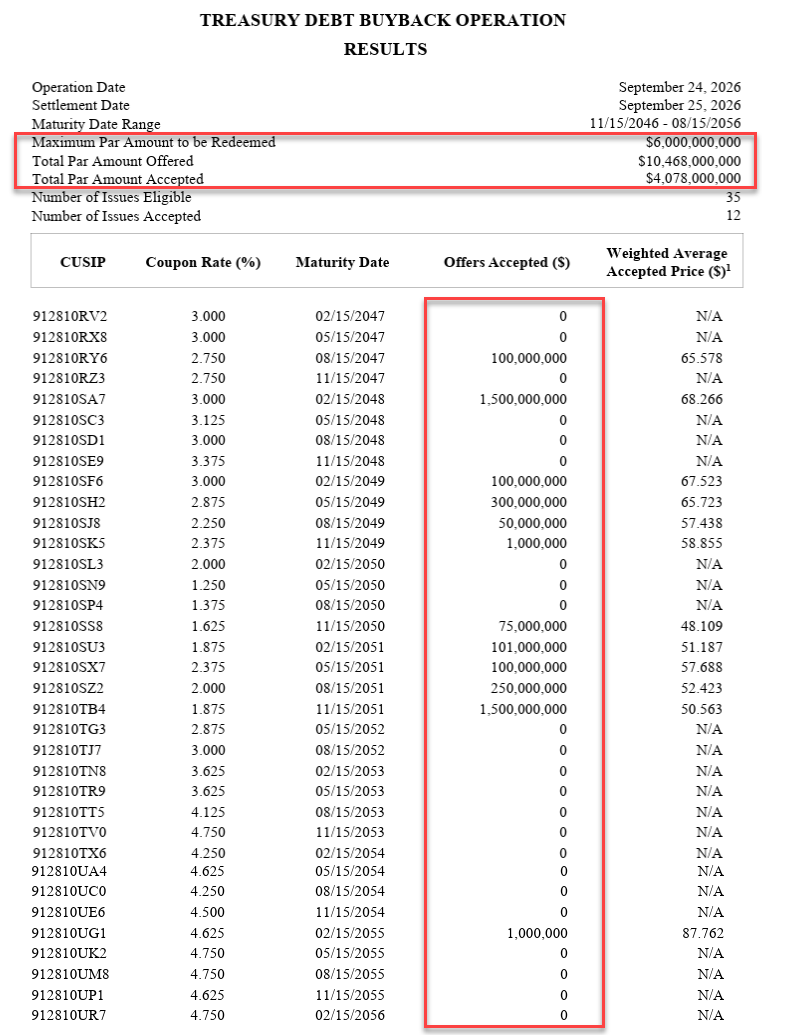
Why not accept the full $6 billion, again? Well, it appears that “The House” is refusing to play ball with – or pay – the Bloomberg Bros, and the Treasury kicked out virtually all lowball offers today.
Using the same method as the Sept 10 exhibit, none of today’s accepted bonds count as lowball offers, compared to 5 two weeks ago. The rule was 0.5bp or more cheap to a curve fitted through all the accepted yields. Today, every one of the 12 accepted issues came within ±0.6bp of that curve (and just two were a near miss)
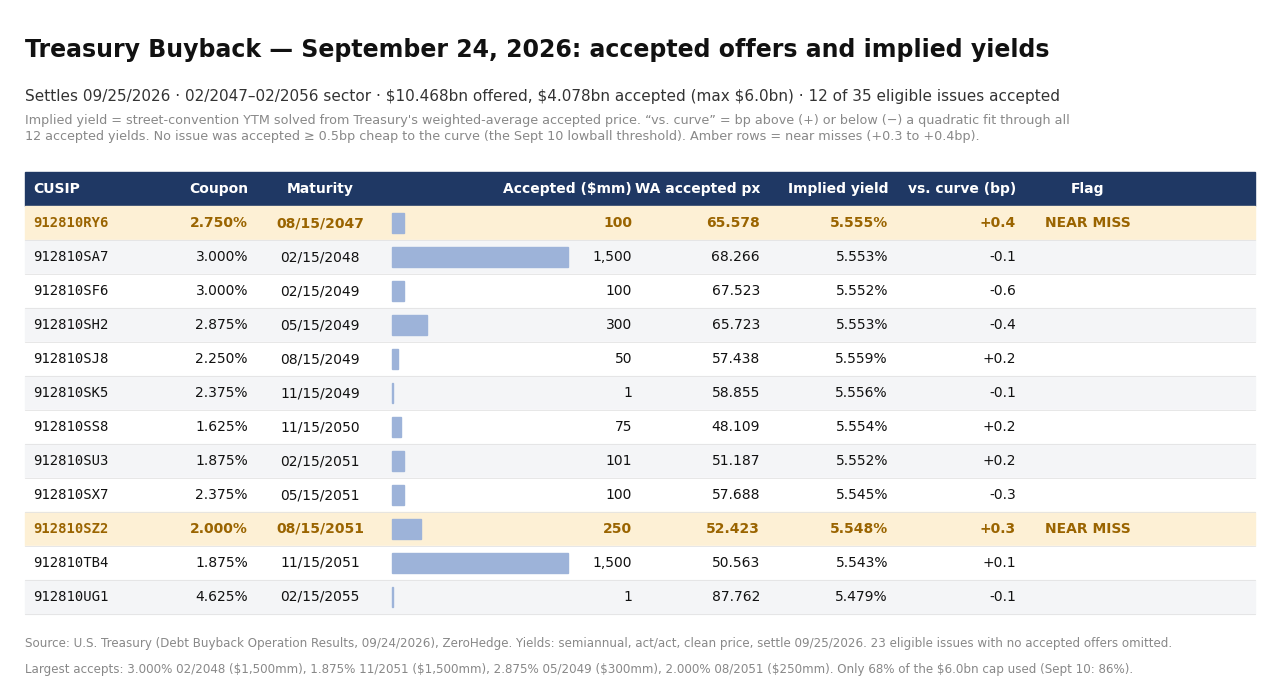
In other words, the Treasury decided that just $4.1 billion of the $10 billion were fair, and it turned down about $6.4bn of low ball offers rather than pay up. It also accepted only 12 of 35 eligible issues. The two largest purchases were $1.5bn each of the 3.000% 02/2048 and the 1.875% 11/2051, and both came in right on the curve (−0.1bp and +0.1bp).
Other things to know:
- Accepted prices imply yields of 5.54–5.56% for bonds maturing 2047–2051. That’s about 40–45bp over the 10Y at 5.10–5.16%, which looks sensible for this part of the curve.
- The long end yields less. The 4.625% 02/2055 prices at 5.48%, about 7bp through the 2051s, so yields fall at the very long end. Only $1mm of it was accepted, so it doesn’t change the result.
And while we commend Bessent’s resolve not be bullied around by the Bloomberg bros, the fact that for the second consecutive “expanded” buyback operation, the Treasury accepted well below the minimum, meant that there was far less “liquidity support” than intended, and sure enough yields spiked to a new multi-decade high.
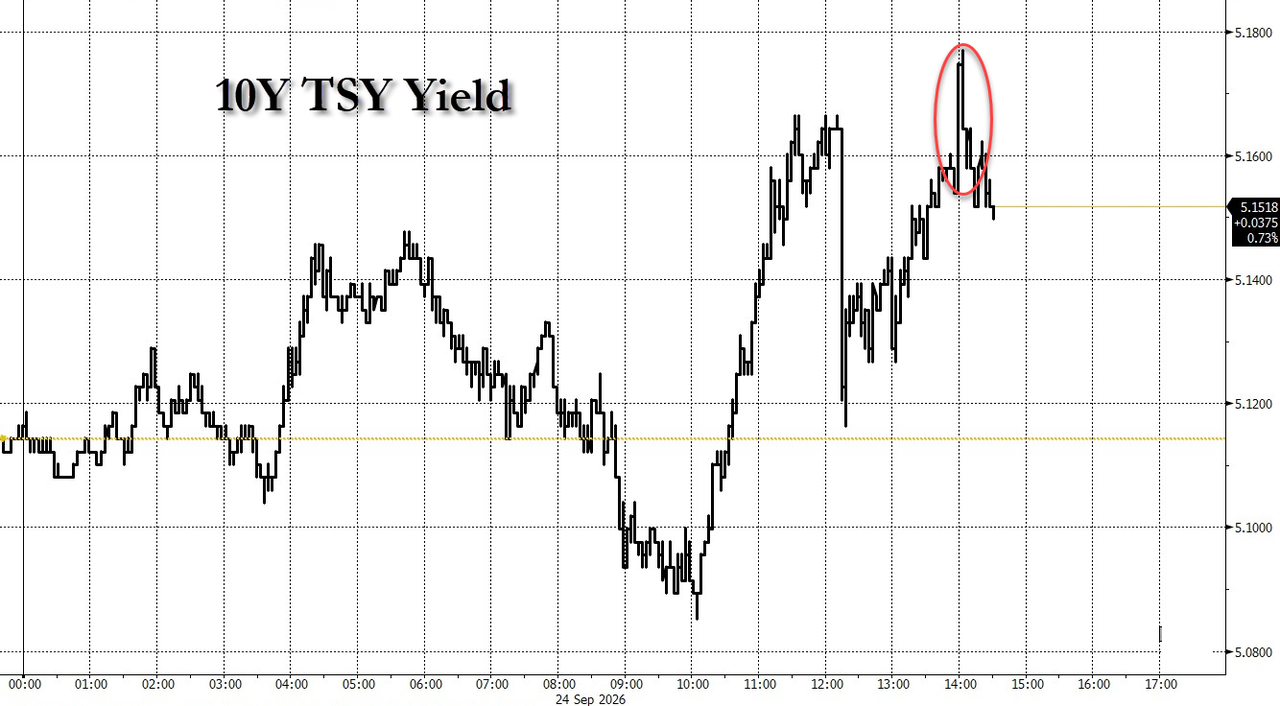
This is turning into quite an interest drama, and many are curious who will win: will Bessent keep turning down lowball offers even if it means a continued meltup in yields, or will he finally cave and accept a few lowball offers allowing a handful of dealers to make a few million extra, if it means not risking the collapse of the bond market. We look forward to the next expanded buyback in two weeks to see which way this clash resolves…

Tyler Durden
Thu, 09/24/2026 – 14:36

