

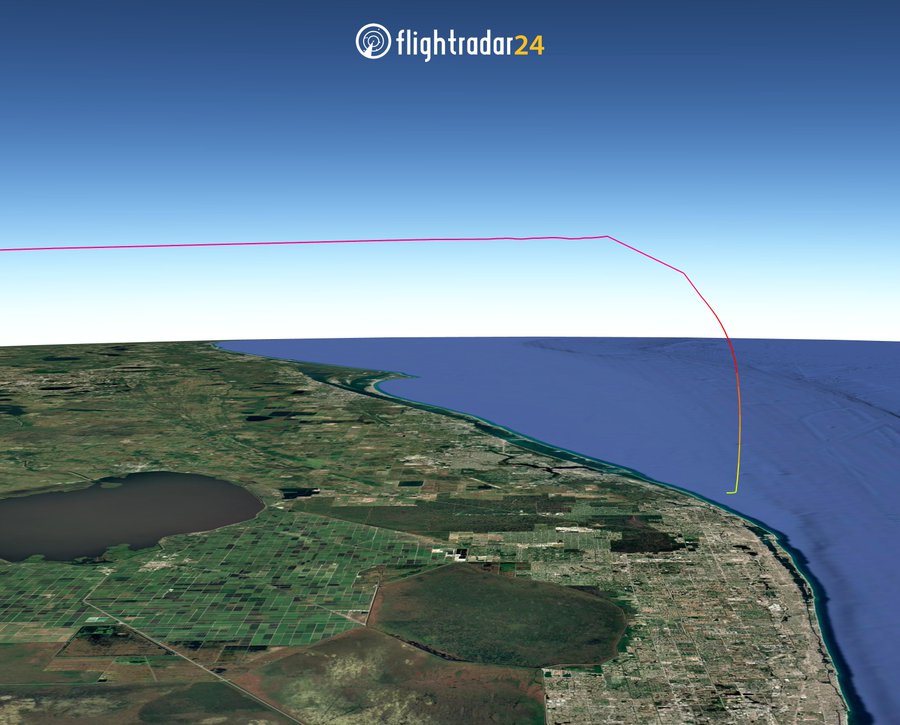
“Mach Tuck”? Investigators Say Learjet 60 May Have Broken Apart Before Florida Crash
The Learjet 60 that crashed on Sunday afternoon in Palm Beach County, Florida, killing all nine people aboard, may have broken apart before slamming into the ground.
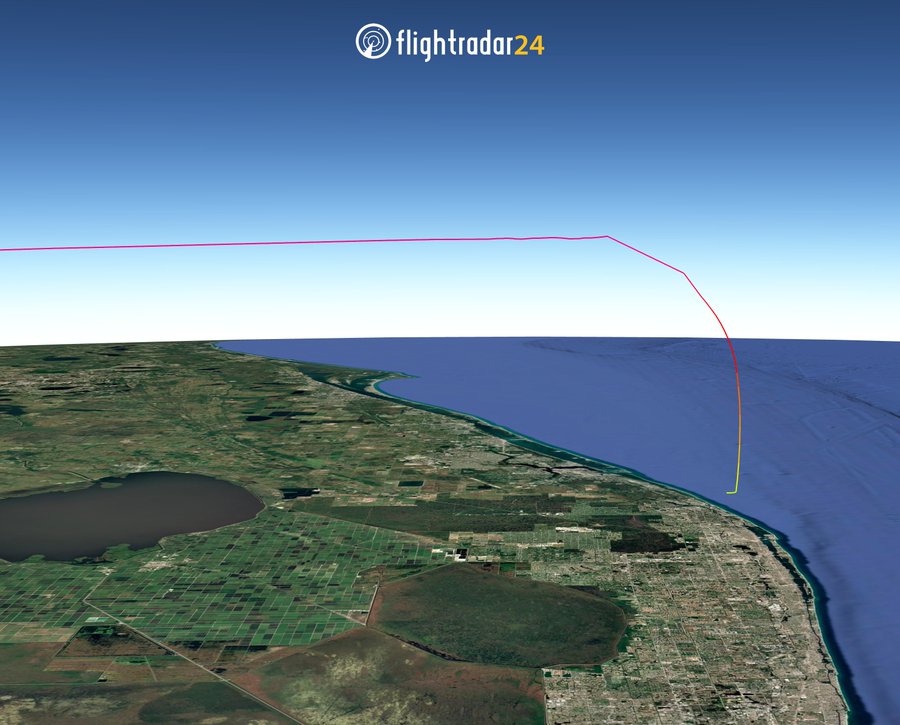
The Learjet 60 (N722BD) was flying from Austin, Texas, to North Eleuthera Airport in the Bahamas (with passengers likely visiting Harbor Island) when it encountered severe thunderstorms and turbulence.
The young woman copilot reported icing at 35,000 feet, followed shortly by overspeed conditions and an accelerating descent rate of between 10,000 and 22,000 feet per minute.
“The weather conditions are a major focus of the investigation,” NTSB board member Tom Chapman said, quoted by Reuters. Investigators have found evidence suggesting an in-flight breakup and may locate aircraft parts some distance from the main impact area, he added.
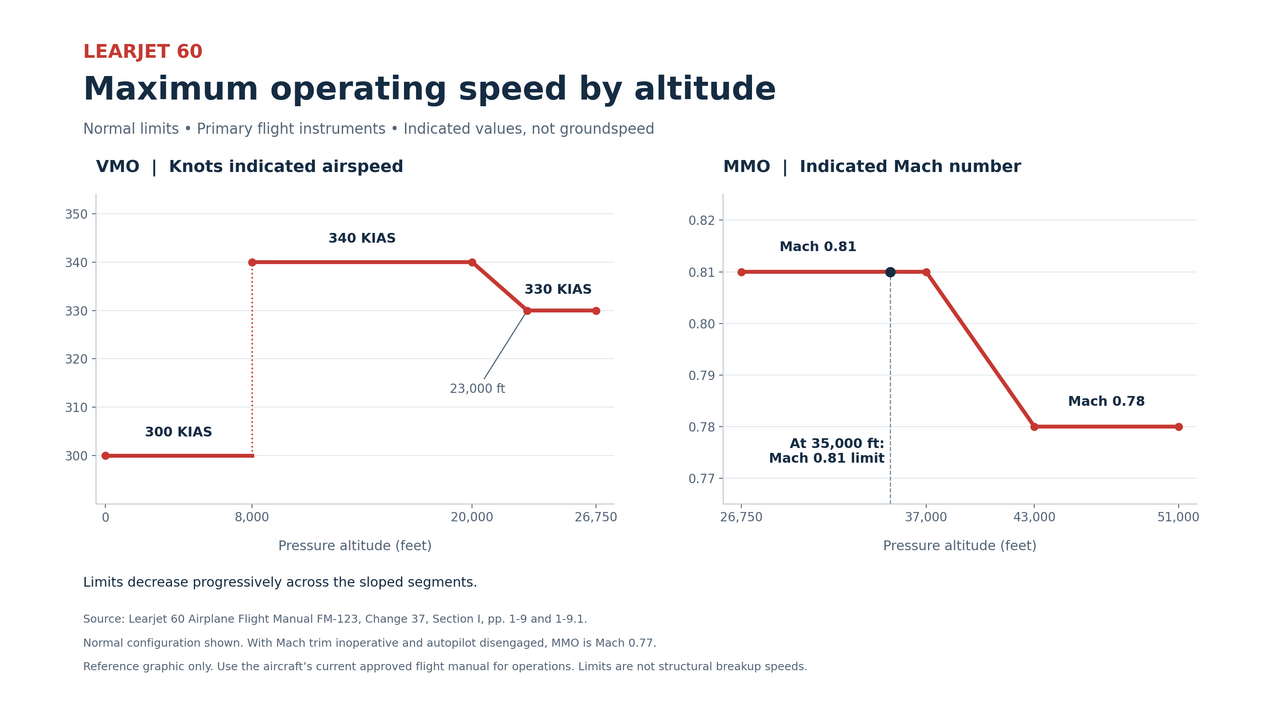
The Learjet’s maximum operating limits, VMO and MMO, change with altitude. At the altitude the jet was flying before the crash, the operating limit was around Mach 0.81:
There are concerns that icing and moderate turbulence led to a phenomenon called “Mach tuck,” in which a jet’s nose pitches downward at high speeds as airflow over parts of the wing becomes supersonic and shock waves form.
If so, it may explain why the pilot lacked sufficient elevator control due to an in-flight breakup as the aircraft exceeded its maximum operating speed.
Unconfirmed reports on X say the Instagram account “divisionofaero” found a flight control surface several miles from the crash site, which would indicate overspeed conditions and the resulting breakup of part of the aircraft.
NASA Administrator Jared Isaacman praised the 20-year-old female copilot for continuing to communicate with ATC during the emergency.
“She was doing her job,” Isaacman wrote on X.
The ATC audio of the young copilot communicating with controllers in the area is one of the worst recordings some commercial pilots say they have ever heard.

