

Flavio Bolsonaro Reveals Why He Fled To Miami; Then Makes One Big Admission…
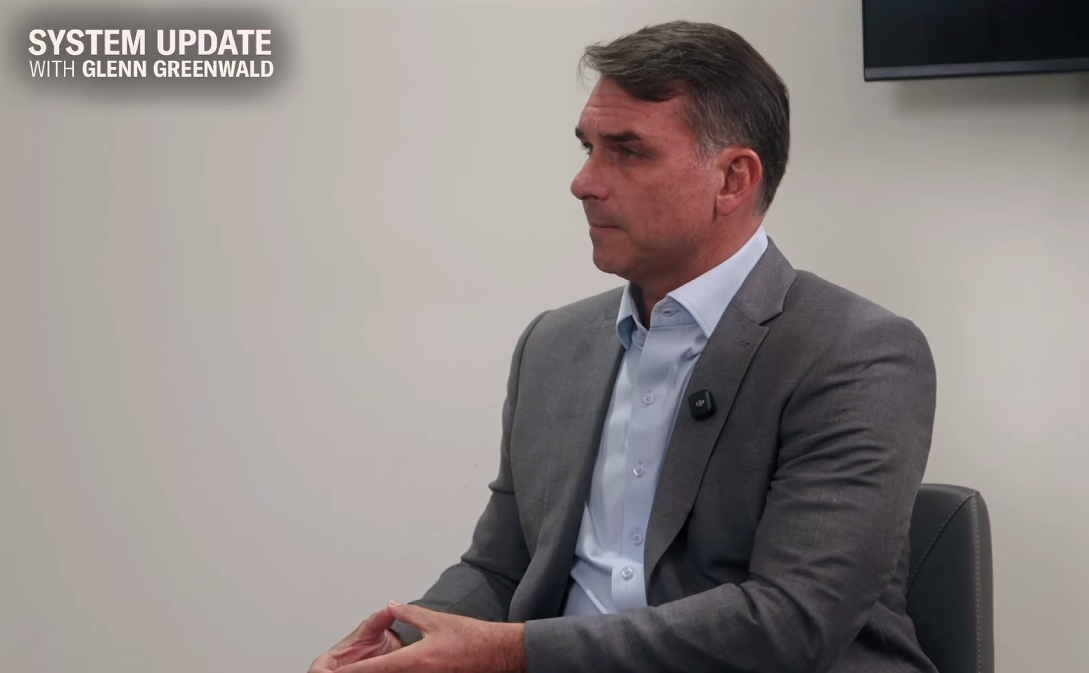
Flavio Bolsonaro, the Brazilian senator who fled to Miami two days after losing the presidential runoff to Lula, sat down with Glenn Greenwald on Thursday for his first on-camera interview since leaving the country – and spent much of it arguing the election was taken from him.
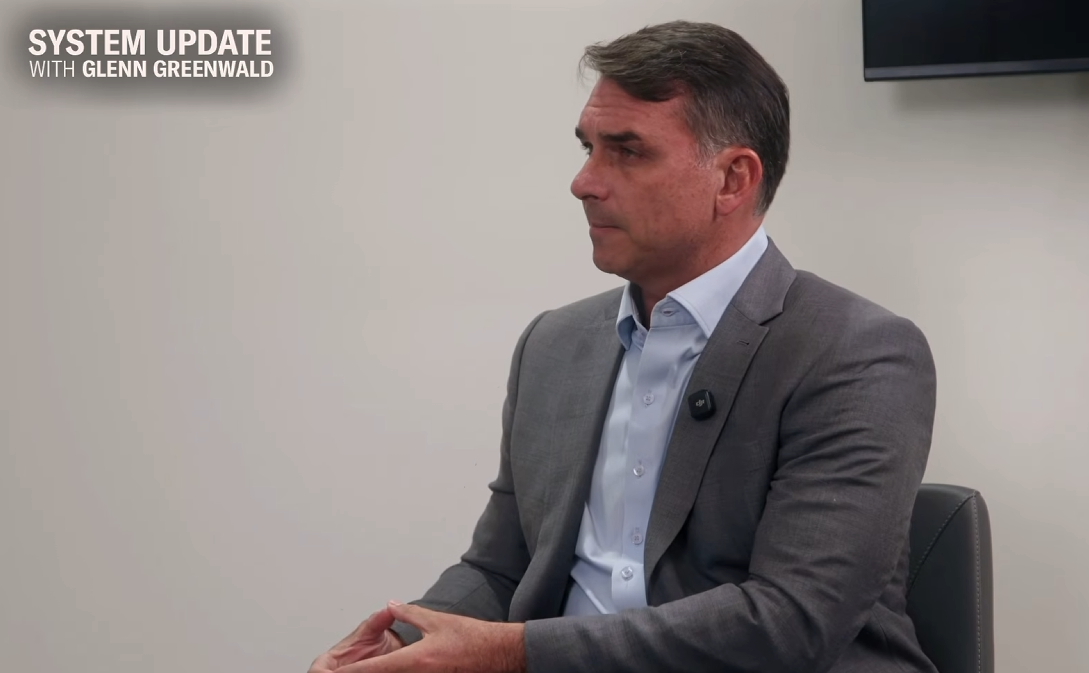
“I didn’t lose the election to my opponent,” Bolsonaro told Greenwald, saying the vote had been “taken over” by the system.
But when Greenwald pressed him on evidence, Bolsonaro conceded, “I have no proof of fraud.”
“That’s why I’m not going to challenge this in the Brazilian courts, because I don’t have proof and I never will,” he added, arguing that investigating the matter is forbidden in Brazil.
The nearly hour-long interview, released Friday on Greenwald’s Substack and YouTube channel, covered Bolsonaro’s escape, the probes that led Supreme Court Justice Alexandre de Moraes to order him to surrender his passports, money from disgraced Banco Master banker Daniel Vorcaro, and whether he still considers himself Brazil’s rightful president. Bolsonaro is under investigation for alleged corruption, money laundering and tax evasion in two cases, including allegations that a sports betting company was used to launder fraudulent deductions from government pensions. He denies wrongdoing.
“Actually, I didn’t leave Brazil, I left for Brazil,” Bolsonaro said of his departure, adding that he sees no conditions for a return while things in Brazil remain as they are.
His case that the vote was rigged rests largely on arithmetic. Lula, who was reelected by roughly 4.4 million votes, added 10.3 million votes between the first round and the Oct. 25 runoff, Bolsonaro said – more than the roughly 9 million votes cast for every other first-round candidate combined. “There’s no mathematical or statistical explanation, nothing, for Lula having gotten all those extra votes,” he said. “It’s impossible, unless the result was manipulated.”
He also pointed to a ruling by Justice Cristiano Zanin – Lula’s former lawyer – extending voting in Bahia by two hours, which he said was issued at 5:01 p.m., after polls had closed. When Greenwald noted that Bolsonaro’s own campaign had asked for extensions too, Bolsonaro said it only did so because the Workers’ Party had, that a little over 34,000 people voted in that window, and that the two-hour delay in releasing results was so “something could happen.”
Greenwald pushed back: if the left had the power to manipulate the result, why didn’t it do so in the first round, when Bolsonaro’s Liberal Party swept? Bolsonaro, who earlier boasted that his allies won 19 of 27 governorships and will hold 286 of the 513 seats in the lower house, didn’t take up the question, asking instead what could explain Lula’s surge in 21 days.
He also floated the idea that criminal factions such as Comando Vermelho and the PCC, which he said dominate areas home to more than 50 million Brazilians, may have forced residents at gunpoint to vote for Lula. Asked whether that actually happened or was just a possibility, he said: “I want an investigation.”
As we reported, a version of his post-election letter declaring him Brazil’s “true president-elect” circulated last week before being pulled. Bolsonaro told Greenwald that wording came from a first draft he had already vetoed, that it “ended up becoming public” without his doing, and that only the final version – calling him Brazil’s “leader” – went out on his account. Asked whether he still considers himself president-elect, he said “neither I nor Lula can say with 100% certainty that anyone was elected president of Brazil.”
Bolsonaro refused to say who planned or paid for the private flight out. “I’m not going to give details about anything,” he said, claiming anyone around him would be persecuted. He said he left Brazil with his driver’s license and entered the US with his passport, legally, and denied speaking with the US, Argentine or Israeli governments before the trip. He also declined to say whether, as has been reported, an Israeli national tied to the Mossad was in the car with him, while insisting it had nothing to do with the Israeli government. Since arriving, he said, he hasn’t spoken with anyone in the US government and now plans to start regularizing his immigration status – consistent with Marco Rubio’s claim last weekend that the US had no direct role in his departure. (translated)
He described the moment Federal Police notified him he could no longer leave the country – at the gate of the house where his father, Jair Bolsonaro, is serving a 27-year sentence under house arrest for attempting a coup after his 2022 election loss. His father, eyes welling up, told him he knew where they were going with this, Bolsonaro recalled. “Dad, I know, and don’t worry – I know what I have to do,” he said he replied.
Asked why he didn’t stay and fight the cases, as Lula did before his 2018 imprisonment and as his father did when he returned from Florida in 2023, Bolsonaro called his father’s return a mistake. “I learn from President Bolsonaro’s mistakes and successes, and I’m not going to make the same mistake,” he said. “I’m innocent. It’s the judge who would judge me who isn’t innocent.” (translated)
On Vorcaro, Bolsonaro said the money for “Dark Horse,” the film about his father, went to the production company as a private investment in exchange for a share of the profits, and claimed police had since acknowledged there was no public money in the film and no favor from him as a senator. Greenwald noted that Bolsonaro had initially denied seeking money from Vorcaro; Bolsonaro said the deal was covered by a confidentiality agreement.
He said he would vote to impeach Moraes, citing the R$129 million he said Moraes’ wife received from Banco Master for supposed legal work. “Everyone knows she didn’t practice law,” he said. “The one who practiced law was Alexandre de Moraes himself.” (translated) Asked about Justice Kassio Nunes Marques, a Jair Bolsonaro appointee whose son Greenwald said received millions from Banco Master, he declined to give an opinion, saying only that any justice who broke the law should be impeached.
Bolsonaro said he will keep serving out his Senate term, which ends Jan. 31, 2027, voting remotely as he did this week on Lula’s public-security constitutional amendment, and that he is living on savings for now, with income as a lawyer and from a business that makes graphene helmets. He said he would run for president again in 2030 if his party agrees – and that if his father regains his eligibility, “he’s my candidate.”
Brazil’s judiciary, he said, needs its credibility restored after Moraes threw it “in the trash.” “Today, Brazilian citizens look at the Supreme Federal Court and feel disgust.”

