

Russian Refineries Go Up In Flames Ahead Of Trump-Xi-Putin Summit In China
President Donald Trump will meet with Chinese President Xi Jinping and Russian President Vladimir Putin next week on the sidelines of the APEC summit in China to discuss nuclear nonproliferation, among other topics.
The meeting is expected to be the first trilateral sit-down between the three countries’ leaders. Trump has suggested the talks could help advance a new agreement among the superpowers.
Ahead of the meeting, our focus shifts to what Trump and Putin will discuss regarding a defiant Ukraine and its ongoing offensive campaign against Russian refineries (read here & here). The attacks come amid what past reports describe as a deep partnership between the CIA and Ukrainian intelligence.
According to NEXTA, Ukrainian drone strikes have targeted ten major refineries over the past two weeks.
Belarusian media outlet NEXTA wrote on X that “Putin will head into his meeting with Trump and Xi Jinping, just five days away, with Russia’s oil industry going up in flames.” The outlet described Ukraine’s drone campaign as targeting the oil industry that funds Russia’s war.
NEXTA said that, over the past two weeks, “ten oil refineries have been targeted,” naming facilities in Ryazan, Kirishi, Volgograd and Omsk, among others. It also cited two strikes on a pumping station near Samara and an attack on the port of Ust-Luga.
Ukrainian news outlet RBC-Ukraine offered additional details about the attacks on Russian refineries, reporting that:
In just one week, Ukrainian strikes disrupted the operations of nine of Russia’s 35 largest oil refineries. Actual oil refining volumes may have fallen by approximately 30%, to 200,000 metric tons per day.
These losses are significant for the Russian economy, which relies heavily on energy exports. At the same time, petroleum products are essential not only for supplying civilian consumers, but also for meeting military logistics needs.
The effects of the attacks are already being felt on Russia’s domestic market. In particular, on November 9, reports emerged that Rosneft had reinstated restrictions on fuel sales at its gas stations. In some regions, drivers were allowed to purchase no more than 30 liters of gasoline in cities and 50 liters per vehicle on highways. Restrictions were also introduced on fuel sales in jerrycans.
Beyond Russia, there has been some promising news: energy flows through the Strait of Hormuz have gradually recovered. However, they are unlikely to return to pre-war levels even as trade flows normalize, according to a recent Rystad Energy report.
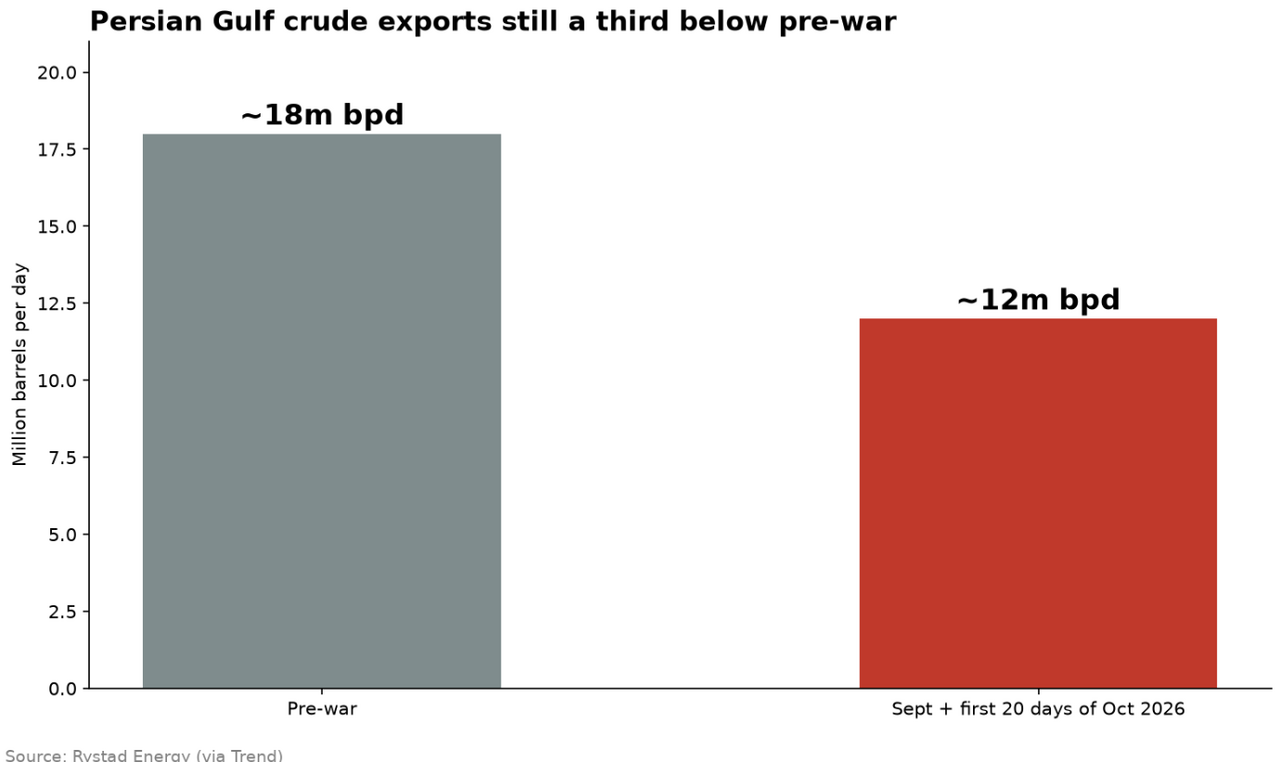
IEA Executive Director Fatih Birol said at the Singapore International Energy Week conference last month that global energy markets won’t return to pre-war conditions in 2027. Ongoing supply disruptions, especially of refined products such as diesel and jet fuel, will continue to pressure global economies and threaten fuel availability.
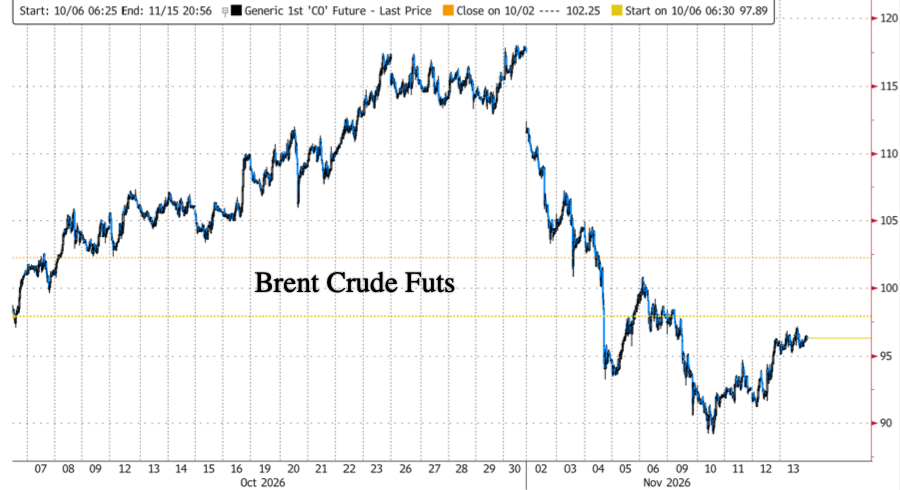
In recent weeks, the prospect of a US-Iran peace deal has erased a $20 war-risk premium in Brent crude futures, with contracts settling around $95 a barrel last week.
Our key concern, from Russian refinery disruptions to uncertainty surrounding Hormuz, is that refined product supplies will remain tight well into next year.
