

The Death Of Real Life: We’ve Confused Technological Progress With Human Progress
Authored by Spyridon Andrews via American Greatness,
I hate the digital age. There, I’ve said it. Go ahead, call me whatever you want. I’m a Luddite, an unenlightened Boomer, a dinosaur, or whatever other insult comes to mind. I don’t really care. In fact, if Boomers didn’t care what their parents thought, we certainly don’t care what our kids think. Although I suspect that, having lived long enough to see how things have turned out, more than a few of us regret not listening to our parents a little more carefully. But that’s a story for another day.
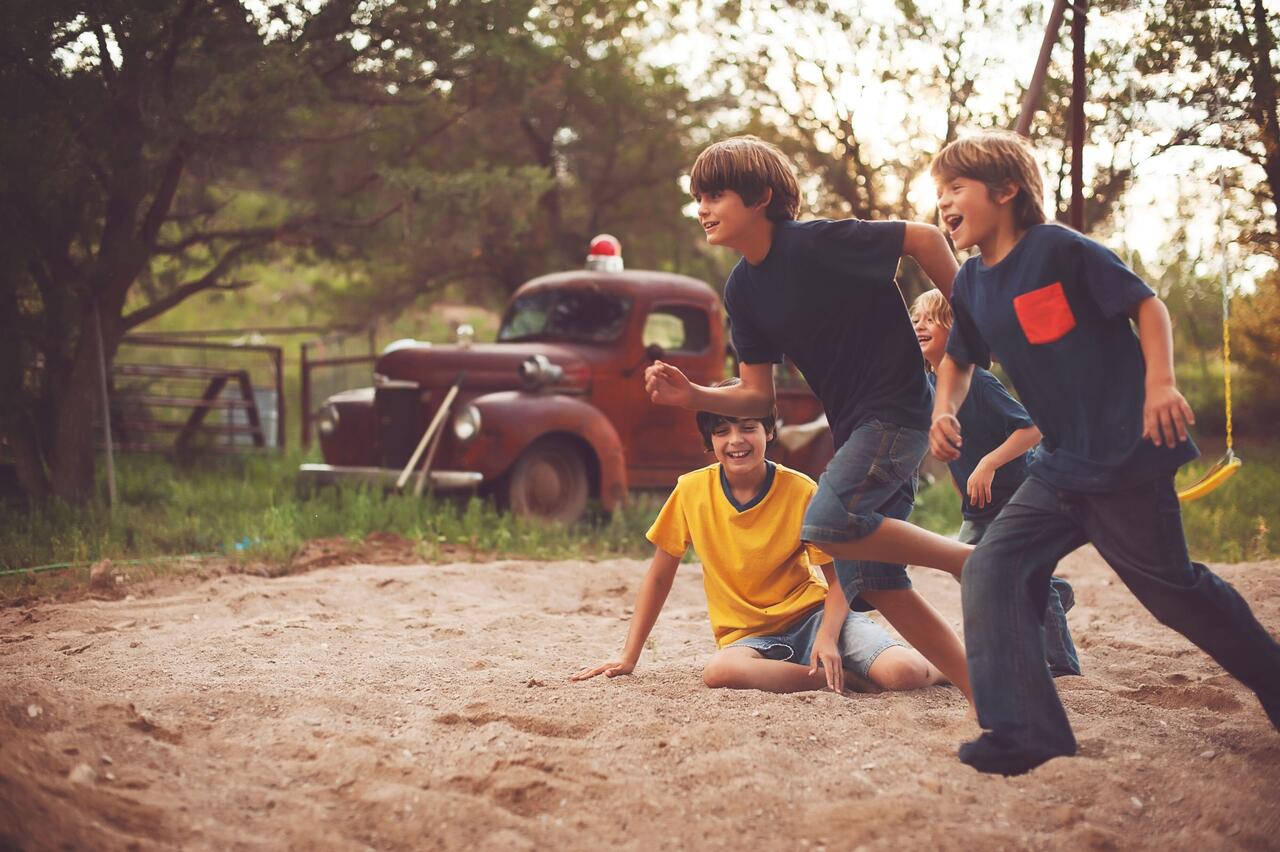
I’ve lived in the previous world, and I’ve lived in this one, and I’m not particularly impressed with this one. We’ve traded much of what makes us human for the ability to do things faster, more conveniently, and with as little human interaction as possible. We’ve confused technological progress with human progress, and I suspect that when we finally look back on all of this, we’ll conclude that we made a terrible bargain.
The world I grew up in is gone. It’s almost impossible to explain what it was like to young people today. It’s like trying to describe music to someone who’s never heard it or the smell of bread baking in the oven to someone who doesn’t know what bread is. I’m not saying people were better. They weren’t. People were cruel, ignorant, selfish, and stupid, just as they are today. And I’m certainly not suggesting that all our teachers were wonderful. Some were complete idiots. But that was part of growing up. When you came across a great teacher, it was a life-changing experience, and great teachers didn’t necessarily kiss your ass. They challenged you, made you work harder, and forced you to discover things about yourself that you hadn’t known when you walked into their classrooms.
We learned early that the world wasn’t particularly interested in our feelings. If you encountered a bully, he was standing right in front of you. You either stood up to him, figured out how to deal with him, or suffered the consequences. There wasn’t a button you could push to make him disappear. You couldn’t block people who disagreed with you, report them to Facebook, or retreat into a safe space where everyone was required to admire your opinions. Sometimes you had to work around people you disliked. Sometimes you had to work with them. Occasionally, you even discovered that they weren’t such bad people after all, which would have been a terrible disappointment to anyone who had already decided they were irredeemable.
We grew up quickly because we had to. We wanted independence, and our parents generally wanted us to become independent. They weren’t trying to be our best friends. They already had friends. Their job was to raise us so that one day we could get out of the house and make something of ourselves. When we went out at night, there were no cell phones, GPS trackers, or parents hovering over us like surveillance drones. Nobody knew exactly where we were, and that was largely the point. It was up to us not to do something stupid, and if we did, we might get hurt, arrested, or killed. These were powerful incentives to develop some judgment.
And nobody was checking Instagram to see how many likes he had received, because the odds were that only a handful of people liked you in the first place. And that was fine. Not needing everybody to like you was a superpower. Friends were real, and they were essential. They were your protection against the rest of the world. You were soldiers together, sharing your triumphs, humiliations, adventures, and occasional disasters. You saw one another at your best and your worst, and there wasn’t much opportunity to manufacture a completely fictitious personality because your friends knew you too well.
Friendship also meant accepting that other people were not put on Earth for your personal convenience. You had to deal with unusual people, difficult people, boring people, and people who were absolutely convinced that they knew everything. You couldn’t simply assemble a collection of agreeable personalities and call it a community. A community was a place where actual people knew one another, did things together, disagreed, argued, cooperated, and occasionally wished their neighbors would move somewhere else. But they were still neighbors, and when somebody needed help, the rest of us were expected to do something about it.
Communities weren’t online. You cannot be in communion with a person you’ve never met. That’s correspondence, not communion. You cannot really know someone without understanding his body language, his intonation, his peculiar habits, or the way he reacts when things don’t go his way. It’s easy to be friendly online when nothing is expected of you. It’s considerably more difficult when the neighbor’s kid breaks your window playing baseball or somebody knocks on your door because he needs help. But those encounters were precisely how we learned to live with one another. The world we’re constructing seems increasingly designed for turbo-nerds who cannot look another human being in the eye. In the old world, even the turbo-nerds had to learn how to talk to people. It was an essential survival skill.
And because we weren’t spending every waking moment whacking off on our phones, we actually did things. We played baseball, football, basketball, and whatever other games we could organize. We hung around with friends, got into trouble, and learned how to get out of it. We played in garage bands and basement bands, which was excellent preparation for dealing with the rest of humanity. Most of those bands were awful, except, of course, the ones I was in. But we learned something important. We had to cooperate, even when we disagreed about which songs to play, how to play them, who should sing, or who deserved the guitar solo.
Occasionally, somebody quit the band in a fit of artistic indignation, only to return the following afternoon because nobody else wanted him. Our parents weren’t mediating these disputes. They were upstairs wearing earplugs and praying that someday we’d discover another hobby. And when you finally performed in front of other people, you put yourself out there. People could laugh at you. They could tell you that you stunk. Even when you were good, somebody would find a reason to mock you. So you practiced. The goal was to get better, to prove them wrong, and eventually to shut them up. Criticism wasn’t necessarily a traumatic experience requiring professional intervention. Sometimes it was exactly what you needed.
Music itself was something you experienced. You bought a record, brought it home, put it on the turntable, and listened. You studied the album cover, read the liner notes, and argued about what the musicians were trying to accomplish. The entire album deserved to be heard, and if you didn’t understand it the first time, you listened again. When somebody bought a new album, it was an event. Friends came over to hear it. You discussed the songs, the arrangements, the musicians, and the equipment they played. We knew the difference between Keith Emerson and Rick Wakeman, or Duane Allman and Eric Clapton. We knew who played which guitar, who influenced whom, and why one musician sounded different from another. You’d have to be a complete dumb shit not to know these things.
Today, we have access to practically every recording ever made, and somehow music seems less important. It’s become background noise for exercising, shopping, driving, or staring at our phones. We don’t so much listen to music anymore as consume it. And the same thing has happened to books. We used to read because we wanted to understand something, or because an author had something to say that challenged the way we looked at the world. Now we can have a machine summarize a novel in three paragraphs, which apparently saves us the inconvenience of having to read it.
I remember when people read real books. Every author was different. They had different styles, different perspectives, and different ideas about what literature was supposed to accomplish. Some of them probably couldn’t have spent ten minutes in the same room without getting into a fistfight. Kurt Vonnegut challenged us. Joseph Heller’s writing style was as important as what he had to say. Hemingway, Salinger, Dostoevsky, and Tolstoy opened up entirely different worlds, and we wanted to know where their ideas came from.
We knew that Eric Clapton had borrowed heavily from Freddie King, so we listened to Freddie King. We learned that Dostoevsky had been influenced by Gogol and Pushkin, so we read Gogol and Pushkin. We knew Beethoven admired Bach, so we listened to Bach. One discovery led to another. We had the time to be curious because we weren’t spending six hours a day staring at photographs of ourselves. We argued about books and music with our friends, tried to understand what artists were saying and why it mattered, and practically everyone I knew wanted to become a great writer or a great musician before the unfortunate reality of having to earn a living intervened.
When you walked into someone’s house, there were usually books on the shelves and records somewhere in the living room. People had little libraries and record collections. You might find Duke Ellington, Benny Goodman, Elvis Presley, or something entirely unexpected. Those collections told you something about the people who lived there. Now you walk into a house, and there’s a television the size of a garage door and a collection of electronic devices that can turn the lights on and off without requiring anyone to get off the couch. Civilization marches on.
And then there were girls. If you wanted to ask a girl out, you couldn’t have some robot do it for you. You had to walk up to her, look her in the eye, and ask her yourself. The odds were pretty good that she’d tell you to get lost. It’s not as though girls were particularly nice. They weren’t. They could be catty, dismissive, and occasionally downright cruel. And their friends were usually worse. But that was the whole point. If you didn’t have the nerve to walk up to her and risk rejection, why should she take a chance on you?
And assuming she said yes, your troubles were only beginning. When you arrived at her house, you had to face her father, who generally disliked you before you’d even opened your mouth. He assumed you had dishonorable intentions toward his daughter, and there wasn’t much reason for him to trust you because, frankly, you were an idiot. He was probably right. But you had to look him in the eye, shake his hand, and convince him that you were at least a reasonably respectable idiot. If you survived that encounter, there was usually a brother or sister who didn’t like you either.
Dating required courage, patience, imagination, and the ability to survive repeated humiliation. It was excellent preparation for marriage. And women had an opportunity to see what men were actually like in the arena of life. They could see whether a fellow was courageous, funny, capable, generous, or completely full of shit. None of this business about a man having to be six feet tall, make a certain amount of money, and satisfy a list of specifications that reads like an advertisement for a used Mercedes. A man who was six feet tall could be a complete pussy, while a fellow who was five-foot-nine might have the world by the balls. I’m not prepared to argue that women were necessarily smarter in those days, but they certainly had more opportunities to discover what a man was made of before deciding whether he was worth their time. I don’t know what this business is today, but much of it doesn’t look like dating to me. It looks like shopping for people.
And that, I suppose, is what we’ve done to practically everything. We’ve turned human experience into a transaction. We’ve made it possible to live an entire life without having to confront another human being, learn to cooperate, master an instrument, read a difficult book, or develop an original thought. You can manufacture a personality, surround yourself with people who agree with you, and find an artificial companion who will never tell you that you’re full of shit. We’ve eliminated much of the friction that once forced us to grow up, and then we wonder why so many people seem incapable of dealing with the real world.
We’re told that modern life is better because we have more choices, more information, and more convenience. In certain respects, that’s true. Medical technology has improved enormously. We know more about diseases, nutrition, and the things that can kill us. I have no particular desire to return to an era when doctors recommended cigarettes. But we’ve confused technological progress with human progress. We walk around carrying tiny computers containing more information than the ancient Library of Alexandria, and what do we do with them? We argue with strangers, watch videos of people doing stupid things, and admire photographs of cats that don’t exist.
We have the ability to learn practically any language, yet we don’t bother because an application can translate everything for us. We can read the greatest works of literature ever written, but we’d rather have a machine summarize them so we can get back to something more important, like looking at ourselves on Instagram. We pass judgment on Shakespeare and Dante from our comfortable perch in the twenty-first century without understanding the world they inhabited, the circumstances they confronted, or the choices we might have made in their place. We have more information than any generation in history, but information is not wisdom. Having access to everything doesn’t mean you understand anything.
And while we’re busy congratulating ourselves on our remarkable sophistication, the people who govern us and the corporations that dominate our lives have discovered something wonderful. They can manipulate practically everything we see, hear, read, and believe. Information has become a weapon. Governments and corporations can categorize us, quantify us, monitor our behavior, predict our preferences, and influence our decisions. They can fabricate images, imitate voices, manipulate news, and manufacture entire narratives. And we’ve willingly handed them the information they need to do it.
We carry surveillance devices in our pockets, install listening devices in our homes, and allow enormous corporations to compile detailed records of our personal lives. Then we congratulate ourselves because the refrigerator can tell us when we’re running out of milk. Orwell could scarcely have imagined a population so enthusiastic about participating in its own surveillance. We’ve given governments and corporations extraordinary power over our lives, and we have remarkably little ability to hold them accountable. Technology was supposed to liberate us. Instead, we’ve made ourselves increasingly dependent on distant institutions we neither know nor control.
And this dependency extends well beyond our computers. Once upon a time, nearly every town had independent businesses owned by people who lived in the community. There was a bookstore, a record shop, a hardware store, a butcher, a baker, and a fellow who ran a little restaurant where everybody knew his name. These people weren’t necessarily trying to become billionaires. They were trying to make a living. Their businesses were places where people met, argued, exchanged news, asked favors, and learned one another’s names. They were part of the infrastructure of human relationships.
Today, we order something from a screen. A robot retrieves it from a warehouse we’ve never seen, and a stranger delivers it to our doorstep without ever speaking to us. We’ve managed to eliminate almost every opportunity for human interaction from the process, and we’re delighted because the package arrived in twelve hours instead of twenty-four. As those encounters disappear, the world around us becomes increasingly mysterious. We don’t know who grows our food, who manufactures our appliances, who builds our houses, or who makes the decisions that shape our communities. We’ve become dependent on enormous organizations to provide things we once understood how to obtain, repair, or produce ourselves. We call this convenience. I call it a loss of independence.
There are still places where remnants of the older world survive, although they’re becoming harder to find. I’m encouraged to see younger people rediscovering independent bookstores, vinyl records, and other things that were supposedly obsolete. God bless them. Perhaps they’re beginning to realize that there’s something missing from the world they’ve inherited. But the larger problem remains. We’ve created a society in which human relationships are increasingly optional, local communities are increasingly irrelevant, and our lives are increasingly managed by people and institutions we will never meet.
Every year, I feel the need to escape this increasingly artificial civilization and spend time somewhere that people still recognize one another by their faces rather than their passwords. For me, that place is Italy. Italy has plenty of problems, and the Italians are not particularly efficient. In fact, if you ever want to experience the limits of human patience, try dealing with an Italian government office. But I don’t care. In Italy, there are still places where an older civilization survives. People sit in cafés and talk. They argue in public squares. They know the butcher, the baker, and the fellow who runs the little shop down the street. They linger over meals, walk through their towns, and have conversations with people they encounter along the way. They don’t always seem particularly concerned about doing everything as quickly as possible. And thank God for that.
My Italian friends visit America and marvel at the enormous houses, the highways, the shopping centers, and the astonishing efficiency of practically everything. They’re impressed, but they go home. And they’re right to do so. They understand something that we seem to have forgotten. The purpose of civilization is not to make everything faster or more convenient. It’s to make life worth living.
I have a dream that one morning all the streaming services go down, and people have to leave their houses to find entertainment. That social media disappears for a week, and millions of people are forced to confront the terrifying possibility that nobody particularly cares what they had for breakfast. I have a dream that email stops working, and people have to pick up a telephone, that children go to basketball and softball practice after school, read actual books, write in cursive, learn languages, and discover how to play musical instruments.
I have a dream that strip malls and subdivisions are prohibited, and towns return to parks, public squares, and Main Streets where people can walk from one place to another without having to drive a three-ton automobile. I have a dream that corporate chain stores are hurled into outer space and independent shopkeepers once again become important members of their communities. I have a dream that architects rediscover how to design beautiful buildings and painters learn how to use color, perspective, and composition instead of splashing paint on a canvas and informing us that we’re too stupid to appreciate their genius.
I’d like to see an argument break out in a bingo parlor again. I’d like bowling leagues to become what people do on Tuesday nights and bridge games what they do on Fridays. I’d like people to join clubs, volunteer for things, and work together on projects even when they disagree about politics. I’d like entertainers to discover that insulting half their audience isn’t necessarily a brilliant business strategy, and that Frank Sinatra was a considerably more talented singer than Sabrina Carpenter.
I’d like restaurants to have to compete with mothers and fathers who actually know how to cook. And I’d like to see a community come together to accomplish something worthwhile without first requiring everybody to agree on evolution, climate change, immigration, string theory, and who ought to be president. Imagine a town where people could build a homeless shelter without having to conduct a political purity test on everyone who volunteered to help. What a radical idea.
I have a dream that civilization will once again be judged by the quality of the lives its people lead, the strength of its communities, the freedom of its citizens, and the richness of its culture. Not by how quickly someone can order a pizza or how many photographs he can store on his smartphone. And that a man or woman will be judged by the content of his or her character rather than the number of likes accumulated on Instagram.
I don’t miss the old world because I was younger then. I like being older. I’ve learned a few things, made plenty of mistakes, and have no particular desire to relive the humiliations of adolescence. I miss that world because there was more to life than staring at a screen. We had fewer conveniences, fewer choices, and considerably less information. We had to figure things out for ourselves, learn how to deal with people, how to disagree, how to cooperate, and how to live with the fact that the world wasn’t organized for our personal convenience.
We weren’t necessarily happier every minute of the day, and we certainly weren’t better people. But we lived in a world where human relationships were not optional accessories to existence. They were the substance of it. Somewhere along the way, in our relentless pursuit of convenience, efficiency, and technological progress, we seem to have forgotten that. We had something that we don’t have today.
