

From Stablecoin To Foundation: Tether CEO Unveils Asimovian Vision To “Reduce The Darkness”
Tether CEO Paolo Ardoino cast the company as Asimov’s Foundation, a seed of light for the coming dark age. Somewhat ironically, the seed money, it turns out, is the Empire’s own debt, and a growing pile of Swiss gold.
Ardoino envisions Tether through the eyes of Asimov’s psychohistory: civilizational decline can’t be stopped, but the “darkness” can be shortened by building open, unstoppable infrastructure ahead of time. Tether’s version is a six-layer “Independence Stack” running from solar kiosks in Africa to on-device AI.
The platform for that ‘stack’ is the giant stablecoin firm’s assets.
Bitcoin, Bills, & Bullion
In the far-reaching keynote address at Lugano’s Plan ₿ Forum posted to X this week, Tether CEO Paolo Ardoino told the audience that the giant stablecoin issuer holds “give or take 150,000 Bitcoin” of its own.
But it’s not just Bitcoin, according to Tether’s Q3 2026 attestation, prepared by BDO and published Oct. 30, Tether held $122.8bn of T-bills directly and $132.4bn including repo. That is 64% of reserves.
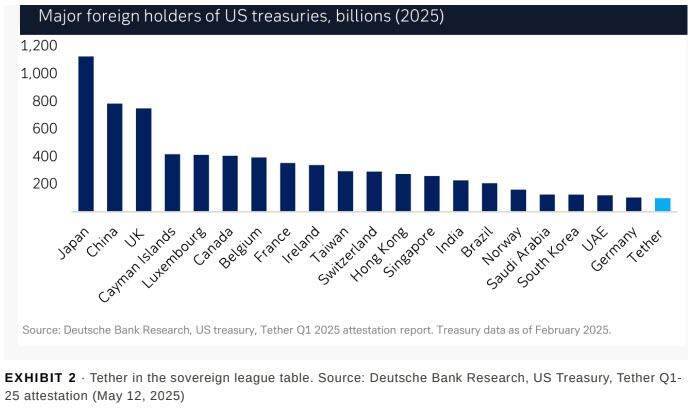
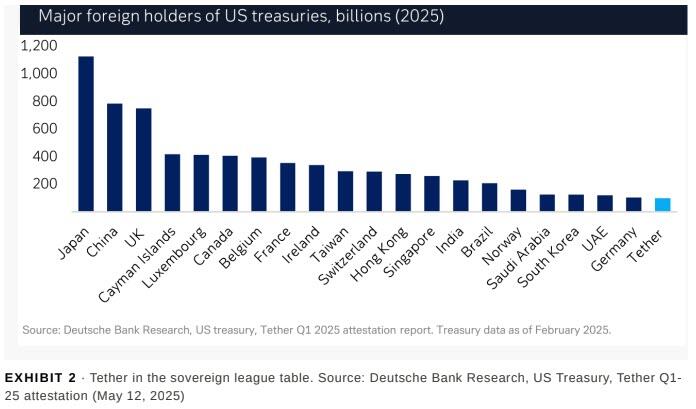
Just as importantly, Tether was the seventh-largest foreign buyer of Treasuries in 2025, and it now holds more bills than TBAC counted for the whole stablecoin industry in April 2025. TBAC’s view then was that stablecoins could reach about $2tn by 2028. That would add roughly $900bn of bill demand, concentrated at the front end by the GENIUS Act’s reserve rules. If Tether kept its 79% share, that implies about $790bn of Tether bills.
TBAC also named the downsides: the money could come out of bank deposits, and a de-peg would force Treasury selling. The catch is that USDT supply has been flat in 2026, at about $184bn. Q3’s rise in bills came from moving money out of reverse repo, not from new inflows.
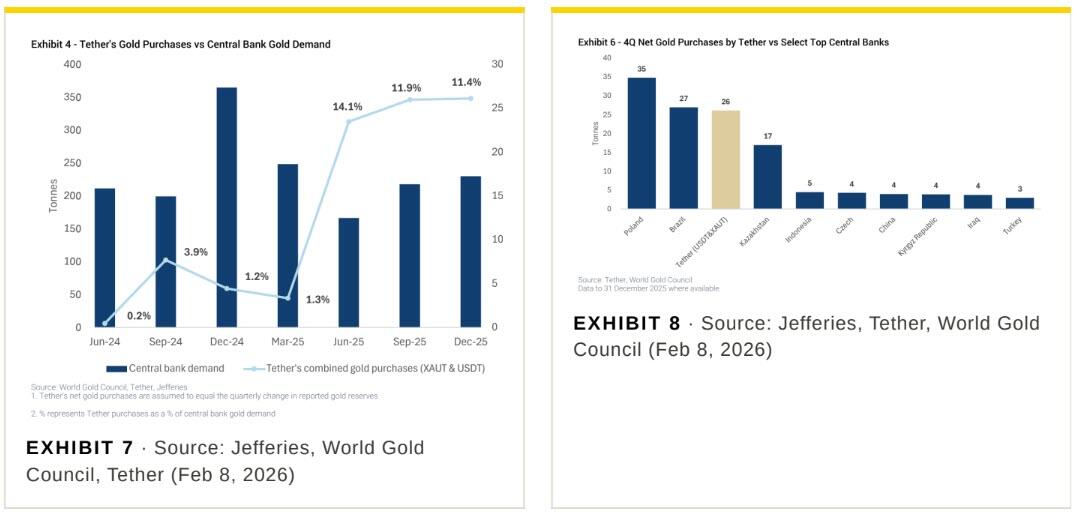
Jefferies and SocGen both identify Tether as the largest non-sovereign buyer of physical gold. Jefferies counts about 26t a quarter in 2H25, roughly 11–14% of central bank buying, and says that figure is a floor because gold on Tether’s own corporate balance sheet isn’t disclosed. SocGen calls Tether a hybrid of a central bank and a gold ETF.
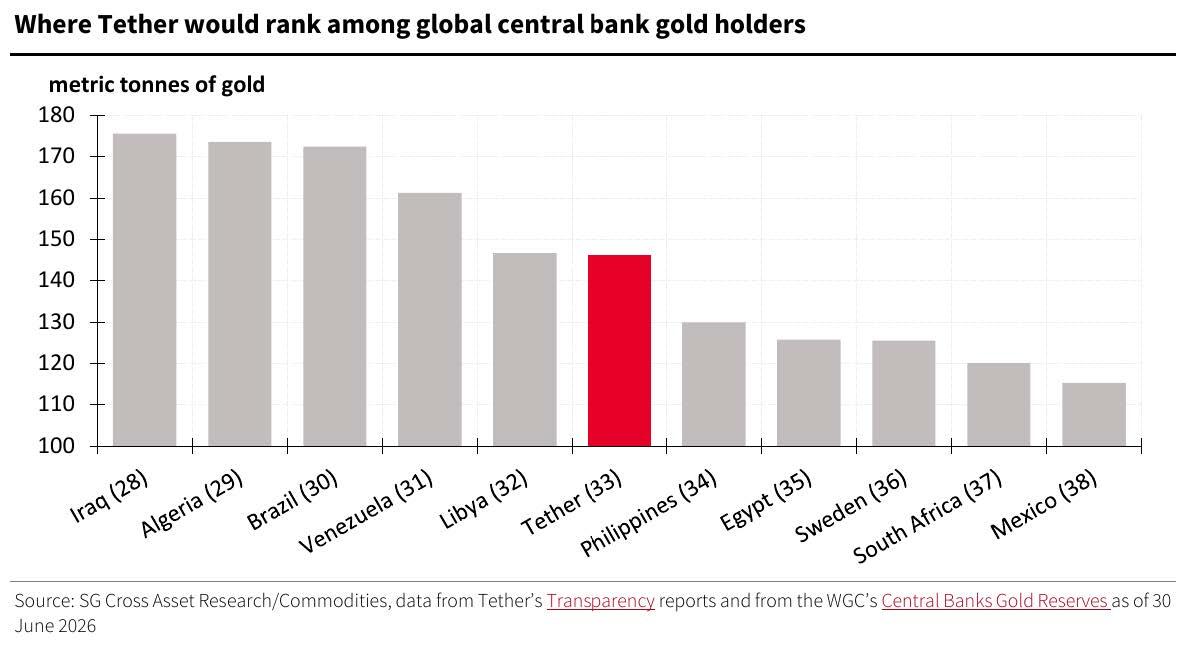
On its count, Tether had about 146.5t by June 2026, ranking 33rd among sovereign holders, and was the fifth-largest net buyer since 2023. SocGen’s nowcast put the total at about 161t by end-Q3. The Q3 attestation didn’t confirm that. Gold in USDT reserves was flat at $19.08bn, which supports SocGen’s warning that digital-gold demand is tactical and can reverse. Ardoino’s 10–15% gold target works out to about 143–215t, and Tether is already at the bottom of that range. Any further buying depends on growth in token supply or profits.
The same report showed Tether’s excess reserves nearly doubling to $7.95 billion from $4.1 billion at the end of June, on $1.5 billion in net operating profit for the quarter.
“It’s not much, but it’s honest work,” he said.
Earlier in the speech, Ardoino said Tether has “more than 730 million users in the world,” growing, by his account, by 30 million new wallets a quarter, “much faster than any other fintech company.”
He also called Tether “the biggest financial inclusion success story in history of humanity.”
Psychohistory: From Stablecoin To Foundation
But, Ardoino’s most notable and ambitious remarks opened his 50-minute Plan ₿ keynote, titled “Tether: A Psychohistory Interpretation.”
A cinematic trailer described the year 10,231, a galactic empire convinced of its own permanence, and mathematician Hari Seldon calculating its collapse. Then he made the link explicit. Psychohistory, Ardoino explained, is Asimov’s fictional unification of math, physics, psychology and history to forecast the behavior of whole populations over centuries, predicting the end of an empire and setting up a seed institution to shorten the dark age that follows.
Tether: a psychohistory interpretation.
My latest keynote. @tether pic.twitter.com/2dQUVAMZE5— Paolo Ardoino 🤖 (@paoloardoino) October 27, 2026
Ardoino said he picked it because Asimov is “one of my preferred authors” and the series’ lesson is that “empires will die.”
“You cannot prevent darkness. Darkness will arrive… But with technology, with mathematics, with being rational, we can find ways to reduce the pain and reduce the darkness.”
He likened Tether to that foundation, a company “focused on stability” that builds stability in society “through financial inclusion.”
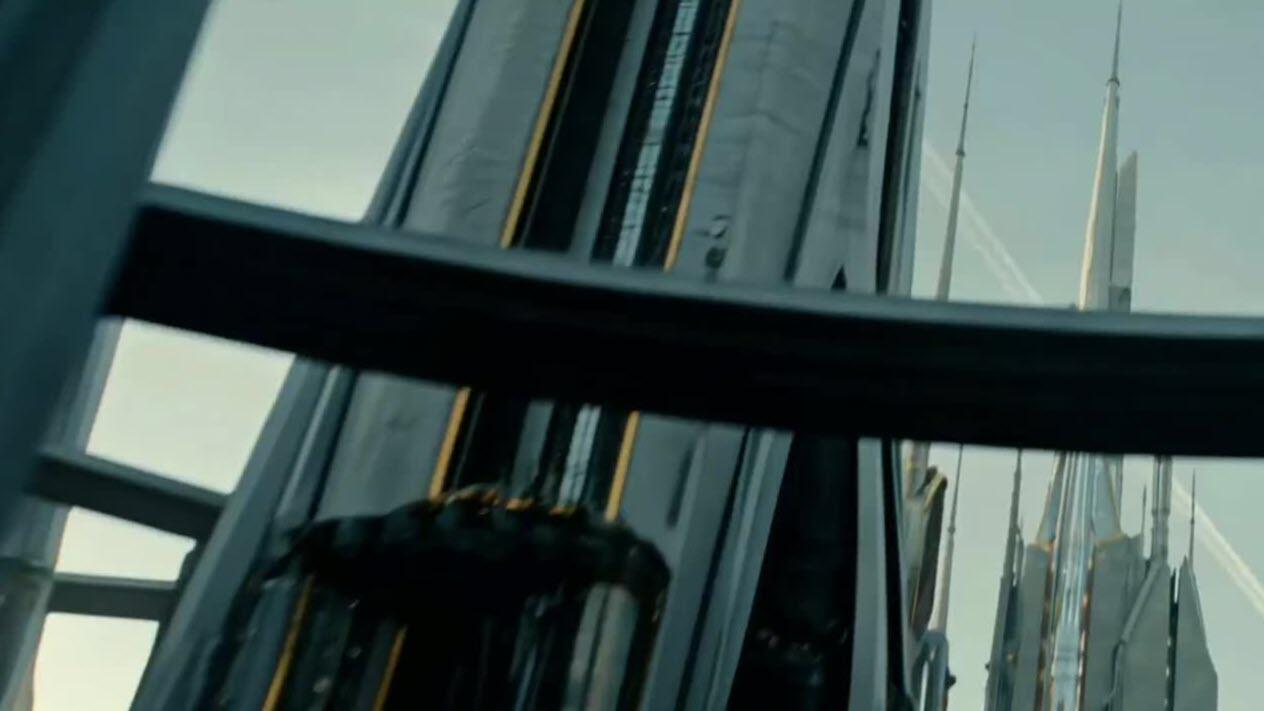
The video’s own narration set up the second half of the talk: people arrested “for a meme,” AI “rented by the month” and corporations “building machines not to serve people, but to exploit them.”
Ardoino said the problems were the ones Tether tries to attack in small steps.
“If you take very complex problems and you try to split them in actual items, you can go somewhere,” he said, and if Tether “solved” financial inclusion, “then maybe we can do good also in other areas”: energy, telecommunications and AI.
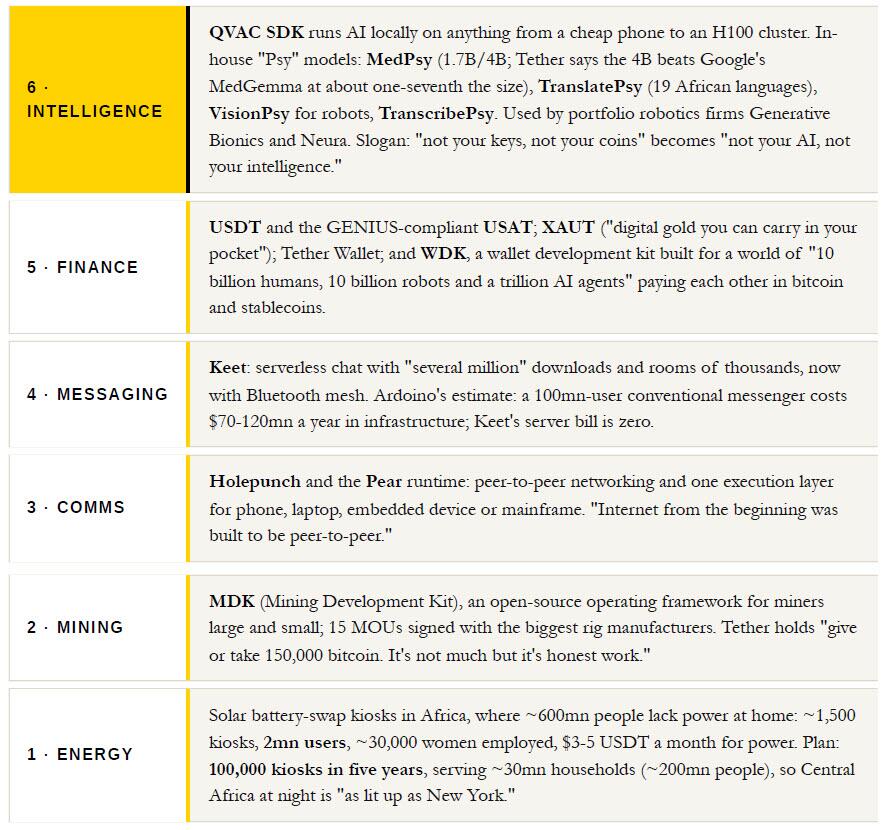
The answer, the video said, is “a foundation, real infrastructure,” which Ardoino called “the independence stack,” a set of open-source technologies Tether built or backs.
“We want people to be independent. We want families to be independent. We want cities, towns, communities to be independent,” he said.
“We want countries to be independent. So independence starts from the small part, not from the big one.”
His case is that Bitcoin and the dollar-token cover money, but “powerful technologies like AI, like telecommunications” need to follow the same pattern, so everyone has “the same tools that are unstoppable tools that are resilient and even better: anti-fragile.”
He pointed to Tether’s own token:
“USDT is a smart contract. It’s like 300 lines of code,” he said, and those lines “changed the life of 700 million people.”
The Independence Stack, all of it open source, has been built, according to Ardoinio so that “if Tether dies tomorrow, our technology should survive.”
At the base is energy.
“Without energy, you cannot have AI. Without communications, you cannot have AI,” he said, and AI “will use a financial stack.”
The futurist said Tether had invested in a company that runs solar-and-battery kiosks across Africa, where about 5,000 kiosks serve 2 million users and employ 30,000 women, and that Tether plans to grow to 100,000 kiosks in five years, powering about 200 million people. Customers pay $3 to $5 a month in USDT to recharge batteries, against average local pay he put at $80 to $120 a month.
Above it is Bitcoin mining, where he said Tether built an open-source framework for operators “from the smallest miner in the world to the biggest.”
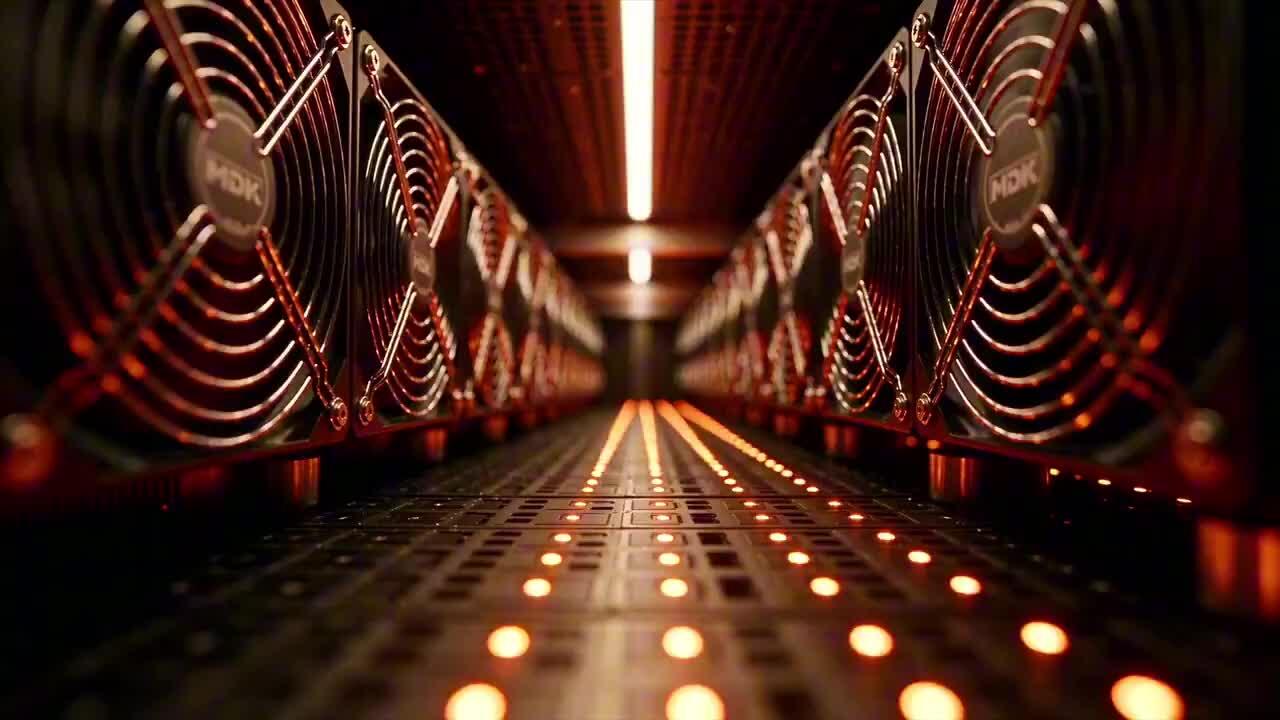
Then comes a peer-to-peer communications layer, which he called Holepunch, letting developers build apps “that don’t necessitate any server to run,” and a chat app on it that he said keeps working over Bluetooth on a plane or at a concert with no signal.
Next is Finance with a WDK, a wallet development kit for self-custodial wallets on seven blockchains, which he said is built for the 10 billion humans, 10 billion robots and “a trillion” AI agents he expects.
And at the top is QVAC, a toolkit for running AI on whatever hardware a person owns.
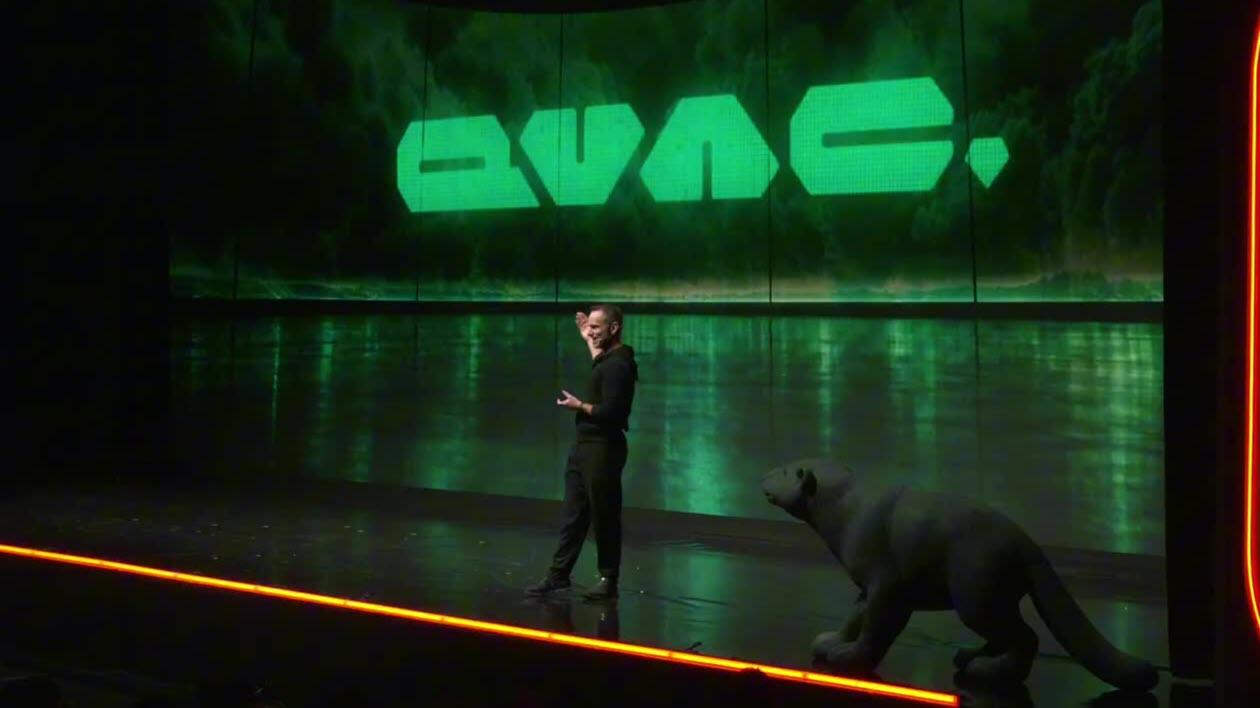
On AI, Ardoino also said Tether built small AI models that run on phones: Med Psy, a medical model in 1.7 billion and 4 billion parameter sizes, with the larger one beating Google’s MedGemma at one-seventh the size; Translate Psy, covering 19 African languages; Vision Psy for robots; and Transcribe Psy, a speech-to-text tool he said keeps data private.
“All this works today,” he said.
He concluded by tying his push to the state of politics today, noting that people in Britain “don’t have any more freedom of speech” and that a stable society needs financial inclusion and free speech together.
Tether is “a very profitable company, so we can afford to build these things,” Ardoino closed by saying.
Tether is “setting ourselves up to create a future that is worth living, that will have a lot of darkness,” he said, “but even if we reduce the darkness of 10%, 20%, 30%, that is our goal.”
Conclusion
Ardoino’s keynote was probably the most ambitious corporate pitch delivered at a bitcoin conference this year: an open-source civilization stack, built by a small team and paid for by one of the most profitable companies per head on the planet. Yet as we noted above, the irony is hard to miss: the “Foundation” meant to outlast the Empire’s decline is funded by the Empire’s short-dated debt. And taking it further, the Treasury’s own advisors see that as a feature, a deep new buyer for bills, which has made Tether the 17th largest holder of US debt, bigger than South Korea, Saudi Arabia and Germany.
Central banks, meanwhile, are finding a crypto company sitting next to Libya in the gold league tables.
For markets, the psychohistory reduces to two equations. Tether is a ~$130BN front-end bid that TBAC expects to grow severalfold, and a ~150t gold holder that has added bullion faster than any central bank or ETF. Both terms are multiplied by the same variable, the world’s demand for an offshore digital dollar, and in 2026 that variable stopped growing. What restarts it is the end of the AI debt boom, when $40-trillion-plus of Treasury borrowing takes back center stage and emerging markets go looking for a lifeboat. Seldon had a thousand years to wait. Tether may only need to wait for the next credit event.
Professional subs can read our full report: “Tether: The Seldon Plan Runs On T-Bills And Bullion.”

